FOR nearly 40 years, Zaid Othman’s days began long before sunrise. In the stillness of Kampung Mukut, a village nestled on the southernmost tip of Tioman Island, Zaid would prepare for yet another journey away from home.
A speedboat ride slicing through choppy waters to a larger jetty on the west side of the island, then a ferry bound for Mersing, Johor – the nearest point on the mainland.
There, the chalet operator of Mukut Harmony would spend his days on paperwork, juggling phone calls and coordinating boat transfers for tourists eager to visit the very village he leaves behind each morning.
At times, his work took him across Malaysia and beyond, promoting Mukut at tourism roadshows to strangers who had never heard its name. It was an irony he had long accepted: to sustain life in paradise, he had to keep leaving it.
Tioman’s hidden gem
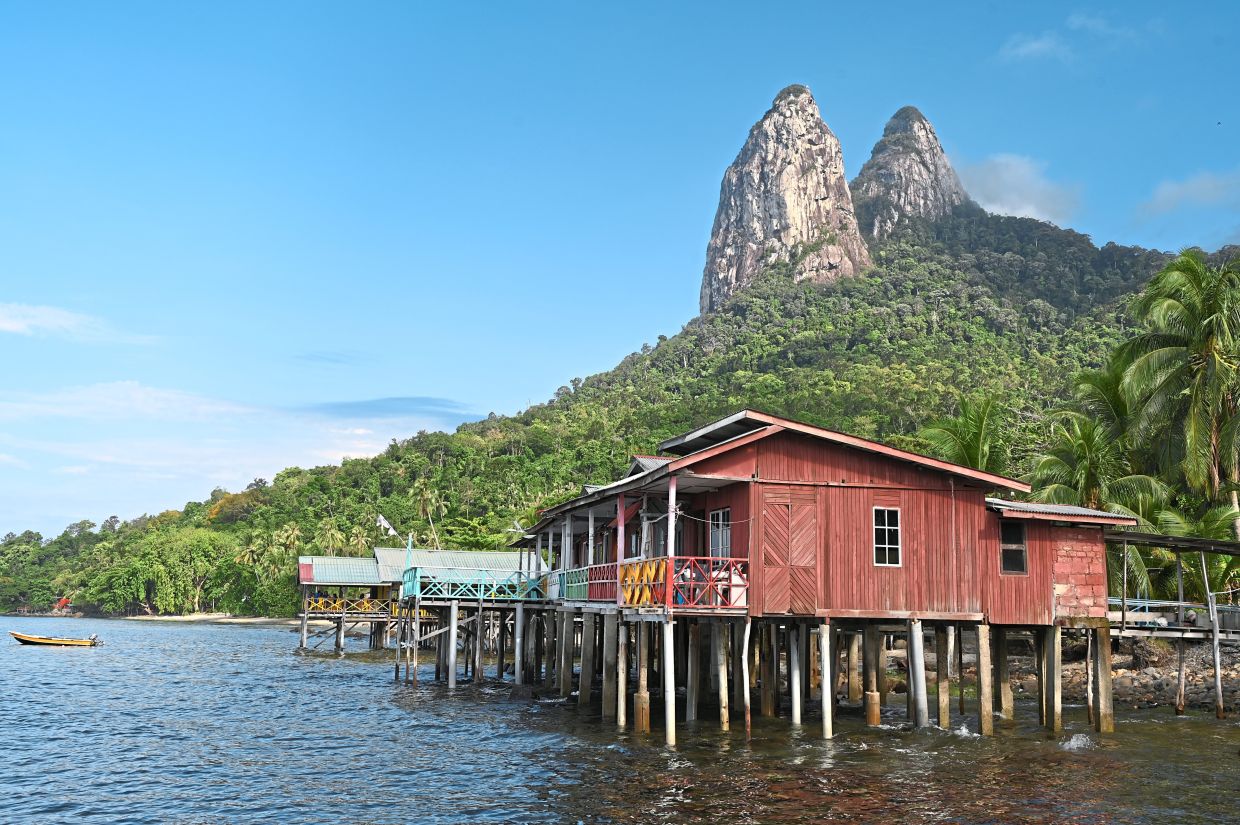
Kampung Mukut feels worlds away from other tourist-laden spots in Tioman. The sea shifts in shades of blue and green depending on the light, while schools of fishes weave their way around corals.
Mornings are broken by the sound of waves brushing the shore and the distant rustle of rainforest that stretches deep into the island’s hilly interior.
Towering above it all is its most recognisable landmark – Dragon Horns or Gunung Nenek Semukut as it is known locally – two jagged granite peaks that pierce the sky.
This idyllic kampung was, once upon a time, the island’s earliest entry point for travellers to Tioman in the 1980s.
But over time, as development took root elsewhere on the island, Mukut remained as it always was – untouched, unspoiled, and increasingly, unseen. Accessible only by boat, its remoteness became its greatest strength and ironically, its limitation.
Tides of change
The shift began when a 75km submarine cable that was deployed by Telekom Malaysia (TM), in collaboration with the Malaysian Communications and Multimedia Commission (MCMC), successfully linked Kuala Rompin on the mainland, to Tioman Island.
Over time, coverage expanded across the island – but Kampung Mukut remained out of reach.
As part of its push for more inclusive development, TM turned its attention to the village.
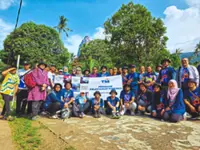
Home to just 148 residents, Mukut became the first site under Jangkau Digital TM, an initiative built on four pillars: connectivity, education, environmental sustainability, and economic empowerment.
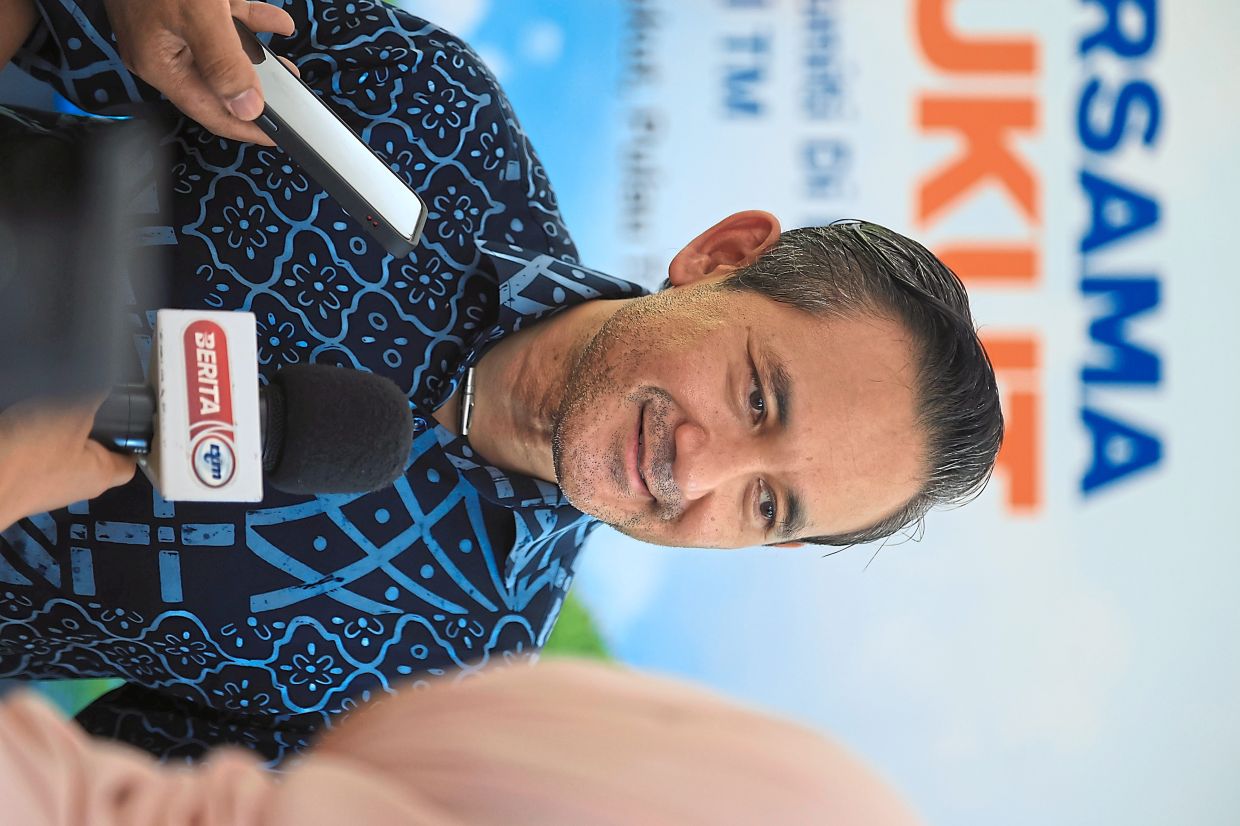
“Jangkau Digital TM is about building the right foundations for communities to thrive. It reflects our role as a nation builder, ensuring that even the most remote communities are part of Malaysia’s digital future,” says TM group chief executive officer Datuk Amar Huzaimi Md Deris.
In Mukut, that vision is taking shape as Malaysia’s first Smart Eco-Village. Work began in 2025, and within a year, the changes are already being felt. For Zaid, the difference is immediate.
“Now, with WiFi and Internet here, it is much easier. We can operate directly from Mukut without needing to go to Mersing or maintain a physical office,” the 65-year-old reveals.
Access for all
“Previously, the people in Kampung Mukut felt disconnected from what was happening beyond the island,” Amar explains. Over the past year, that sense of isolation has begun to dissolve.
He notes that via the initiative, TM has already rolled out seamless outdoor WiFi across the village, opening up new possibilities for both residents and visitors.
Locals can now run online businesses directly from Mukut, while children are able to take part in virtual learning, something that was once out of reach in this remote corner of Tioman.
Beyond connectivity, the company has introduced Vision AI CCTV systems to help manage visitor flow and enhance safety.
At the same time, digital tools have been put in place for local tour operators and accommodation providers, giving them a more direct way to promote their offerings.
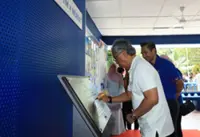
Jangkau Digital TM has also put Mukut on the digital map through an online tourism portal, positioning it as a hidden gem where visitors can scale the Dragon Horns, trek to Asah Waterfalls, or unwind with kayaking, fishing and diving.
Unifi Business – TM’s brand for MSME and business solutions – has also enhanced the experience through its Go Bookit system. Designed as a digital concierge of sorts, it allows travellers to browse, plan and secure activities or accommodation in just a few taps.
Reflecting on the programme, Amar adds: “Technology is not just about transforming lives in cities; it can also uplift rural communities that are far removed from it.”
Local eco-guides Zhafri Zamros and Amy Mat Rock are seeing the impacts first-hand.
“With Internet connectivity, exposure has expanded. Our income is more consistent, and more tourists are aware of this place,” says Zhafri.
For Amy, whose tours weave together Mukut’s history, myths and ecology, that visibility carries responsibility.
Children in the village now see eco tours as both inspiration and livelihood, often asking Amy about kayaking trips or climbing the Dragon Horns.
“For us, this mountain and the sea are our treasures. We want to share them with the world, but at the same time, we want to protect them.
“That’s why, as local guides, we manage these ourselves, not outsiders, so we can promote them while preserving them.”
Rippling across the island
The impact of Jangkau Digital TM stretches far beyond Mukut.
On the island’s western side in Kampung Tekek, small-business owner Syamsuddinias Mohd Anuar is discovering what connectivity can make possible.
Alongside other small business owners around Tioman, she recently completed an MSME Empowerment Workshop at the TM-managed National Information Dissemination Centre (NADI) in Tekek.
“Before this, I didn’t know anything about TikTok or how to create content. But now I understand how wide-reaching the Internet is and how I can use it to expand my business further,” says Syamsuddinias, who runs a small mini-post office which also doubles up as a phone repair shop.
“Alhamdulillah, it has helped me generate income and support my family financially.”
But the transformation went beyond income.
Syamsuddinias says her biggest hurdle was gaining confidence on camera.
Inspired by others, she gave it a try, and gradually found her voice and ideas.
For Unifi Business general manager Kelvin Shaman, who leads the training, the mindset shift is as significant as the skills gained.
He said initially, some participants felt it was not for them, believing they lacked the skills, were too old.
“I think this is something I have also learnt from, and I am proud that together with my peers, we are able to help them move into a different digitalspace, taking their businesses in a more digital direction,” Kelvin shares.
More than digital transformation
Economically, things are improving too. The village was once heavily reliant on fishing, but digital connectivity has made tourism, and other sources of income more accessible.
Government departments and agencies are also part of this ecosystem of progress, promoting beach programmes, hiking, and waterfalls to a wider audience.
The ripple effects are also shaping the futures of children in Mukut. SK Mukut is one of 35 schools in the country under TM Future Skills (TMFS), a nationwide programme designed to introduce students to science, technology, engineering, and mathematics (STEM) and digital learning in a more hands-on, engaging way. Designated a Champion School under TMFS, these students are now exploring robotics, 3D design, coding and other digital applications, skills once rarely associated with remote schools.
Beyond the classroom, the exposure is broadening horizons and boosting students’ confidence to imagine futures beyond traditional trades in Mukut.
“I hope these small efforts will create a big impact, and that the children who say thank you to TM today will grow up to contribute significantly to Malaysia in the future,” says Amar, adding that three other schools in Tioman are also part of the TMFS programme.
Growing together
What began as a telecommunications effort under the Jangkau Digital TM initiative however, has since evolved into something far more rooted, a presence deeply woven into village life.
“TM in Mukut is unique. We do not just provide assistance. We integrate ourselves into the village and become part of the community,” Amar discloses.
“The villagers have accepted us as family. That is a beautiful experience – bringing technology while also strengthening relationships,” he adds.
For Zaid, the change is also deeply personal. The long journeys that once defined his routine are no longer necessary.
The cost of maintaining a mainland office has disappeared, and the hours once spent travelling are now reinvested into his business and family life in Mukut. For the first time in decades, Zaid no longer has to leave Mukut to sustain it.