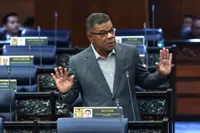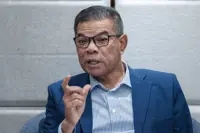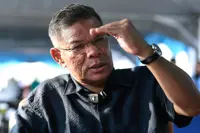
PUTRAJAYA: A rigorous screening process is currently underway for over 4,000 Myanmar nationals to determine their refugee status before potential repatriation, says Home Minister Datuk Seri Saifuddin Nasution Ismail.
Speaking after flagging off the Star FC tour here on Sunday (Aug 9), Saifuddin clarified that data collection has begun to differentiate genuine refugees from individuals who have committed immigration or criminal offences.
"I am not saying that they are refugees yet," Saifuddin said. "To determine whether they are refugees or Myanmar nationals who have committed immigration or other offences, we have to screen them. If they are confirmed to have refugee status, they will certainly be among the first groups that we will arrange to be repatriated."
He added that Putrajaya is working on an outreach mechanism to encourage Myanmar nationals outside immigration detention depots to come forward voluntarily for registration and identification.
Under the initiative, the Home Ministry will oversee identification and data collection, while the federal government handles the overall repatriation logistics.
Saifuddin also urged the public not to conflate the broader Myanmar refugee situation solely with the Rohingya population.
"Currently, there is an excessive focus on the Rohingya issue, causing society to perceive the Myanmar refugee issue as revolving around just one ethnic group," he explained. "Rohingya are one of them, but there are also the Chin, Arakanese, and various others. It is better to use the term 'Myanmar refugees' because focusing only on the Rohingya creates a false impression."
He noted that Malaysia also hosts refugees from several other nations, including Afghanistan, Iraq, and Jordan.
Updating on the progress of the Refugee Registration Document (DPP) Programme—which aims to systematically identify and profile Myanmar refugees across Malaysia—Saifuddin revealed that initial data is expected by the fourth quarter of this year.
On the broader regional picture, Saifuddin noted that the Myanmar government has agreed to accept the return of roughly 100,000 refugees from Cox’s Bazar in Bangladesh, which currently shelters over 1.2 million Rohingya refugees.
However, he cautioned that third-country resettlement opportunities for refugees in Malaysia have dwindled significantly due to shifting global geopolitics.
"Resettlement in third countries like the United States is not impossible, but the numbers are very small now," he said. "For refugees in Malaysia processed by the UNHCR, the chances of being resettled in a third country are very slim."