PETALING JAYA: One in every nine persons with disabilities (OKU) recorded with the Social Welfare Department has autism, with the number of registered cases swelling by 17,000 in the past year.
Despite these rising numbers, Malaysia’s autism care remains under strain with a long wait for therapy and a shortage of trained professionals.
The Women, Family and Community Development Ministry revealed in the Dewan Negara last Thursday that 93,199 out of 849,775 registered OKU had autism.
Such an increase in registrations had prompted the government to enhance initiatives on early intervention, education and skills training, its minister Lim Hui Ying told Senator Dr RA Lingeshwaran who had asked about plans to support autistic people and their caregivers.
ALSO READ: Parents seek faster intervention
Dr Lingeshwaran said the latest figures showed autism registrations had increased by 17,742 cases (or 23.5%) from 75,457 in June 2025 to 93,199 in June this year.
“It is a clear warning that Malaysia is facing a growing national challenge requiring an urgent, coordinated and whole-of-government response,” he said.
In a Senate written reply in September 2025, the Health Ministry said family medicine specialists at government health clinics could make early diagnoses.
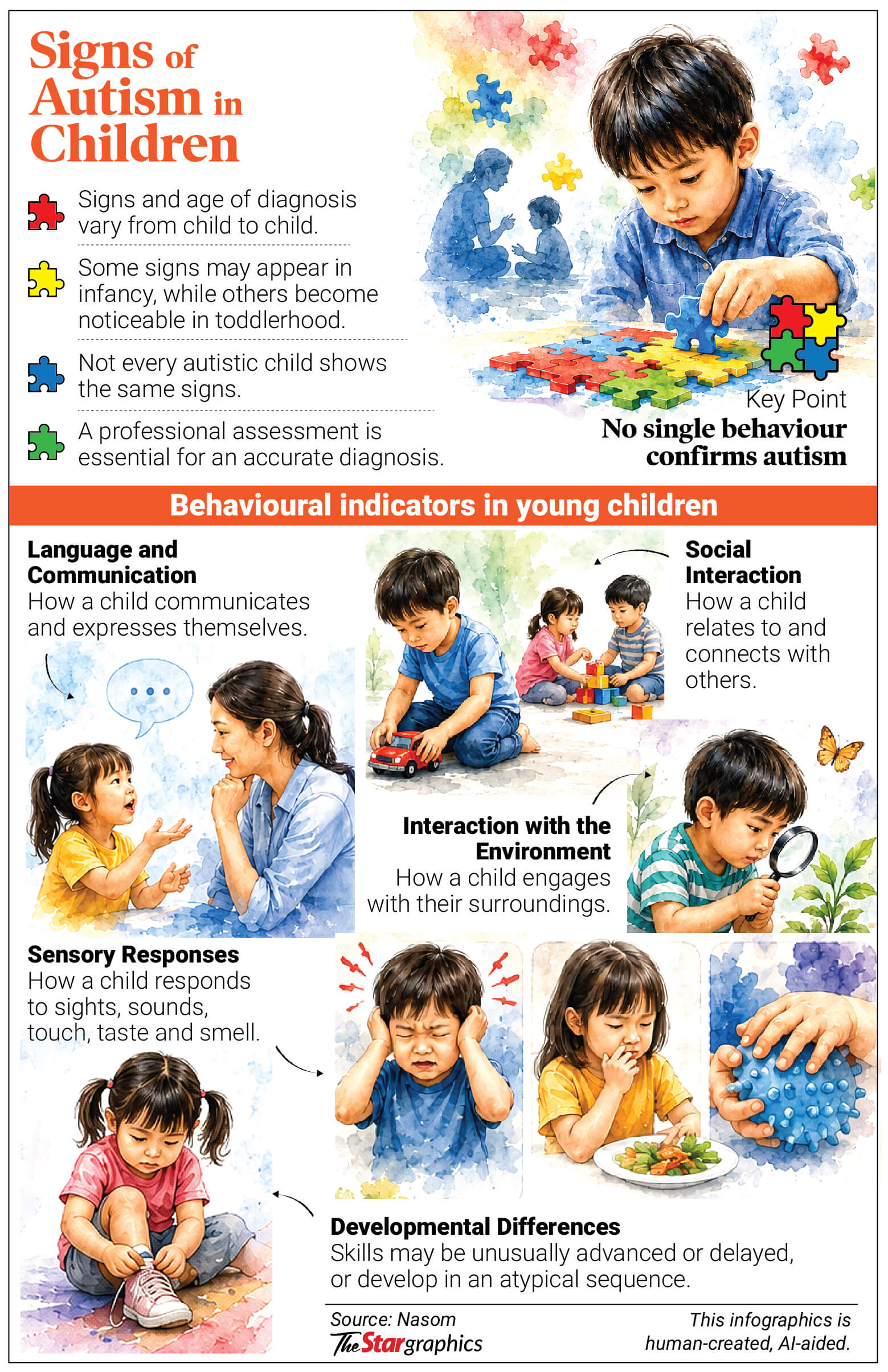
However, it said there were only 14 developmental paediatric subspecialists in public hospitals nationwide, including six undergoing specialist training.
The ministry also noted that pre-school developmental screening was made compulsory in June 2025.
Dr Lingeshwaran commended the introduction of compulsory pre-school screening, saying this would enable early detection of developmental disorders.
However, he said, screening without timely access to treatment and intervention defeated its very purpose.
He noted that ages two to six represent the “golden window” for developmental intervention, warning that waiting six to nine months for therapy could significantly affect a child’s long-term development and independence.
He urged the government to fast-track approval for therapist posts in the Health Ministry, introduce a public-private partnership model and therapy voucher scheme for B40 and M40 families, and prioritise funding for the Integrated Specialist Services Cluster under the 13th Malaysia Plan.
National Autism Society of Malaysia (Nasom) chairman Julian Wong said the number of developmental paediatricians, clinical psychologists, speech therapists and occupational therapists has not kept pace with demand, despite rising diagnosis rates.
“The public healthcare system operates with a critically low number of child development sub-specialists nationwide. This shortage creates a significant bottleneck, making it incredibly difficult for families to access consistent, specialised therapy their children need to thrive.”
Wong suggested that the government provide more scholarships and opportunities in these areas. He said families often wait up to nine months or longer just to secure an initial assessment before beginning therapy in public facilities.
He proposed a unified national framework to standardise and expedite early screening, improve referrals, speed up the hiring and training of healthcare professionals and therapists, and equip educators to better support inclusive classrooms.
Consultant paediatrician and child disability activist Datuk Dr Amar Singh HSS said the Health Ministry had not invested sufficiently in therapists to meet demand, while university medical curricula lacked adequate disability training.
“It is not possible for a handful of developmental paediatricians or rehabilitation medicine specialists to meet the need. It requires the entire paediatric specialist workforce working together with family medicine specialists.
“Public-private partnership seems like a quick fix but is not a solution and is very expensive.”
He said children identified with possible disabilities should ideally be assessed within a month and begin therapy as early as possible.
“The first two to three years of a disabled child’s life significantly impact developmental trajectories, hence early childhood intervention is critical.”
He spoke of the limited government-initiated early childhood intervention centres and that even most non-profit providers have long waiting lists.