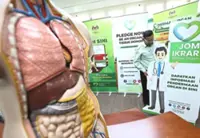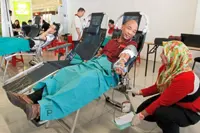
PETALING JAYA: Organ donations aside, whole-body donations can save countless more lives by helping to train and shape the next generation of doctors.
Since its inception in 2012, the Silent Mentor Programme at Universiti Malaya’s Faculty of Medicine has enabled thousands of medical students and doctors to hone their surgical skills through the generosity of body donors known as “Silent Mentors”.
As of June, the programme had recorded 2,383 registered body pledgers.
So far, the remains of 193 donors, comprising 103 men and 90 women, helped in medical training and research purposes.
Silent Mentor Centre manager Sia Thiam Eng said more than 2,000 medical students and over 4,000 doctors have undergone training through the programme in the past 14 years.
He said the donated bodies are used for surgical simulation training in a near-natural state, enabling medical students and doctors to develop their skills before operating on patients.
Beyond teaching anatomy and surgical techniques, the programme is also aimed at nurturing more compassionate and humane healthcare professionals, he added.
He noted that unlike conventional cadaver-based training, students in the programme are introduced to the personal stories of their donors through home visits and interactions with their families before surgical training begins.
Upon completion of the anatomical training, each donor is honoured with a send-off ceremony where students, lecturers and the donors’ loved ones gather to pay their respects and honour the deceased’s invaluable contribution to medical education.
Despite growing public awareness, Sia acknowledged that body donation continues to face resistance due to traditional beliefs.
“Our aim is not to convince people but to create public awareness of the selflessness illustrated by body donors for the betterment of medical services in the country,” he said.
Sia added that under the programme, individuals may pledge their organs or bodies.
However, he said organ donation takes precedence if a donor is medically suitable, as saving lives remains the top priority.