
PETALING JAYA: Malaysia’s pharmaceutical supply remains stable despite uncertainty in the Strait of Hormuz, but industry players warn that prolonged disruptions could put pressure on costs and delivery timelines.
They said the stability was thanks to closer monitoring by the Health Ministry, including mandatory reporting requirements for medicine supply disruptions, which has allowed authorities and companies to track potential risks and respond early.
The reporting mechanism that took effect on July 1, require Product Registration Holders to notify authorities of any medicine supply disruptions or discontinuations.
Malaysian Organisation of Pharmaceutical Industries president Ch’ng Kien Peng said medicine supply among its members remained stable, with no indication of widespread shortages or major interruptions to production.
However, he said manufacturers continued to monitor the availability, lead times and costs of imported active pharmaceutical ingredients, packaging materials and logistics services.
He said the latest developments in the Strait of Hormuz had raised the risk of higher procurement costs due to increased freight, fuel and insurance expenses, shipment rerouting, and longer delivery times.
“However, this should not be interpreted as a uniform increase in medicine prices, as the impact will vary considerably by product and supplier,” he said.
Ch’ng said Malaysia’s pharmaceutical supply chain had several strengths, including local manufacturing capabilities, diversified international sourcing, and inventory buffers.
However, he cautioned that Malaysia was not completely insulated from prolonged global disruptions because local manufacturers still relied on specialised packaging and other production inputs.
On July 12, Iran announced that the strategic waterway had been closed again amid renewed tensions with the United States.
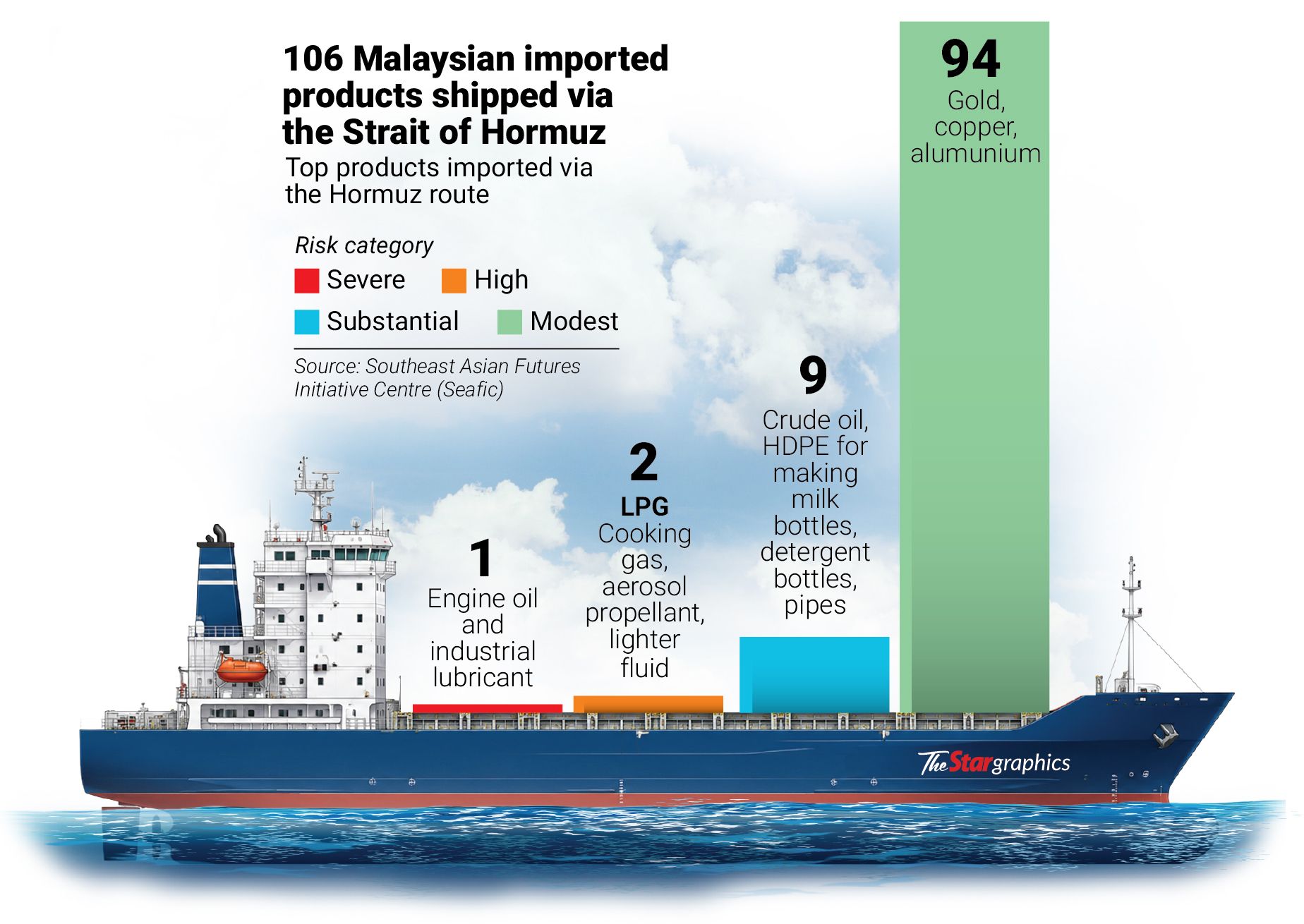
A total of 106 types of products imported by Malaysia pass through the strait, ranging from crude oil to raw materials to make plastic items and food products such as dates and pistachios.
Malaysian Association of Pharmaceutical Suppliers (MAPS) president Lim Teng Chyuan described the current situation as relatively stable, although there had been some delays and price increases.
“So far, generally we are okay,” he said.
Lim said it was still too early to determine whether medicine prices would rise further because of uncertainty over the Strait of Hormuz situation.
He said Malaysia’s medicine supply was supported by diversified sourcing, with about 80% of MAPS members’ supply coming from various countries, including India, Thailand, Canada and several countries in Europe and Asia.
On mandatory reporting, Lim said the system was useful in monitoring potential disruptions, but its effectiveness depended on the availability of alternative sources.
Lim cautioned that pressure on global oil supplies could eventually raise costs, while disruptions to shipping routes may affect delivery schedules.
“We recognise that pressure on oil supply will affect prices, but it is too early to tell whether the current situation will differ from the past three months, which the industry has managed well so far,” he said.
Malaysian Pharmacists Society president Amrahi Buang said the pharmaceutical supply situation remained stable.
“So far, everything is stable,” he said, adding that the public need not panic.