



KUALA LUMPUR: Fewer urban rail service disruptions have been reported this year following Rapid Rail Sdn Bhd’s comprehensive mitigation measures to reduce disruptions on its LRT and MRT networks when measured using Mean Kilometres Between Failures (MKBF), a metric used to benchmark service reliability, says Transport Minister Anthony Loke.
“It (MKBF) is calculated based on the distance travelled by trains before a failure occurs that results in a delay of more than five minutes, using a 12-month moving average,” he said in a written parliamentary reply dated July 14.
There were 177 service disruption and train failures in 2022, followed by 111 in 2023, 64 in 2024 and 28 in 2025.
As of end of May this year, 12 incidents have been reported (with the statistics excluding the KL Monorail).
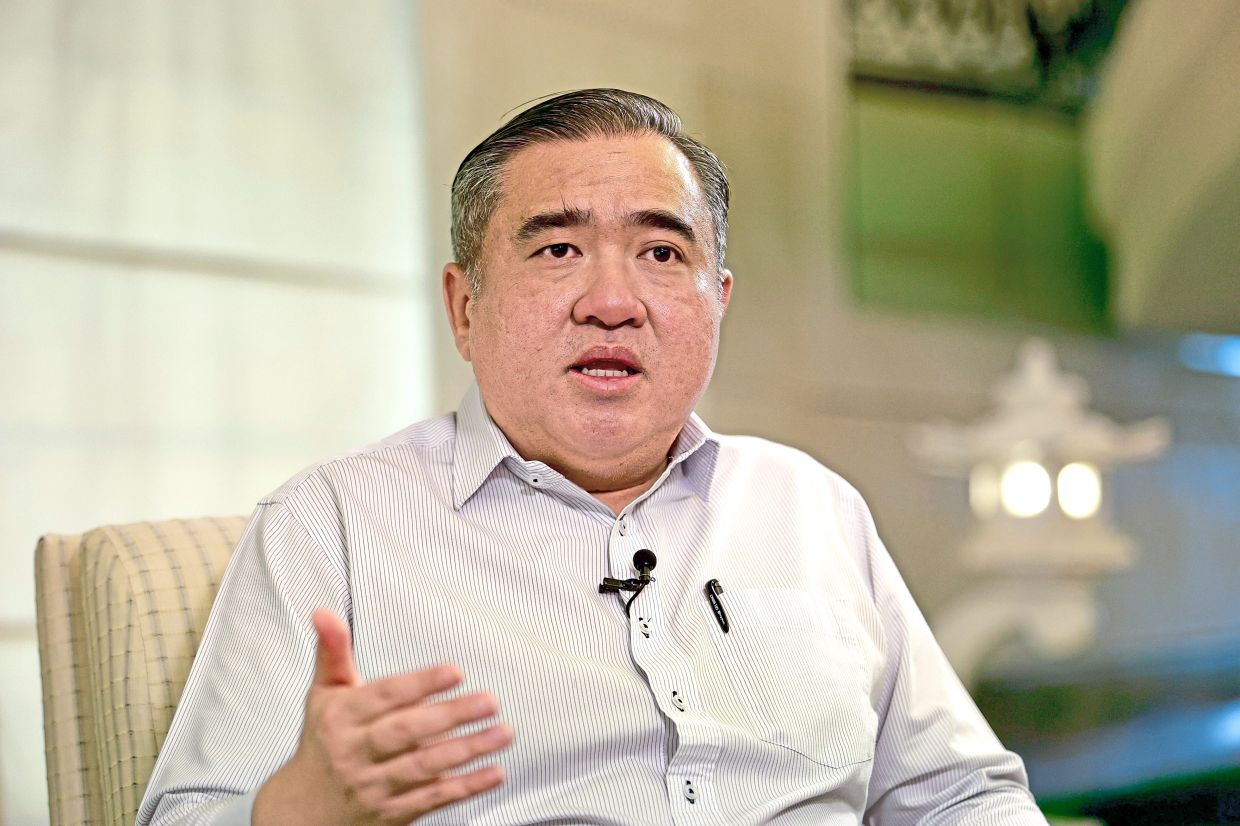
Loke said the latest performance demonstrates an improving trend in overall performance compared with previous years.
“As a result of the implementation of various initiatives, Rapid Rail’s operational performance has improved significantly. As of May 2026, the MKBF for all LRT and MRT lines reached 930,000km,” he said.
In 2025, the MKBF stood at 790,000km, with 28 service disruptions recorded, which is a marked improvement over 2024, when the MKBF was 330,300km with 64 service disruptions, and 2023, when the MKBF was 160,000km with 111 disruptions.
Loke said the short-term mitigation plan focuses on the immediate restoration of operations through the activation of emergency response procedures, deploying standby trains and feeder buses, prompt execution of on-site repairs, and continuous dissemination of information to passengers.
“In addition, repair works, replacement of faulty components, and comprehensive emergency inspections are carried out,” he said.
Medium-term mitigation plan focuses on enhancing system reliability through special engineering programmes to repair critical components, improving preventive maintenance schedules, strengthening staff competency, and implementing a Failure Review Panel to identify root causes of disruptions, as well as ensuring that effective corrective and preventive measures are implemented.
Over the long term, he said various rail infrastructure development and upgrading projects will be implemented.
“These include the procurement of additional trains, comprehensive overhauls of trains and critical systems, upgrades to communications, signalling and power systems, the implementation of predictive maintenance, the installation of automatic platform gates, and enhancements to passenger information systems,” he said in response to a question by Shaharizukirnain Abd Kadir (PN-Setiu).
