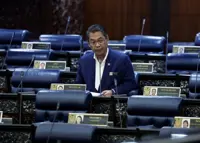
PARLIAMENT will be given a formal role in scrutinising candidates for the post of public prosecutor, while the Prime Minister and Cabinet will be expressly barred from participating in the appointment process under proposed constitutional amendments, says Datuk Seri Azalina Othman Said.
The Minister in the Prime Minister’s Department (Law and Institutional Reform) said the changes will mark a significant shift from the current system by allowing lawmakers to evaluate proposed candidates before their appointment.
If passed it will allow appointments to be validated or evaluated by Parliament.
“Before this, when you talk about the separation of powers, the Executive makes the appointments while Parliament could only question the process. We could not participate in (advising of proposing) the names,” she told reporters in Parliament House yesterday.
The Parliamentary Special Select Committee’s (PSSC) report on the proposed constitutional amendments to separate the roles of the Attorney General (AG) and public prosecutor (PP) was tabled in the Dewan Rakyat yesterday.
Under the proposed reforms, the PP will be appointed by the Yang di-Pertuan Agong on the advice of the Judicial and Legal Service Commission (SPKP), without any involvement from the Prime Minister or the Cabinet.
Azalina said the constitutional amendment will expressly exclude the appointment from the scope of Article 40 of the Federal Constitution, which generally empowers the Prime Minister and Cabinet to advise the King unless otherwise specified.
“That is the commitment – that the government is not involved in the appointment process.”
She said the proposed amendments will require the names of recommended candidates to be communicated to Parliament, enabling MPs to provide their views to the SPKP before an appointment is made.
Parliament will also be empowered to establish its own procedures for scrutinising appointments.
Among the other recommendations put forward by the bipartisan PSSC are a fixed seven-year term for the PP without renewal or reappointment, the submission of an annual report to Parliament, and the introduction of a dedicated code of ethics, breaches of which could form grounds for removal from office.
Azalina said the recommendations were aimed at establishing an independent, professional and accountable prosecution service that operates in line with the rule of law and international best practices.
She said the report was the result of seven committee meetings involving both government and opposition MPs, as well as consultations with legal experts, academics, professional bodies, and civil society organisations.