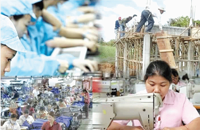
PETALING JAYA: Despite strong interest in job vacancies, employers say the labour shortage remains a persistent challenge.
Malaysian Employers Federation (MEF) president Datuk Dr Syed Hussain Syed Husman said the issue was not just job availability but whether they matched the skills, desire and expectations of jobseekers.
ALSO READ: Addressing youth unemployment
He said an abundance of vacancies remained in the manufacturing, construction, agriculture and hospitality sectors, but these were often not the preferred choices of young Malaysians.
“Malaysia is not faced with a shortage of jobs per se, but challenges relating to skills, expectations and labour market efficiency,” he said in an interview.
Syed Hussain said young workers today placed greater emphasis on career progression, meaningful work, flexibility and work-life balance compared with previous generations.
He said there was also a growing gap between what jobseekers expected and what employers could realistically offer, particularly among fresh graduates and young workers.
ALSO READ: Tough to find work that meets expectations
The Federation of Malaysian Manufacturers (FMM) also acknowledged that the workforce was changing, with businesses needing to invest more in training, workplace culture and employee well-being to attract talent.
Its president Jacob Lee Chor Kok, however, said the large turnout at Infineon Technologies’ interview in Melaka reflected a genuine and growing pool of those willing to consider manufacturing jobs in the present economic climate.
He cautioned against viewing the turnout as evidence that recruitment difficulties had been resolved.
“The large turnout signals latent labour supply and genuine interest. But bridging that interest into long-term, productive employment in manufacturing requires more than a recruitment event,” he pointed out.
Lee said high application numbers did not always translate into successful placements, with manufacturers continuing to face difficulties recruiting workers for a range of positions.
Among the hardest roles to fill were that of production operators, assembly line workers, maintenance technicians, quality control personnel and equipment specialists, he revealed.
Demand is also growing for automation specialists, robotics technicians and programmable logic controller programmers as manufacturers adopt more advanced technologies.
He said the challenge extended beyond wages, citing Economic Census 2023 data with median manufacturing wages ranging from RM2,764 to RM3,052 with the sector’s average monthly salary of RM3,513 exceeding the formal economy average of RM3,332.
“The barriers to local recruitment in manufacturing go well beyond pay,” he reiterated.
He said one of the most underestimated barriers was the perception that manufacturing work was low-status, physically demanding and had limited career prospects.
“This perception lags significantly behind the reality of modern manufacturing, which increasingly involves automation, digital systems and precision technology, mainly in industries such as semiconductors, electrical and electronics, and advanced manufacturing,” he said.
Syed Hussain and Lee also pointed to a mismatch between skills produced by the education system and those required by industry.
Lee said demand for TVET-related roles grew by 28.9% last year, while manufacturers continued to face shortages of candidates with technical competencies required for increasingly sophisticated operations.
They concurred that addressing labour shortage would also require stronger industry-education collaboration, better career visibility and a larger pipeline of skilled workers to meet future demand.