



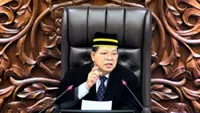
MUAR: Datuk Seri Anwar Ibrahim will meet Russian President Vladimir Putin to among others, discuss ensuring a stable supply of oil and gas to Malaysia amid growing global uncertainties.
The Prime Minister said he would be leaving for Kazan, Russia, today to attend the meeting with Putin, which will also involve other Asean leaders.
“Discussions with the Russian President is to ensure continued supply of oil and diesel to the country,” he said during a high tea gathering with fishermen, farmers and residents at Pantai Leka in Parit Jawa.
Anwar said the government is taking proactive steps to safeguard the nation’s energy needs as geopolitical tensions continue to affect global markets.
He pointed to the conflict involving Iran, the United States and Israel, warning that any disruption to shipping through the Strait of Hormuz could have serious consequences for global oil supplies and prices.
“If the Strait of Hormuz is closed, the impact will be felt worldwide, including in Malaysia, through higher oil prices,” he said, adding that the government is closely monitoring developments in the region.
The Prime Minister said he had received information from Pakistan’s Prime Minister Shehbaz Sharif, indicating that efforts were underway to end the conflict and that a resolution could be reached as early as Friday.
Anwar said Malaysia remained fortunate to have among the lowest fuel prices in the world, with RON95 petrol continuing to be heavily subsidised, whereas some countries were facing fuel shortages and the closure of petrol stations due to supply constraints.
He said Malaysia was pursuing cooperation with Turkmenistan to secure long-term gas supplies through PETRONAS, a move that would help guarantee energy security for future generations.
The Prime Minister also reaffirmed the government’s commitment to ensure development benefits ordinary Malaysians, including fishermen, farmers and low-income communities, rather than focusing solely on major infrastructure and high-technology projects.
“Development must be inclusive and address the needs of those at the grassroots,” he said.



