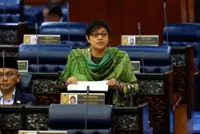
PETALING JAYA: The quality of written parliamentary replies to MPs must be improved to strengthen accountability and parliamentary oversight, analysts say.
Findings by the Institute of Strategic Analysis and Policy Research (Insap), which mirror The Star’s analysis of parliamentary written replies, found that 24 responses received by Ayer Hitam MP Datuk Seri Dr Wee Ka Siong and Tanjung Piai MP Datuk Seri Dr Wee Jeck Seng could be categorised as “poor” in relation to the 46 questions they submitted.
Insap director Woon King Chai said the study covered replies received by the two MCA MPs between July and December last year, as well as during the first Dewan Rakyat meeting of this year from Jan 19 to March 3.
ALSO READ: Lawmakers want straight answers
A recurring pattern identified in the replies was that the more precise the question, the more generic the response tended to be, he said.
“When an MP asks for figures broken down by the category that matters, the reply that comes back only provides a national total that does not answer the original question.
“This gives the appearance of an answer while withholding its substance,” he said.
Woon said parliamentary questions were intended to hold the Executive accountable by requiring ministers to provide specific information and explanations to the House.
ALSO READ: ‘Raise issues with replies in debates’
“This administration has made transparency and parliamentary reform its signature.
“The proof of those reforms should be visible in the government’s own responses to questions raised by MPs,” he said.
Political analyst Dr Bridget Welsh said a healthier parliamentary sitting would see at least half of all replies meeting a reasonable standard, with the longer-term goal being 80%.
“Repeated scripted responses suggest carelessness, and when they occur frequently, they can even be perceived as showing contempt for Parliament.
“Quality written responses are a critical part of a healthy, functioning democracy,” she said.
Welsh expressed hope that the findings would encourage ministries to improve the quality of their replies to MPs.
She said Malaysia has some of the strictest standards in the world governing how MPs submit parliamentary questions, but no equivalent rigour is applied to the responses provided by ministries.
“Failing this, ministries that provide scripted or deflecting responses should be called upon by Parliament to provide verbal explanations either in the House or to the media,” she added.
The Star’s analysis of the first 2026 Dewan Rakyat meeting from Jan 19 to March 3 found that at least one in nine written replies – 157 out of 1,354 – were flagged by MPs as being generic, deflective or failing to directly address the questions asked.