
PETALING JAYA: As the FIFA World Cup 2026 draws nearer, betting activity is expected to rise, which could lead some to develop gambling addiction as a result.
To this, mental health experts are urging families and friends to spot early signs of gambling addiction in their loved ones and intervene before the habit spirals out of control.
Psychologist Dr Victor Goh said the prominence of the World Cup creates more opportunities to get into betting as gambling advertisements flood social media.
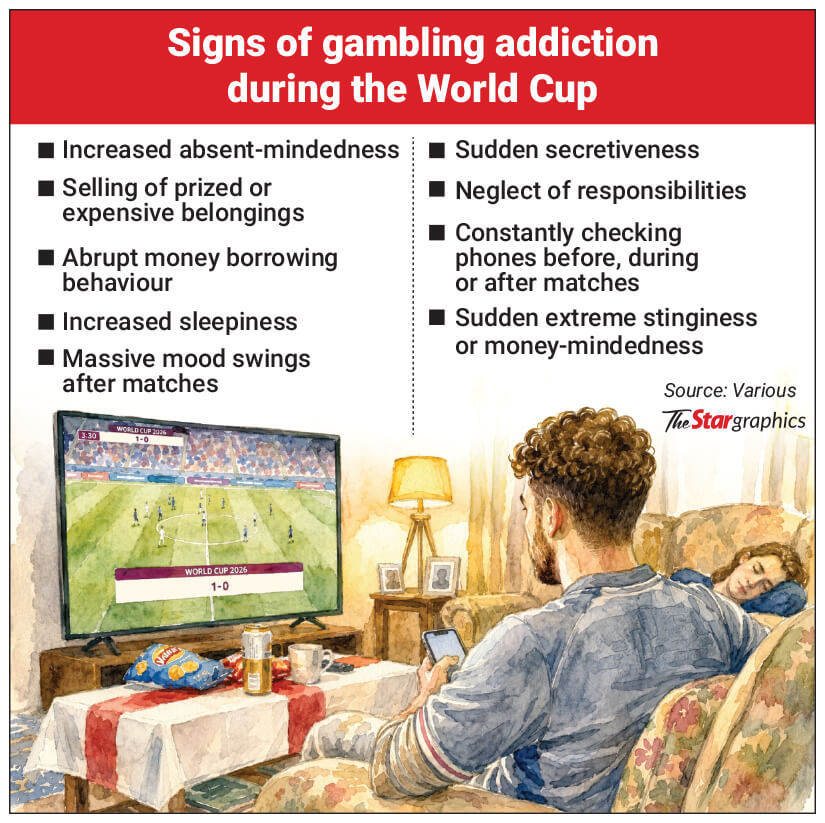
“The issue comes when simple bets become an obsessive behaviour that affects their mood and interaction with their loved ones.
“They may be seen wanting to borrow money during the tournament as well as becoming extremely money-minded or stingy towards expenses outside of gambling,” said Goh, who is the dean of Psychology at HELP University.
He added that while social betting during big sporting events like the World Cup is a normal pastime that can be enjoyable, anyone engaging in it should do so in moderation.
Mental health counsellor Dr Anasuya Jegathevi Jegathesan said families need to look out for sudden behavioural changes in their loved ones during major sports events like the World Cup.
“Some signs of possible gambling addiction include them suddenly becoming secretive about their spending before, during and after the event.
“They may also suddenly sell their prized belongings before or during the event to fund their bets, which is a serious sign that the casual bet has gone beyond leisure,” she said.
She added that a severe sign of gambling addiction is when a person begins trying to get their loved ones or other people to start gambling as well.
Consultant addiction psychiatrist Dr Joven Mailvaganam said gambling addiction is easier to arise if a person has recently encountered significant stress, either emotionally or financially.
“Stress can lead them to turn to gambling as a coping mechanism, which could easily lead to addiction as they become obsessed with checking betting apps, odds or match updates all the time.
“Those addicted will also display significant mood swings around matches and even begin to neglect other aspects of their lives during the tournament,” said Joven, who is also a member of the Mental Health Association of Sarawak.