PETALING JAYA: Technical and vocational education and training (TVET) is set to be strengthened with more funds and training in emerging sectors, says Datuk Seri Anwar Ibrahim.
The Prime Minister said the RM50mil allocation will come from the High-Impact Programme fund under the Skills Development Fund Corporation (PTPK), but requires cooperation from the private sector and related industries.
“The funds have been approved for TVET 2.0 development, but they must be matched by active participation from employers and industry stakeholders,” he said, adding that the allocation is part of a broader push to strengthen TVET as a key pillar of Malaysia’s workforce development.
The fund comes from a wider RM650mil allocation set aside under Budget 2026 to drive national talent development, TVET and industrial upskilling.
“Malaysia’s TVET system has made significant progress and is now regarded as among the leading models in Asean, reflecting a rapid transformation over the past three years,” he said at the National TVET Day 2026 celebration here yesterday.
Anwar said the government’s focus is not only on strengthening traditional training pathways but also on expanding into emerging fields such as artificial intelligence (AI), digital technologies, cryptology-related industries and energy transition.
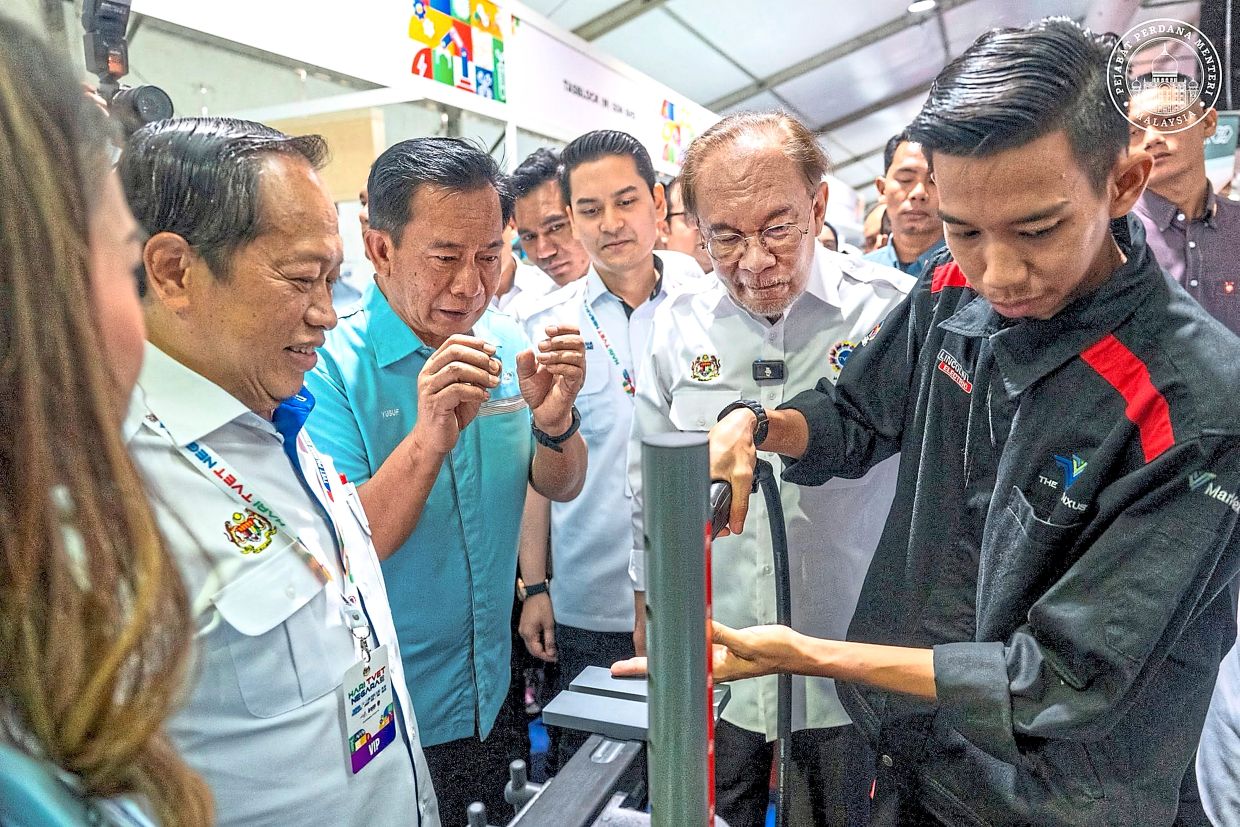
He said TVET 2.0 marks a shift away from outdated perceptions that only university education leads to high-value careers, stressing that vocational pathways are now equally competitive.
“This is a wise decision because the world has changed.
“AI, cryptology and energy transition are shaping entirely new fields that did not exist 20 or 30 years ago,” he said.
TVET students will undergo training in emerging sectors such as AI, cryptology-related industries and energy transition at government training and research institutions.
Anwar noted that about 50 to 100 participants from TVET centres will be given training and placement opportunities at facilities under the National Science Council.
“Perhaps as early as next week, the Chief Secretary to the Government will convene all these research bodies and require them to take in a number of selected students from each TVET institution,” he added.
Anwar acknowledged that gaps remain between industry needs and current training standards, adding that these gaps can be addressed through industry collaboration.
Although local universities possess strengths in engineering, including programmes in IT and certain areas of cryptography, he said discussions with leading companies such as Nvidia, Infineon and Amazon Web Services revealed that the level of training still falls short of industry requirements.
He added that while collaboration between universities and industry exists, more structured involvement from TVET institutions and government training bodies is needed to meet evolving technical demands.
He said companies, including large local firms, must take greater responsibility for providing structured training opportunities rather than relying solely on government funding.
“If they need 60 engineers in two years, they should also help train them now.
“Investors consistently emphasise the need for a stronger skilled workforce, reinforcing the urgency of expanding TVET capacity,” he said.