KUCHING: This year’s Gawai celebration will be a little quieter than usual for Jackson Dom, who will not be returning to his longhouse in Skrang.
Instead, he will be spending the harvest festival at the Sarawak Cultural Village (SCV) here, where he serves as the lead staff member at the Iban longhouse.
“Every year we take turns to be on duty during festive seasons. Last year, I went back for Gawai, so this year I’ll be working,” he said.
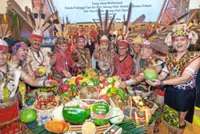
Still, Jackson said the festive spirit will remain very much alive at SCV, which will host a Gawai open house for visitors.
Gawai, celebrated on June 1 and 2, is the annual harvest festival observed by Sarawak’s Dayak community.
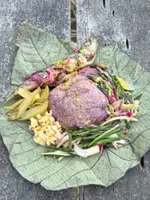
Visitors to the open house will be treated to traditional delicacies such as kuih penyaram, kuih chuan and kuih jala.
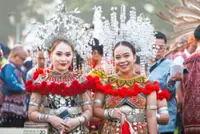
“We will also perform traditional dances such as the Ngalu Temuai (welcoming dance) and Ngajat Bujang Berani (Iban warrior dance) to entertain visitors,” Jackson said.
Jackson’s role includes welcoming guests to the Iban longhouse at SCV and introducing them to Iban culture and traditions.
“Although I will miss celebrating Gawai with my family, I’m proud to share our culture with visitors.
“We want them to feel welcomed and experience the joy of our festive celebration,” he added.
SCV performer Illona Umang will also be on duty during Gawai.
“I can’t take leave because I only started working here recently. But my family is in Kuching, so I can still meet them after work to celebrate,” she said.
Meanwhile, fellow performer Enyssa Christeny is looking forward to celebrating Gawai with her mother’s side of the family.
“My father is a Bidayuh from Serian and my mother is an Iban from Bintulu.
“This year, we’ll be returning to Bintulu for the celebration,” she said.
For Enyssa, Gawai is a special time for families to reunite in the longhouse or village and strengthen ties with one another.
“Even though many of us work far from home, we always make the effort to return during Gawai, especially to spend time with our parents,” she said.
“The best part is the gathering on Gawai eve when everyone comes together to share a meal in the ruai (communal area) of the longhouse.
“We will prepare tuak (rice wine), and at midnight, everyone will cheer ‘Ooh-ha!’ to mark the arrival of Gawai,” she added.