
STACKS of plastic buckets and towering water tanks are a common sight across Sabah’s west coast corridor.
This is the stark visual reality of an exhausting “bucket culture” that haunts the region to this day.
“Seeing families, our neighbours and staff constantly storing water in buckets is frankly heartbreaking in this modern era. It has practically become a Sabahan subculture, but it is not something we should be proud of.
“When the water goes out for days, normal life grinds to a halt. It strips away dignity and creates an underlying layer of constant anxiety,” says Minyak VW Enterprise Sdn Bhd marketing and sales director Jeff Lu.
Describing himself as a “Likas boy through and through”, Lu lives this reality from both a personal and professional standpoint.
His company specialises in maritime logistics and bunkering, supplying critical mid-stream fresh water to cargo ships, domestic vessels and island resorts.
When a municipal water cut hits, the corporate impact triggers a high-stakes logistical crisis.
“It throws a massive wrench into maritime logistics. When onshore municipal supply suffers a multi-day disruption, it creates a severe bottleneck.
“If a vessel is docked and waiting for fresh water, every single hour of downtime costs thousands in maritime demurrage and logistical penalties. It forces a business into a reactive, firefighting mode instead of focusing on growth,” he says.
Lu stresses that the current water supply has reached its absolute limit, highlighting exactly why a structural intervention like the Ulu Padas Water Supply Scheme (SBAUP) is ultimately a matter of basic human dignity for Sabahans.
The long-awaited solution
Conventional upgrades can no longer fix a crisis of this scale.
PY Konsep Perunding managing director Dr James Yong Hon Min notes that Sabah’s infrastructure has hit a critical tipping point as industrial demand outstrips legacy systems.
“This is driven by population growth and domestic consumption, and the increasing requirements of strategic industries such as oil and gas, solar, glass and silicon manufacturing, battery-related industries and green steel production,” Yong explains.
Compounding this are ageing, leaking pipes and high non-revenue water (NRW) losses, which translates to 7,195 million litres of treated water being lost daily, resulting in more than RM2bil in annual losses.
To fix this, SBAUP has been structured as a comprehensive grid stabilisation project.
Following the official site handover from the State Water Department (JANS) to Upper Padas Power Sdn Bhd (UPPSB) on May 12, construction has commenced.
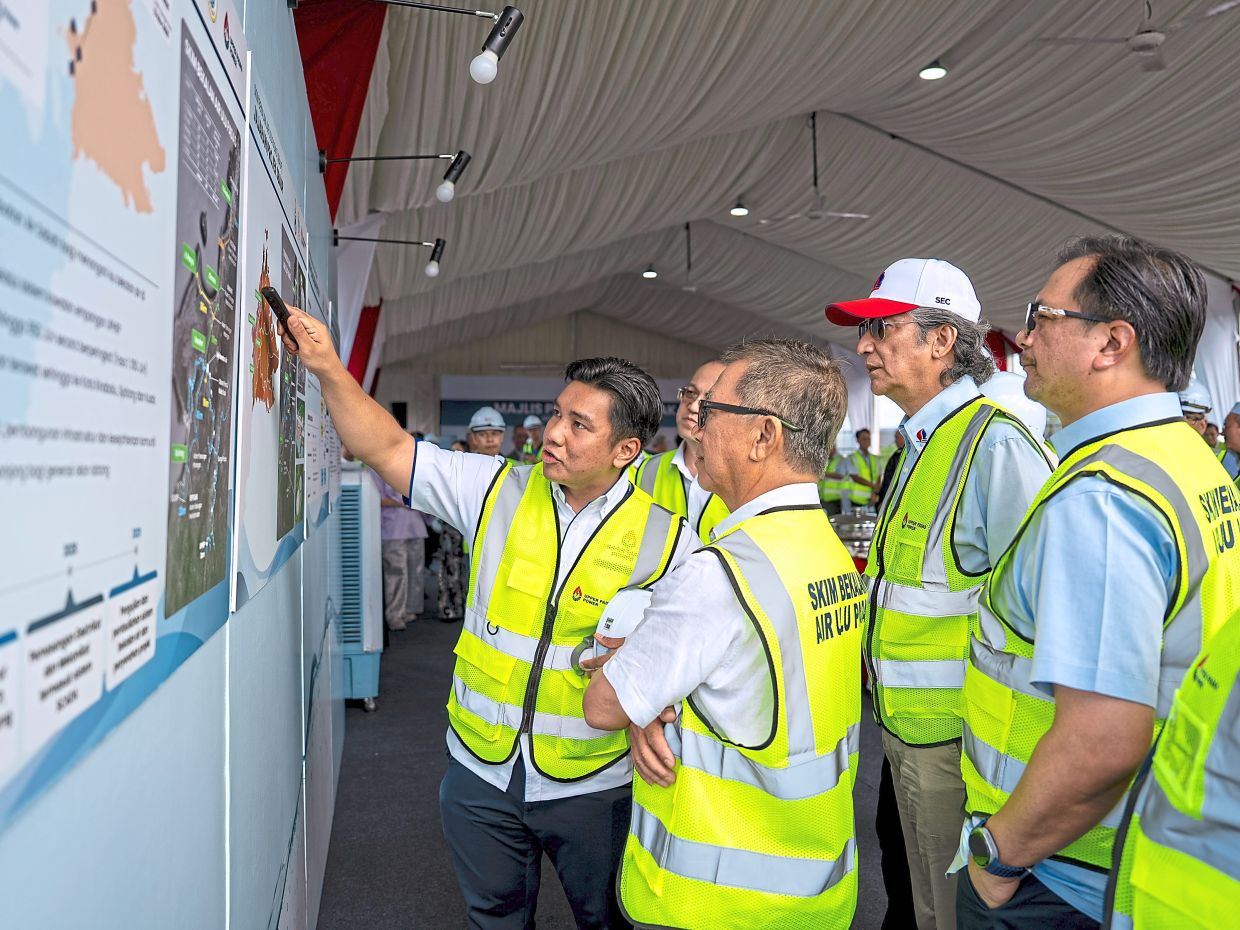
Sabah Deputy Chief Minister I Datuk Seri Dr Joachim Gunsalam, who is also the state Works and Utilities Minister, witnessed the proceedings, highlighting the project’s significance as a key milestone in the state’s pursuit of long-term water security.
Phase 1 targets delivering 350 million litres daily (MLD) by the end of 2029 to the west coast corridor, covering Kota Kinabalu, Beaufort, Sipitang, Kuala Penyu and Kimanis.
Phase 1 includes a new treatment plant in Beaufort, with 200km of pipelines from Sipitang to Kota Kinabalu.
The scheme is ultimately designed to deliver up to 950 MLD to secure Sabah’s needs for the next 50 years.
With the recent site handover to UPPSB, Yong believes this prompt start sends a clear signal that Sabah is moving from discussion to delivery.
“Infrastructure confidence comes when people can see that a project is being implemented with urgency, discipline, and accountability.
“The public has waited long enough for reliable basic amenities. It is about giving Sabah the infrastructure backbone it needs for the next generation,” he says.
A win-win blueprint
For local businesses and regular wage earners alike, the promise of a stabilised water grid is a massive socio-economic game-changer.
“For SMEs across Sabah, predictability is everything. When Phase 1 adds 350 MLD to the system, it will completely change the economic playing field,” Lu points out.
He says for Minyak VW Enterprise, a stable water source means the company can promise seamless, 24/7 mid-stream fresh water supply to the maritime sector without the constant threat of operational paralysis.
The benefits ripple directly through to F&B operators, manufacturers and tourism operators.
“It means businesses can finally dismantle their costly contingency plans. No more investing heavy capital into massive backup tanks or halting production. We can confidently scale up.
“For the everyday local, it means a vastly improved quality of life where basic necessities are completely taken for granted. It lets families focus on thriving, educating their kids, and building a future right here in Sabah, rather than worrying about when the taps will next run dry,” says Lu.
Engineering a sustainable future
What truly sets the project apart from traditional utilities is its innovative integration with the co-developed 187.5 MW Ulu Padas Hydroelectric Project (UPHEP), allowing both water and renewable energy infrastructure to share a single engineering footprint.
In simple terms, Sabah is getting a two-for-one asset.
“UPHEP is primarily a renewable energy project, but it also regulates approximately 6,000 MLD of raw water through Sungai Padas for SBAUP,” Yong points out.
This means Sabah can use the exact same drop of water to generate clean electricity first, before releasing that raw water downstream for storage, treatment and household distribution.
This clever integration eliminates the need for a separate water-retention dam, lowering overall system costs and significantly reducing land disturbance.
While the International Energy Agency notes that hydropower remains the world’s largest source of renewable power, Yong stresses that large infrastructure must be subjected to strict environmental, social and technical safeguards.
UPHEP has undergone environmental scrutiny through the Sabah Environmental Protection Department and is seeking certification under the internationally recognised Hydropower Sustainability Standard.
This development has injected immense confidence into the industrial sector as well, particularly for the Sabah Oil and Gas Industrial Park (SOGIP).
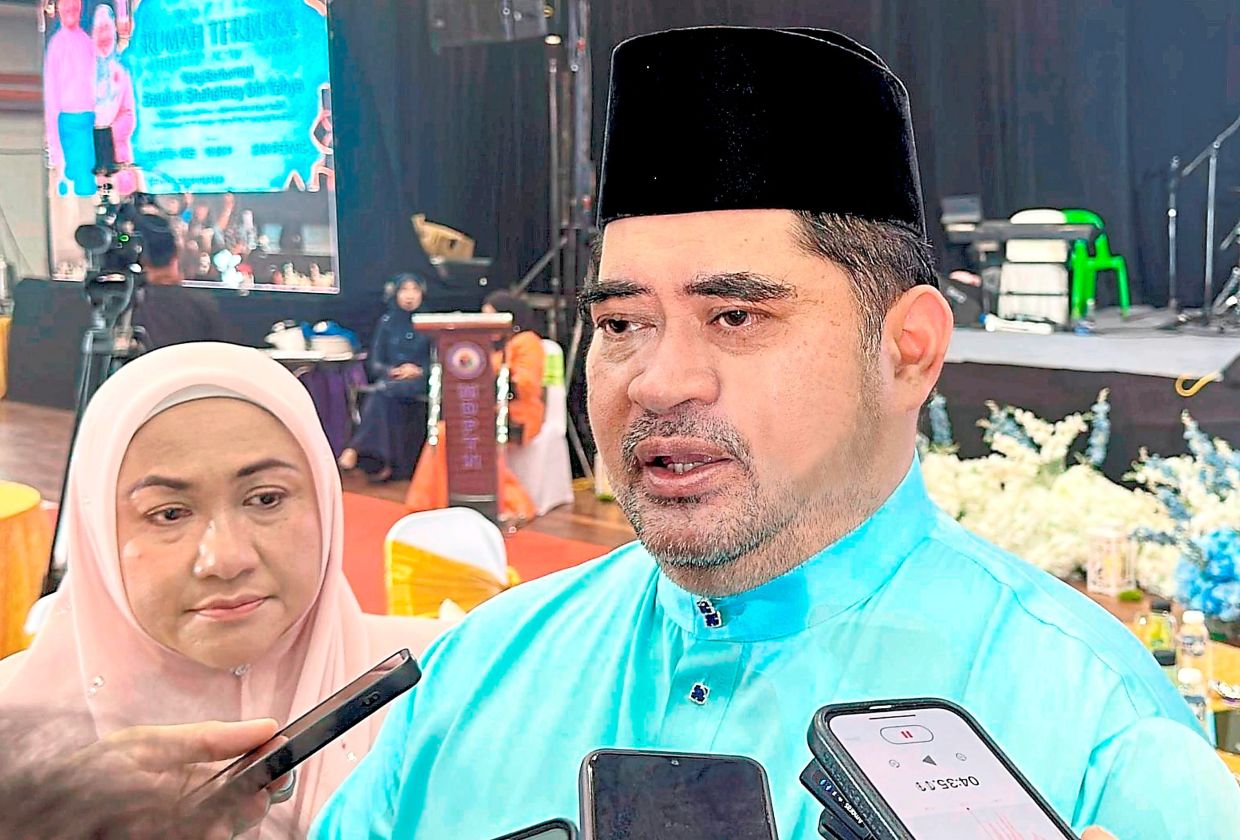
“SBAUP is an assurance to the community, businesses and industries that the supply of water to the western side of Sabah would be adequate for many years to come,” says SOGIP chairman Datuk Shahelmey Yahya.
“The target timeline of completion for Phase 1 in 2029 augurs well with the timeline for our present big investor in SOGIP.”
Delivering on the promise
As construction begins, the focus shifts squarely onto execution.
“If you think of Sabah’s economy and community as a body, water is the lifeblood, and infrastructure is the heart that pumps it.
“Right now, that heart has been struggling, which leaves the rest of the body sluggish. Once SBAUP is fully operational, a healthy ‘heart’ means long-term security,” Lu says.
By securing a stable water grid, greater Kota Kinabalu will become a magnet for foreign and domestic investments, creating high-quality jobs for local youth and reversing the state’s brain drain.
“As a local community, Sabahans are incredibly resilient, but we’ve been patient for a very long time.
“We are ready to see this project cross the finish line so we can finally close the chapter on water disruptions and let Sabah run at its full potential,” he says.