KUALA LUMPUR: Malaysia must shift its welfare approach from dependency to empowerment by helping aid recipients secure jobs, build businesses and support their families independently, says Datuk Seri Dr Ahmad Zahid Hamidi.
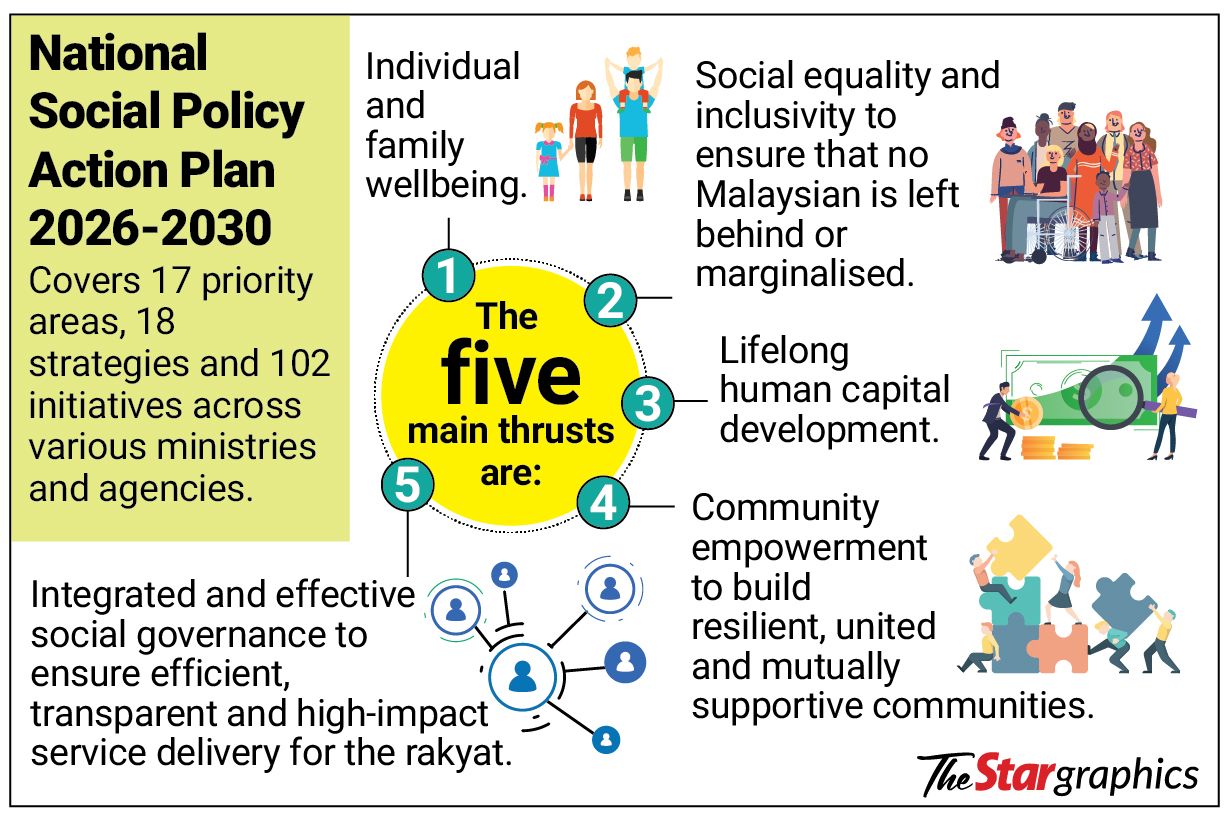
The Deputy Prime Minister said this was among the three major thrusts of the National Social Policy Action Plan 2026-2030 that he wanted a greater focus on.
“Providing assistance is crucial, especially to those in need. The end goal of social policies, however, is not to ensure these groups remain only as aid-recipients.
“We want to uplift them where they can stand on their own, work, run businesses and contribute towards the future of their families,” he said in his speech when launching the National Social Policy Action Plan 2026-2030 yesterday.
Ahmad Zahid also stressed the importance of moving away from working in silos when it came to tackling social challenges.
“I appreciate the engagements, which have since involved various ministries, related agencies and state governments.
“When it comes to implementation, this cooperation must be expanded to local authorities, non-governmental organisations, the private sector, academia and communities.
“Social challenges cannot be resolved by solely one party. The whole ecosystem must move together.”
The Deputy Prime Minister added that measures must be preventive instead of reactive.
“We should not wait until the family institution collapses before we take action. We should not wait until our children are impacted before we act, what more waiting until our elderly are sidelined before we show sympathy.
“Good social policies must be there before all of these happen.”
Ahmad Zahid also said that all initiatives must have measurable key performance indicators, strict timelines and constant monitoring from the National Social Council.
“We too, must monitor the progress of initiatives and improve weaknesses when needed.”
He added that the National Social Policy 2030 must truly be a catalyst towards improving the country’s social responsibility.
In her speech at the same event, Women, Family and Community Development Minister Datuk Seri Nancy Shukri said the National Social Policy Action Plan comes at a significant period, with Malaysia facing increasingly complex challenges such as a rising elderly population, socioeconomic pressures and mental well-being.
According to her, figures show that Malaysia is expected to be an ageing nation by 2030, which requires a comprehensive social support system that is inclusive, strong and responsive.
Nancy added that the policy would be mobilised in a comprehensive and rakyat-centric approach.
“The focus is on strengthening the family institution and improving community well-being among others.
“It will also be mobilised through four strategic focuses – prevention, empowerment, promotion and protection,” she said.
She explained that prevention would focus on early measures to avoid social challenges while empowerment was aimed at uplifting individuals, families and communities to be independent.
“Promotion, meanwhile, is towards improving awareness and practice towards positive social values, while protection aims to ensure marginalised groups are always supported and given relevant intervention measures, according to their needs.”