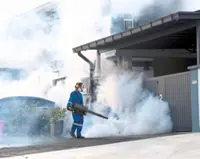
PETALING JAYA: A proposed law to tighten fumigation regulations is seen as a vital step to address safety risks in an industry where the use of toxic gases has previously led to severe consequences.
Industry stakeholders said the move reflects long-standing concerns and regulatory gaps in a sector where mistakes can be deadly.

She said fumigation remains one of the most high-risk operations in pest control due to the chemicals involved.
There have been past incidents involving deaths linked to non-compliance with standard operating procedures, underscoring the need for tighter enforcement, she said.
Currently, fumigation work is licensed primarily at the individual level, meaning only certified personnel are permitted to carry out and supervise operations involving toxic gas release.
While this ensures operators are trained, Intan said it also limits accountability.
“Previously, if something went wrong, action was taken mainly against the individual. The company itself was often not directly affected,” she said.
This, she said, has created loopholes, where individuals whose licences are suspended may still continue working under different arrangements, without addressing compliance issues within companies.
Intan pointed out that similar dual-licensing systems already exist in other areas of pest control, where both individuals and companies must hold valid licences and can face suspension if regulations are breached.
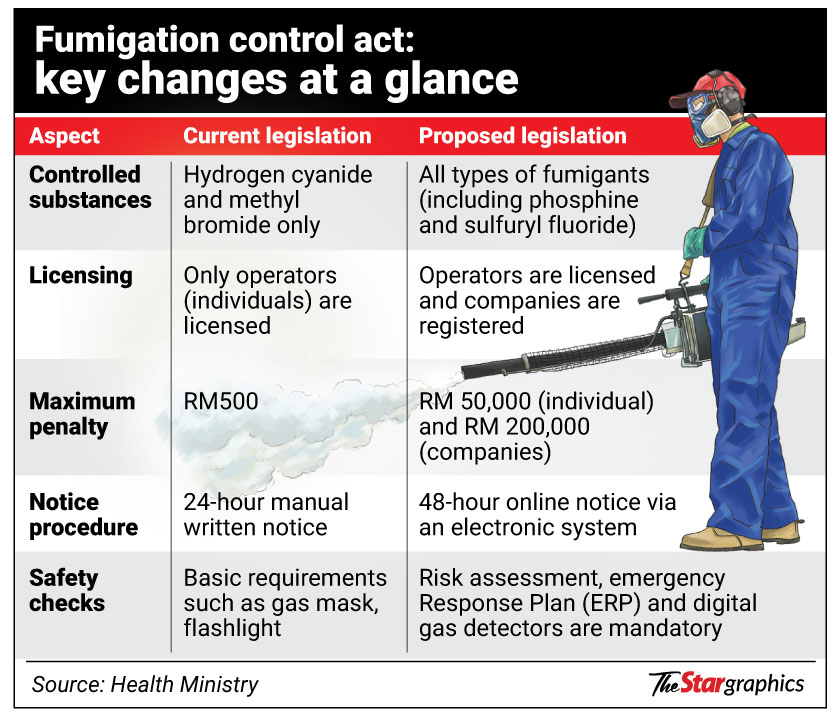
“The proposed law would ensure a more balanced system. If a company fails to ensure proper procedures are followed, then the company should also be held accountable,” she said.
Fatalities and illnesses have been reported in Malaysia in relation to fumigation involving toxic substances such as methyl bromide and organophosphate-based pesticides.
This includes a case last year in which a worker was killed and several others injured following a fumigation exercise at a Penang factory.
Pest Group executive director Gerard Liew Chieh said the proposed regulatory shift could improve accountability by tying licensing closely to companies rather than individuals.
Citing Indonesia as an example, he said licensing there is issued to companies rather than solely to individuals.
He said under the current system, licensed fumigators can move between companies relatively easily, which can create challenges for operational continuity.
“If licences are tied to companies, it creates greater stability and responsibility within organisations,” he said.
He acknowledged that the proposed changes could increase operational costs due to licensing fees and compliance requirements, but said this may be necessary to strengthen industry standards.
“The barrier to entry will be higher, but that means only properly structured and competent companies will remain in the market,” Liew said.
Occupational health expert Prof Dr Rosnah Ismail of Universiti Kebangsaan Malaysia said the proposed law represents an important shift towards strengthening both public and occupational health protection through more objective, science-based safety controls.
She said the move reflects the need to shift away from subjective methods of assessing safety, such as reliance on smell, as many hazardous gases can reach dangerous levels without being detectable.
“The absence of odour does not mean safety,” she said, adding that exposure should be assessed using scientific limits that separate workplace standards from public guidelines.
She said fumigants such as phosphine and sulfuryl fluoride are highly toxic even at low concentrations and require strict control measures.
“The chemicals cause serious health effects, including respiratory and neurological damage, particularly among vulnerable groups such as children, the elderly and pregnant women,” she said.
Prof Rosnah said that effective safety management must prioritise risk control measures, including replacing hazardous chemicals where possible, along with proper monitoring and emergency plans and readiness to use atmosphere-supplying respirators for first responders.
“Furthermore, the presence of specific antidotes is vital. Authorities must clarify responsibility for stockpiling these life-saving treatments to ensure a rapid response to fumigant toxicity,” she said.