PETALING JAYA: A new fumigation law which will introduce major changes in protecting public safety is being planned to replace the seven-decade-old Hydrogen Cyanide (Fumigation) Act 1953.
The necessity for the proposed Fumigation Control Act is in view of the limited number of chemicals that come under the existing law.
“It was originally drafted to control only hydrogen cyanide gas, before being expanded to include methyl bromide in 1978,” the Health Ministry said, in reference to the current law which is well over 70 years old.
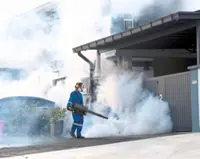
Fumigation is the process of using poisonous gas (fumigants) to eradicate pests, frequently performed at ports, on ships, in warehouses, commercial premises and residential areas.
“The industry today uses various other gases such as phosphine, ethandinitrile and sulfuryl fluoride which are not specifically controlled under the current Act, leading to uncontrolled safety risks,” it said.
This is one of the primary reasons that warranted a new law, the ministry said in a draft document of the proposed Act.
Furthermore, the fines are too low currently, with the maximum fine being only RM500, an amount that is no longer a deterrent in preventing negligence that could result in death.
“The old Act only licenses individuals [operators] but does not mandate company registration. This makes enforcement difficult against companies that fail to provide complete safety equipment or insurance coverage.”
Under the proposed new law, individual operators will be required to pass a fumigation examination, be physically fit to work, and undergo continuous accredited training.
Companies must be registered as fumigation companies and must possess public liability insurance and calibrated equipment.
“The manual notice system is abolished, any party wishing to carry out fumigation work is required to submit a job notice 48 hours before starting work via an online system,” the ministry said.
Every work site must display a warning sign with a QR code for enforcement verification purposes, it added.
A high-risk fumigation permit is also required for sensitive areas such as hospitals, passenger ships or residential areas.
The ministry said a special permit from the Health director-general will be required before fumigation exercises can be carried out in sensitive areas.
Licences will no longer be focused only on individuals and will include companies.
Also, smell tests will no longer be allowed.
“The use of the sense of smell to determine safety is prohibited. The issuance of a Certificate of Clearance can only be made after gas readings are confirmed safe using a calibrated digital detection device,” it said.
Companies will have to be prepared for registration costs, employee competency training, and the procurement of modern gas detection equipment.
“Poisoning risks due to gas leaks at ports, cargo, or premises near public areas can be minimised through buffer zones and strict permits,” it said.
The ministry said that these moves are being planned to provide the public with a higher assurance of safety.
The new law is also expected to strengthen Malaysia’s biosecurity reputation at the international level by adhering to the latest standards for handling hazardous chemicals.