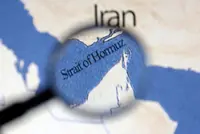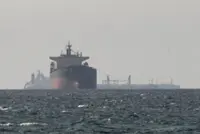
NEW YORK: Iranian gunboats fired on commercial ships in the Strait of Hormuz while the US intercepted two of the Islamic Republic’s oil tankers.
A cargo ship and a container vessel came under fire in the waterway on Wednesday (April 22), according to a UK Maritime Trade Operations social-media post. Meanwhile, US Central Command refuted a report by analytics firm Vortexa that said Iranian supertankers had evaded the American Navy blockade.
The tankers Hero II and Hedy were intercepted by US forces earlier this week, and the vessel Dorena has been under escort of a US Navy destroyer in the Indian Ocean, Central Command said in a post on X. Since the US blockade began, naval forces have seized an Iran-linked cargo vessel, boarded a sanctioned oil tanker east of Sri Lanka, and turned back at least 29 vessels.
Separately, Iranian state TV reported that the Islamic Revolutionary Guard Corps (IRGC) had seized the MSC Francesca and Epaminondas in Hormuz and brought them to shore for inspection.
The Wall Street Journal reported that both came under attack, as well as a third, the Euphoria.
Technomar Shipping Inc., the manager of the Epaminondas, confirmed the vessel’s bridge was damaged after being fired upon and that its priority is the ship’s crew. The managers of the other two vessels, as listed on the Equasis international shipping database, didn’t immediately respond to requests for comment.
The moves underscore Tehran’s increasingly aggressive stance in the face of US pressure at a time when talks between the two sides are in limbo.
They also demonstrate the challenges of resolving a conflict that has eliminated a billion barrels of oil supply, according to top traders.
Supertankers
The Iranian crude carrier Diona appeared to turn back after entering the Arabian Sea from Hormuz, TankerTrackers.com co-founder Samir Madani said. Iran shut Hormuz shortly after coming under attack from the US and Israel at the end of February.
The latest incidents demonstrate that, while US President Donald Trump has said that Iran’s navy has been destroyed, Tehran’s deployment of small boats to target commercial shipping remains a terrifying prospect.
New Approach
Washington initially responded to the closure of Hormuz by encouraging the Islamic Republic’s barrels to flow to buyers in an attempt to contain spiralling oil prices. It switched tactics on April 13, imposing a blockade of its own on Iranian shipping.
Vortexa reported that Hero II and Hedy moved into the Arabian Sea, citing satellite imagery to hone in on the Iran-flagged very large crude carriers, or VLCCs. Although "voyage signals” earlier indicated Hero II and Hedy were moving outbound, Vortexa has since updated its data to denote their interdiction, a company spokeswoman wrote in an email.
"Situations like this are inherently fluid,” the Vortexa spokeswoman wrote. "In a disrupted operating environment, initial signals can evolve quickly as additional data and confirmations come in. Our approach is to continuously reassess and update our analysis to reflect the most accurate picture of what is actually happening on the water.”
Tracking vessels via satellite imagery can be challenging because coverage typically isn’t continuous, and identifying a vessel seen from above is difficult when distinguishing features like the name aren’t clearly visible.
After the war entered its eighth week, Trump extended a ceasefire indefinitely on Tuesday, but said the US blockade would remain in place. Around 800 vessels are still stuck in the Persian Gulf, with the International Maritime Organization saying this week it’s working on an evacuation plan that’s contingent on a de-escalation of the war.