PETALING JAYA: Malaysia must strengthen efforts to secure stable oil supplies amid ongoing global shipping uncertainties and production disruptions, as it consumes roughly twice its daily crude output, economists say.
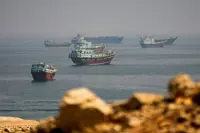
Economist Geoffrey Williams said the reopening of the Strait of Hormuz is good news, provided that it holds.
“There will still be a backlog, and the situation will take some time to return to normal,” he said when contacted yesterday.
Williams predicted that it could take between three and six months alone to clear the oil in transit and a period of between 12 and 18 months to fully restore production from damaged and disrupted refineries and oil terminals.
“Hence, it makes sense for Petronas to look for alternative sources, even from Russia.
“While this may raise some concerns with other countries, including the European Union and the United States, the priority is to secure supply,” said Williams, who is the founder and director of Williams Business Consultancy Sdn Bhd.
He added that Malaysia’s overconsumption of oil, petrol and diesel comes down to factors including very low subsidised prices.
According to the Finance Ministry, Malaysia consumes about 700,000 barrels of oil per day, double its daily production of 350,000 barrels, necessitating continued crude oil imports to meet domestic demand.
Data from the ministry showed that 48% of the country’s petroleum product supply is refined by PETRONAS, while the remaining 52% is handled by other domestic oil companies.
While 48% of Malaysia’s crude oil is produced locally, the country relies on imports for the remainder.
Of these imports, 38% are through the Strait of Hormuz, 7% are sourced from South-East Asia and West Africa, and another 7% are from the Middle East and other regions.
“The current challenges are exposing the vulnerability of subsidies and the fiscally unsustainable costs.
“Hopefully this will act as a catalyst for further reforms and subsidy rationalisation.
“If petrol and diesel are more expensive, consumers will change their behaviour and cut consumption and waste,” said Williams, who also proposed tiered pricing be used for oil, petrol and diesel.
Economist professor emeritus Dr Barjoyai Bardai said the government’s decision to allow PETRONAS to explore negotiations with Russia for crude oil supply is a positive step, although it may come at a higher cost.
“Malaysia should definitely engage with Russia, and it is important to use every opportunity available to secure sufficient oil supply. That is the main concern,” he said.
“I think we can also look at biomass, as there is significant potential there. We have large oil palm plantations as well as padi fields, and these can generate energy,” he said.
“That would at least help in electricity generation through biomass.”
He added that Malaysia’s power generation mix is still heavily dependent on fossil fuels, including coal, and said greater efforts are needed to develop alternative energy sources.
University of Nottingham Malaysia’s Dr Tan Chee Meng said the reopening of the Strait of Hormuz is welcome news; however, he cautioned that the security situation remains fragile with elevated insurance costs.
“Shipping volumes through this critical energy chokepoint remain subdued, reflecting the fact that the security situation is still fragile.
“As long as the conflict remains volatile, many shipping firms will judge it too risky to commit vessels to the route without clearer and more durable assurances that hostilities will not flare up again,” the assistant professor of business economics was quoted as saying by Bernama.
In the latest development, Iran’s military declared the Strait of Hormuz closed again as of yesterday evening after reopening it with more than a dozen commercial ships passing through the vital waterway.