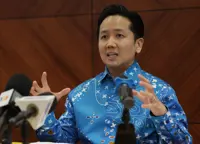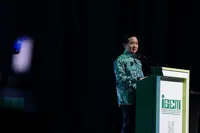
KUALA LUMPUR: Malaysia requires a robust ecosystem of proactive developers, long-term investors and diligent local authorities to transform national sustainability policies into a neighbourhood reality, according to Datuk Seri Arthur Joseph Kurup.
Speaking at the soft opening of International Sustainability Week 2026 (ISW 2026), the Natural Resources and Environmental Sustainability Minister emphasised that the transition to a greener economy requires a shift from isolated initiatives to a broad, nationwide movement.
He framed the government's role as an "enabler" tasked with providing the "clear skies and the firm ground" necessary for growth, but stressed that the private sector and local regulators must now bridge the gap between policy and practice.
"We need an ecosystem where everyone plays their part. We need developers who aim higher than the minimum standard, investors who look at long-term value over short-term gain, and local authorities who turn national policy into neighbourhood reality,” he said in his speech here on Tuesday (April 14).
Arthur said while Malaysia possesses the necessary technology and policy frameworks, the primary challenge remains one of volume.
He argued that the journey from ambition to action is already well underway, yet the country must now focus on expanding these efforts.
"What we need now is scale. We need to move from isolated 'pilot projects' to a nationwide movement that is visible in every street and every skyline,” he said.
He also highlighted that sustainability must remain "inclusive" rather than being a "luxury reserved for a few".
He described it as a pathway to improving the quality of life for all Malaysians through more resilient cities and productive workspaces.
Arthur pointed to the convergence of the International Green Building Conference and GreenScape as a critical platform for the "honest, difficult, but necessary conversations" required to co-create a lasting legacy.
He reminded the audience that behind statistics showing that buildings contribute 39% of energy-related emissions lies a "human story" regarding how future generations will live.
He also reiterated Malaysia’s commitment to achieving net-zero greenhouse gas emissions as early as 2050, supported by a target to reduce emission intensity by 45% by 2030.
To support this transition, Arthur drew attention to the RM419.2bil allocated under the Madani Economy framework in Budget 2026.
He detailed several fiscal measures intended to make the business case for sustainability "undeniable," including the Green Investment Tax Allowance (Gita), which provides a 100% allowance for companies adopting certified green technology.
Furthermore, he noted the extension of the Green Technology Financing Scheme (GTFS 5.0) with an additional RM1bil through 2026, alongside a new 10% special tax deduction for the adaptive reuse and retrofitting of commercial buildings.
"In today’s world, energy is no longer just a utility we pay for; it is a strategic resource that we must protect," he said.
Arthur warned that ignoring the shift toward efficiency risks being left behind by evolving international capital expectations and the Energy Efficiency and Conservation Act (EECA) 2024.