PETALING JAYA: Any impact from the dip in global crude oil price due to the Middle East ceasefire will be delayed, say experts.
They say it is not likely to bring lower prices at the pumps in Malaysia – at least not for a couple of months – because the current supply was purchased at the old, higher price, say experts.
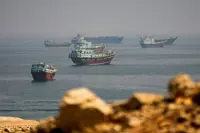
Furthermore, even though Malaysian ships have been allowed to pass the Strait of Hormuz, global commodity prices, such as for oil and natural gas, are based on future supply and demand, not today’s news.
“Even though we have seen the oil price drop since the announcement of the ceasefire – Brent crude dropped from US$110 to US$97 per barrel – the impact will not be seen immediately,” said Mazli Noor, Fellow of the Institute of Corporate Directors Malaysia.
“Crude trading is a very regulated market, whereby contracts mechanism are normally signed on a long-term basis and based on future requirement.
“Also, we need to consider the sailing time from the Strait of Hormuz to Malaysia, which is about four to six weeks ... If we purchase cheaper crude today, the earliest we can enjoy it is in almost two months, incorporating the refining process time.
“Since our own crude production is not enough to fulfil our needs, we still depend heavily on imports,” said Mazli, who is also a Society of Petroleum Engineers International professional member.
The disruption extended beyond crude oil to commodities like helium, which is critical to semiconductor manufacturers in South Korea and Taiwan, said Asia West East Centre geopolitical analyst Dr Abdolreza Alami from Universiti Teknologi Mara.
“For Asean economies, this war was never distant. The Strait of Hormuz is the jugular of the regional economy,” said Abdolreza.
Prof Dr Yeah Kim Leng, director of the economic studies programme at Jeffrey Cheah Institute on Southeast Asia at Sunway University, said consumers must not expect immediate cheaper fuel because the conflict has damaged refineries and pipelines in the Middle East.
“There is a time lag since oil must be shipped, refined into petrol and diesel and transported to local stations. That typically takes four to eight weeks.
“Refining capacity is also a bottleneck because the ceasefire does not immediately result in damaged refineries or pipelines becoming operational.
“With the Middle East supplies accounting for about one-quarter of the world’s oil supply, the war has created a persistent supply shortage.
“The third reason is that traders look ahead and will bid up contract prices now if they believe demand will outstrip supply over the next three to six months.
“As long as the underlying physical shortage has not been resolved, energy prices will remain elevated long after a ceasefire.“The return of oil prices to pre-crisis levels will need either a sustained rise in supply or a sharp drop in demand, which will happen if the global economy slows down or experiences a downturn,” said Yeah.
Oil and natural gas, he said, are traded as global commodities, meaning their prices are not set by any single country or company.
“Instead, they are determined in international markets where traders buy and sell contracts for delivery in one, three or six months.
“These traders are betting on future supply and demand. Hence, when a ceasefire is announced, that does not mean cheaper petrol at the pumps tomorrow,” said Yeah.