



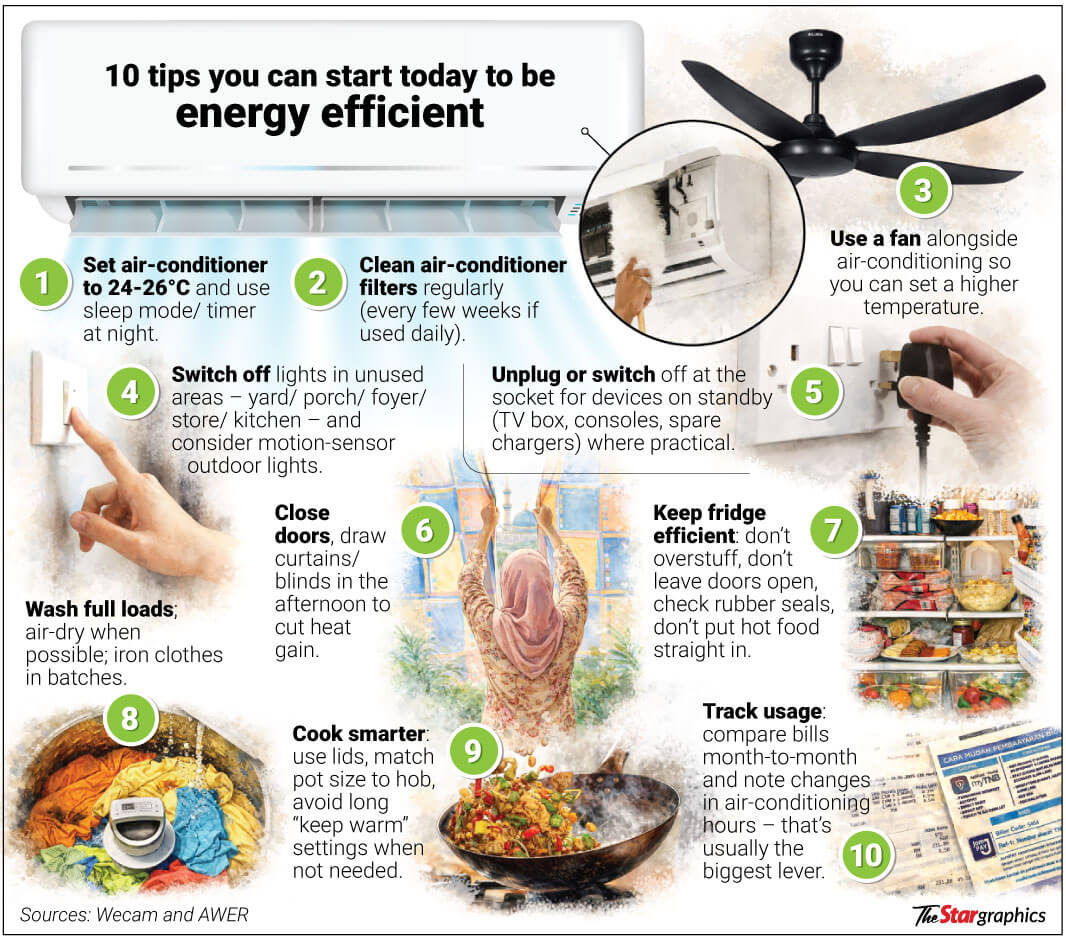
PETALING JAYA: From doing the laundry at night to timing showers wisely, small changes in daily routines can go a long way in cutting energy use at home.
Water and Energy Consumers Association of Malaysia president Dr Saravanan Thambirajah said households should shift the use of high-energy appliances, such as washing machines and water heaters, to off-peak hours whenever possible.
This not only eases pressure on the electricity grid but can also potentially lower energy bills under certain tariff structures.
“Consumers can also improve home insulation by sealing gaps, using reflective window films or installing roof insulation to reduce heat entering the house and, in turn, lessen reliance on air-conditioning,” he said when contacted.
According to the myTNB portal, off-peak hours on weekdays run from 10pm to 2pm the following day, while all 24 hours of weekends and public holidays are considered off-peak.
Meanwhile, Association of Water and Energy Research Malaysia president S. Piarapakaran said simple adjustments at home can also make a difference.
Placing a wooden cupboard against walls exposed to direct sunlight, he said, can help reduce heat transfer into a room, thereby reducing cooling needs.
“When less heat enters the room, the air conditioner does not have to work as hard to cool the space. This can reduce electricity use, especially during prolonged hot weather,” he said.
