
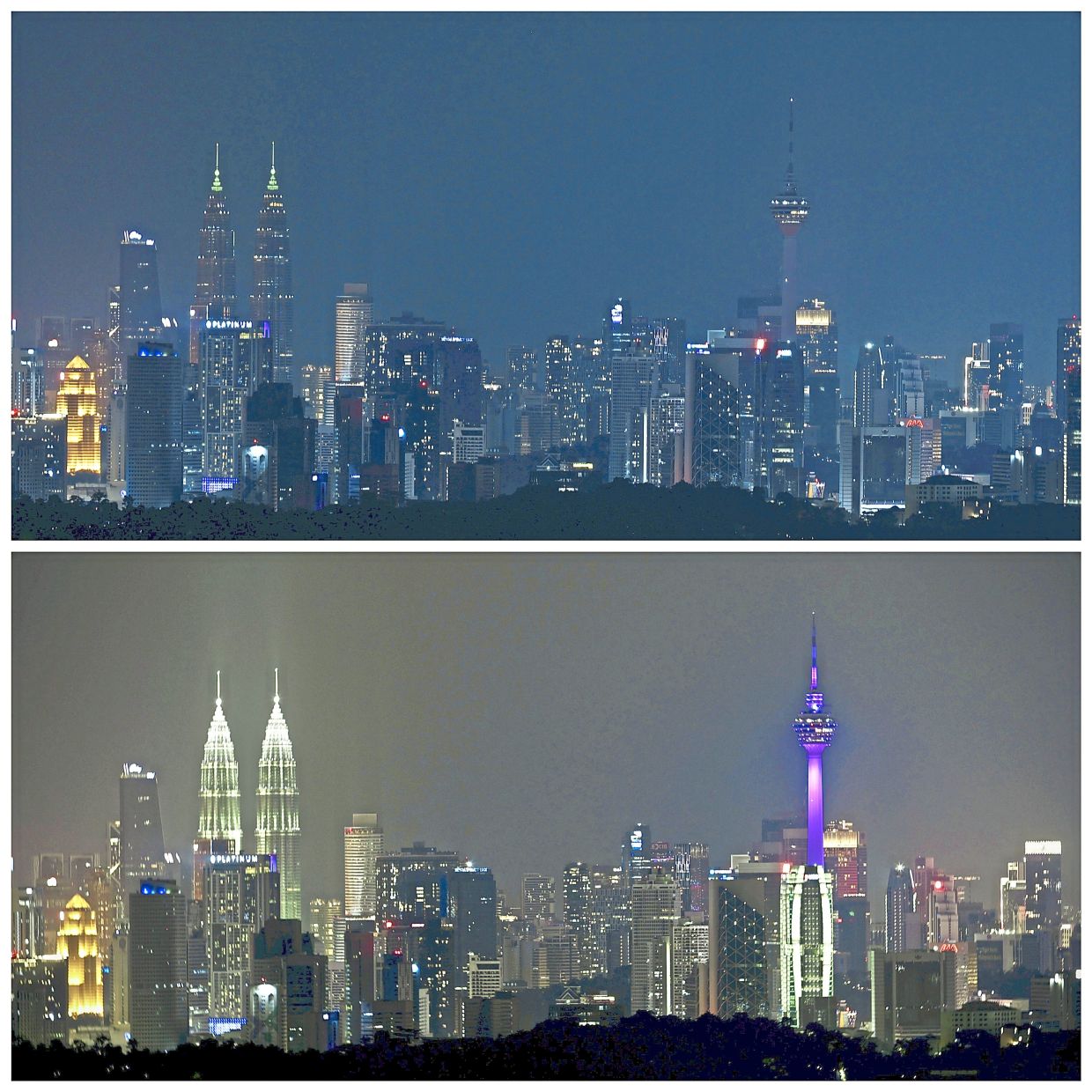
PETALING JAYA: A three-day event was held here for the first time to mark the 20th Earth Hour global event, says World Wide Fund for Nature Malaysia (WWF-Malaysia).
Held in Kuala Lumpur from Friday through the weekend, WWF-Malaysia said the event had since grown from a simple Lights-Off initiative into a platform that brings together communities to participate in youth outreach, forums and eco-friendly bazaars.
WWF-Malaysia’s chief executive officer Sophia Lim said that for the first time since 2019, the Earth Hour 2026 celebration was marked by larger-scale events featuring a scavenger hunt, a weekend bazaar, and the symbolic Lights-Off moment at Piazza, Pavilion Bukit Jalil yesterday.
“We have come a long way since the first Earth Hour took place in Sydney, Australia in 2007.
“Over the past two decades, millions of people around the world have united in what has become the biggest hour for Earth,” she said in a statement yesterday.
The Lights Off event featured an exciting lineup of live music and performances, including an Earth Hour Dance for Nature that brought the crowd together in celebration.
The highlight of the event yesterday was the symbolic #BiggestHourforEarth in the dark, where nonessential lights in Piazza, Pavillion Bukit Jalil were switched off in solidarity with the global Earth Hour movement.
Since its inception in 2007, Earth Hour has become popular for its ‘Lights-Off’ moment, aimed at raising awareness about global warming and climate change.
Among the famous landmarks that have participated in the ‘Lights-Off’ includes the iconic PETRONAS Twin Towers, the Sydney Opera House, Beijing Phoenix Center, Taipei 101, the Eiffel Tower and the Empire State Building.
Environmentalist Anthony Tan Kee Huat said that while Earth Hour is a great initiative, the public needs to adopt a more practical approach rather than merely turning off power for just one hour in a year.
“We have to realise that Earth Hour was originally designed as an initiative to encourage communities to undertake practical actions to combat climate change.
“Repeat Earth Hour actions on a monthly, then weekly basis until it becomes a norm,” he said.
He suggested setting practical individual, family and community targets, such as walking, cycling, or using public transport several times a week, as a means of reducing carbon footprints.
“This includes finding the optimal air-conditioning temperature,” he said when contacted.
“Teach families how to conduct a household energy audit and provide a list of suggestions on ways to improve energy usage.
“This will identify that the refrigerator, cooling appliances (air-conditioner, fans) and heating (water heater) are using between 70% and 80% of electricity,” he said.