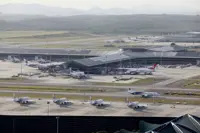
PETALING JAYA: More direct and long-haul flights and better connectivity between the two terminals are what the KL International Airport (KLIA) needs to position itself as a competitive global transit hub, say stakeholders.
Malaysian Inbound Tourism Association (MITA) president Mint Leong said Malaysia has an advantage as it is strategically located in terms of geography.
However, its southern neighbour, Singapore connects four continents smoothly and was a major shopping hub that has branded itself as a lifestyle and experience centre, giving transit passengers plenty to do, she added.
Thailand being the largest tourists hub in South-East Asia, Leong said, has the Suvarnabhumi and Don Mueang airports within Bangkok itself.
“We have a lot of domestic flights and Malaysia serves as an Asia hub, so we have more flights overall. That’s where we seem to “win.” But in terms of transit passengers, we are behind,” she said.
“We need to compete with Singapore and Thailand first before even thinking about (competing with) Dubai or Doha which have more flights,” she said.
Leong added that Malaysia already has an advantage in the low-cost carrier space with AirAsia being a homegrown airline that has become one of the leading budget carriers in the world.
If Malaysia wanted to be a leading transit hub, she said, it must have more direct flights from several countries.
To illustrate her point, Leong said the Russian tourism market held massive potential for Malaysia, but there are no direct flights yet connecting the two countries.
“But currently, certain flights are not allowed due to regulatory policies. In contrast, countries like Thailand are more flexible in allowing international flights. This affects tourism and connectivity,” she said.
Leong pointed out that connectivity between Terminal 1 and Terminal 2 was another issue.
“If I arrive at one terminal and want to connect to a domestic flight in another terminal, my luggage cannot be transferred automatically. I have to collect it, exit and then travel to another terminal to check in again,” she said.
The connectivity issue, especially the handling of baggage for passengers transiting between the two terminals, she said, must be addressed if Malaysia is to be a transit hub.
“To become a transit hub, the airport must be large, with multiple runways and have the ability to handle all types of aircraft. We do have the space to expand, which is a strength.
“We have the potential and strategic location, but we are not there yet.
“The biggest challenges are infrastructure gaps, connectivity issues, and restrictive policies,” she said, adding that with improvements in those areas, KLIA could move closer to becoming a true regional transit hub.
Singapore-based independent aviation analyst Brendan Sobie said KLIA was already a major transit hub catering to regional travel but it had limited long-haul routes.
“If you look at Malaysia’s air transport market, three local airline groups are AirAsia (Capital A), Malaysia Airlines (Malaysia Aviation Group) and Batik Air (Malindo Airways Sdn Bhd). They are all predominately regional, not long haul or intercontinental,” said Sobie.
“Malaysia Airlines for example only has routes to London and Paris while AirAsia only has Istanbul and that’s relatively new.
“One can’t just launch long-haul flights so easily. They don’t have the right aircraft type or strategy.
“But that doesn’t mean KLIA doesn’t have transit traffic – they have lots, it’s just differently positioned and its strength is regional, not long-haul,” he added.
To be an intercontinental or long-haul transit hub, he said Malaysia needed a strong local long-haul carrier, and that long-haul aircraft required a massive investment.