PETALING JAYA: Several iconic fish species are now slipping quietly into rarity, their disappearance reflecting a deeper crisis unfolding beneath the country’s waters, says the Fisheries Department.
Its director-general Datuk Adnan Hussain said species such as the humphead wrasse (ikan mameng), the giant guitarfish (ikan yu kemejan) and bottlenose wedgefish (pari kemejan), are increasingly scarce, and in some cases, nearing extinction.
He said the decline has reached a worrying level, with some species now rarely sighted in local waters.
“These species were once part of our seafood culture, but today, their populations have dropped drastically, with some almost no longer found in many parts of Malaysia,” he said.
ALSO READ : Protect habitat to halt dwindling numbers
The humphead wrasse, he said, is classified as endangered and is now recorded at very low abundance levels, with monitoring reports showing it is “almost not found” in many reef areas.
As for the giant guitarfish, he said that landing records show just two individuals recorded the species in 2018 and only one in 2021 in Kota Kinabalu, underscoring how rarely the species is now encountered.
The bottlenose wedgefish, although still landed more frequently, is facing severe population stress, he added.
He said local studies found that at least 83% of those caught in Malaysian waters are juveniles, a clear sign of over exploita- tion before the species can reproduce.
Adnan noted that broader fish stocks, particularly demersal species such as groupers (ikan kerapu) and snappers (ikan merah), have also suffered sharp reductions over the decades.
“Surveys indicate that catch rates in some areas have fallen by as much as 96%, with total quantity now reduced to about 6% of original levels,” he said, describing the figures as a clear indication of prolonged overfishing.
He said snappers are now considered overexploited in coastal areas, while large schools of trevally (ikan talang) are less frequently seen.
Spanish mackerel (ikan tenggiri), he said, are still landed, but large, mature specimens are increasingly hard to find, a sign of sustained fishing pressure.
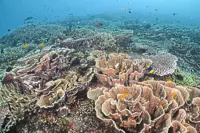
Sea bream populations, meanwhile, are declining due to the destruction of seagrass beds and mangroves, which serve as vital nursery habitats, he said.
Other species like the parrotfish (ikan kakatua) and Malaysian stingrays (ikan pari), are declining due to overfishing, reef degradation and coastal trawling.
Adnan said such patterns reflect a broader issue of non-selective and intensive fishing practices.
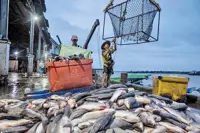
“Non-selective fishing gear, particularly bottom trawling, not only captures target species, but also juvenile fish, disrupting the natural breeding cycle and accelerating stock depletion,” he said.
He said bottom trawling alone contributes to over 45% of Malaysia’s landings, but its destructive nature damages critical habitats.
“In some cases, a single trawling operation can destroy up to 20% to 25% of marine life in the area, and the habitat may take decades to recover.
“Compounding the issue are illegal, unreported and unregulated fishing activities, pollution and the destruction of ecosystems such as coral reefs, seagrass beds and mangroves – all essential breeding and nursery grounds for marine life,” he said.
Climate change is further accelerating the decline, with rising sea temperatures, coral bleaching and ocean acidification weakening marine ecosystems.
Despite intensified enforcement, with nearly 1,000 trawling-related offences recorded between 2020 and 2025, Adnan said conservation efforts will take time to bear fruit.
“Species like humphead wrasse and wedgefish have slow growth and low reproduction rates.
“Even with strong protection measures, recovery could take several decades,” he said.
Malaysia, he added, has introduced a range of measures, including marine protected areas, seasonal fishing bans and international agreements to regulate trade in endangered species.
Still, Adnan stressed that reversing the trend will require a shift in both industry practices and public awareness.