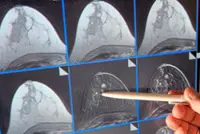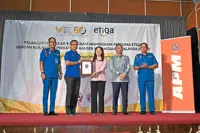

KUALA LUMPUR: Women risk harming themselves if they avoid mammograms out of fear of radiation exposure, says consultant breast surgeon Datuk Dr M. Devanand.
The Pink Ribbon Wellness Foundation founder and chairman said mammograms are a safe procedure and remain the gold standard for early-stage breast cancer detection.
“Many women worry that mammograms may damage breast tissue, but the answer is no.
“Years ago, this may have been a concern, but the machines today are far more advanced,” he said during a session at the Health Family Day programme held at Wisma MCA yesterday.
Dr Devanand added that many women also avoid mammograms and other breast cancer screenings because of fears about pain, taking time off work or receiving bad news.
He said self-breast examinations can be carried out at home and noted that many breast cancer cases are first detected by the patients themselves.
“Look out for any abnormal feeling or visible changes in the breast.
“However, this is still not a substitute for a mammogram,” he said, adding that about 95% of breast lumps are not harmful.
Highlighting the rising prevalence of breast cancer among Malaysian women below the age of 50, he said maintaining a healthy diet, exercising regularly, managing stress and getting enough sleep can help reduce cancer risk.
“We cannot rely only on hospitals and NGOs to fight breast cancer. The whole community must come on board.”
Separately, Tunku Abdul Rahman University of Management and Technology’s Datuk Dr Monna Ong Siew Siew said families must be open to therapy to build healthier relationships.
Ong, who holds a Doctor of Philosophy in Psychology, pointed to a growing trend of emotional detachment in modern families.
She cited the example of a primary school pupil who retreated to his room daily to speak with an artificial intelligence (AI) system.
“The mother was very saddened when she discovered this, realising the child preferred talking to an AI because the computer would praise and agree with him,” she said during another session.
She explained that conflict often arises from a misunderstanding of brain science, where individuals react on a “nervous system” level rather than a rational one.
“When two people are in conflict, they cannot communicate rationally.
“A child’s development is not yet mature, so they can be very impulsive. As parents, we need to sense the child’s emotions and help them understand and accept them.”
Ong warned that constant criticism can lead to negative self-recognition.
“If you label a child ‘stupid’ or ‘lazy’, 99% of the time the child will eventually see themselves that way. Instead of scolding a child over phone usage, a parent could say they are worried and hope to discuss setting a time limit together,” she said.
She added that this approach, together with an openness to therapy, allows for “repair” in relationships, something she said is more important than being a perfect parent.