KUALA LUMPUR: Malaysia will present an explanation to the United States (US) regarding allegations of structural excess capacity and production, as well as the use of forced labour. These issues fall under Section 301(b) of the US Trade Act of 1974.
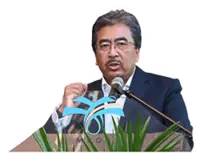
Investment, Trade and Industry Minister Datuk Seri Johari Abdul Ghani said that even if Malaysia has excess production capacity, it does not mean the country is dumping products into the US market.
"Even if we have excess capacity, as long as we are not dumping, we can substantiate our costs," he told reporters after a casual dialogue session in Kampung Baru here on Friday night (March 13).
Johari said the matter can be clarified by comparing product selling prices in the domestic market with export prices.
"Prices in Malaysia can be compared with our export prices. If prices here are similar to those of our export goods, it cannot be said that we are practising dumping," he said.
He said dumping generally occurs when a product is sold at a lower price in the export market than in its country of origin.
"For example, if the price in Malaysia is RM100 but we sell the product in another country for RM80 or RM90, that can create the perception that we are trying to undercut competitors in their market," he added.
Johari made these remarks when commenting on the US move on Wednesday to begin investigations into the acts, policies and practices of 15 trading partners, including Malaysia and the European Union, under Section 301(b), concerning structural excess capacity and production in the manufacturing sector.
Most recently, the US — through US Trade Representative (USTR) Ambassador Jamieson Greer — launched on Thursday investigations into 60 economies under Section 301(b) of the Trade Act of 1974, a provision created, among other things, to address failures to act against forced labour.
Among the 60 countries involved are major US trading partners, including seven Asean countries: Cambodia, Indonesia, Malaysia, the Philippines, Singapore, Thailand and Vietnam.
Commenting on the forced labour allegations, Johari said Malaysia has clear labour laws to ensure workers are protected and not exploited.
"Forced labour includes using workers without valid permits or paying workers below the prescribed minimum wage," he said.
He said the employment of underage workers is also prohibited under national law.
"The government has set a minimum wage. If a company pays below that rate, it is not allowed. Likewise, employing underage workers is prohibited," he said.
He added that compliance with labour laws and employment standards is crucial to ensuring Malaysian products are not associated with forced labour issues in international trade. – Bernama