
Group of student protesters gathers outside Parliament to call for its abolition
KUALA LUMPUR: The Higher Education Ministry is prepared to listen to all grievances raised by student protesters who gathered outside Parliament over the Universities and University Colleges Act (Auku) 1971, says Datuk Seri Dr Zambry Abd Kadir.
The Higher Education Minister said his ministry is open to reviewing Auku, an Act he referred to as dynamic.
“We can reassess the processes under it, especially if there are gaps or areas that could be improved,” he said when wrapping up the debate for his ministry on the motion of thanks for the Royal Address yesterday.
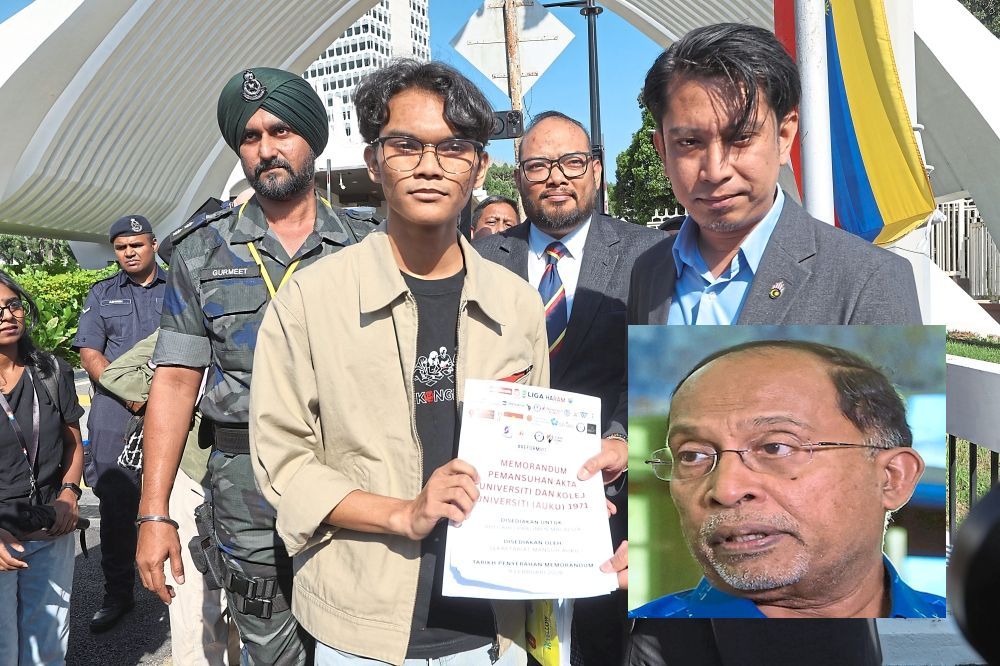
Earlier, a group of student protesters called for the abolishment of Auku.
The protesters, who said they belonged to various student groups making up the Abolish Auku Secretariat, walked to the Parliament building yesterday morning to hand over a memorandum of their demands.
Zambry said the review aligns with the ministry’s broader plan, which aims to evaluate the entire higher education ecosystem, including procedures, appointments and related mechanisms.
“For instance, the ministry is considering developing a new legal framework for higher education, which would include a review of all relevant laws, including Auku.
“I would like to see Auku examined in the context of today’s world, particularly regarding student freedom.
“Its definition cannot remain the same as in the past.
“Today, in academic terms, we talk about ‘student self-formation’ – how students can exercise both their intelligence and their freedom in a constructive way,” said Zambry.
On the appointment of vice-chancellors of public universities by the minister, Zambry said the ministry is prepared to look into this.
“We are prepared to listen to their views, including the specific concerns raised this time regarding the minister’s powers.
“They were outside earlier calling for the process of appointing vice-chancellors not to be placed entirely under the absolute authority of the minister.
“If we look back at existing legislation, in the context of appointing vice-chancellors, it is not solely or absolutely subject to the minister’s discretion.
“It is not a case of the minister arbitrarily appointing whoever he pleases,” he said.
He added that Auku stipulates that a vice-chancellor shall be appointed by the minister on the advice of the committee established under Section 4(a) of the Act, following consultations with the university board.
“I also never rejected the proposal given by the board,” said Zambry.