
DAYS begin quietly at Sabah’s traditional markets. Before sparse crowds arrive, pearl sellers lift glass covers, straighten velvet trays and trace strands once shipped far beyond the state.
As Sabah looks ahead to Visit Malaysia 2026, pearl traders in Kota Kinabalu and Sandakan cling to one hope: renewed tourist interest and long-awaited upgrades to ageing markets to revive a trade once inseparable from the Sabah travel experience.
Once, visitors left with “mutiara Sabah” necklaces and brooches – distinctive souvenirs carrying the state’s story.
Pearl stalls buzzed as travellers browsed and haggled.
Those memories linger.
At Pasar Filipin in Kota Kinabalu, the change is stark.
Periods that once guaranteed crowds – school holidays, festivals and long weekends – no longer deliver the steady stream of buyers traders once relied on.
From the outside, the market may look busy. Inside, many pearl sellers spend long hours watching visitors pass by without stopping.
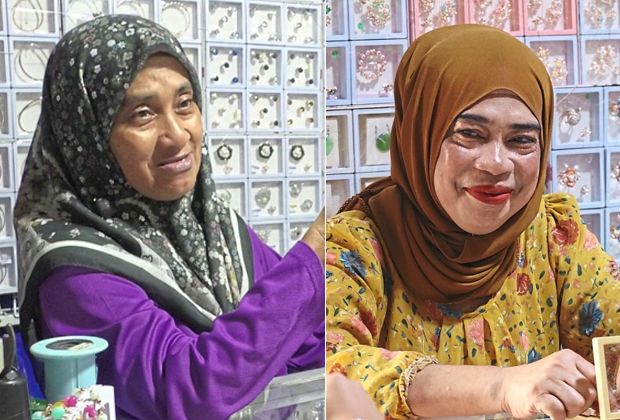
Latifah Abdul Taib, 55, has watched the shift unfold. Even during the current school holidays, she said sales have been slow.
“Sometimes you only see two, three, four people coming in,” she said.
“People walk through, they look around, but they don’t really stop. There are days when you just sit and wait.”
While pearls are still closely associated with Sabah, sellers say the reality today is more complex.
The pearls on display are a mix of natural and cultured varieties.
Some are sourced from islands around Sabah, particularly along the east coast near Semporna, where small-scale pearl farming and harvesting have long existed.
Others come from outside the state, with quality, grading and workmanship now playing a greater role in pricing than origin alone.
Pasar Filipin is home to 114 pearl stalls. Yet the pace that once saw visitors lingering at counters has faded.
Foreign tourists who spent time asking about pearls now move quickly through the market, often heading straight for the food stalls or tour pick-up points.
Latifah said visitors from China and South Korea, once among the strongest buyers, are now fewer.
“Before, they would take their time and ask about the pearls,” she said. “Now, if they come, most go straight for food. Pearls are no longer the priority.”
A few stalls away, second-generation pearl seller Minang Suhaili shared the same sentiment. For her, the difference between then and now is stark.
“The old days were better,” she said. “Before, people really came to buy. Now, if there are no tourists, there are no buyers.”
Her family has been in the pearl trade for about two decades.
In the past, brooches and bracelets were especially popular among visitors from Peninsular Malaysia. Today, sales are unpredictable, even during the school holidays.
Sandakan’s woes differ but sting just as much.
At Central Market, pearl stalls sit upstairs, out of tourist sight.
Erwina Datu Ladjah, who has traded there for about 20 years, said tourists often ask where pearls are sold, unaware that they are already in the right building.
“If they don’t ask, they might just leave without ever seeing our stalls,” she said.
Norsahadah Abdullah, who took over her mother’s stall, said the pressures facing sellers now extend beyond tourism alone.
Since the pandemic, she has seen a clear shift in local buying habits towards online shopping platforms.
“They buy online, on Shopee, on TikTok. Before, the market was where people bought everything,” she said.
Norsahadah remembers a time when customers bought souvenirs in bulk and stalls stayed open late into the evening. That peak period came in the mid-2000s.
Today, sales are uneven, and many neighbouring stalls have closed, leaving gaps where other traders once operated.
Despite the uncertainty, none of the sellers speak of walking away.
Instead, they talk about what could make a difference. Better promotion, clearer signage, improved facilities and markets that feel welcoming rather than tired.
For many, the hope tied to Visit Malaysia 2026 is not about a sudden surge in sales, but about restoring relevance to a trade that once formed part of Sabah’s identity.
Latifah said traders are not asking for handouts or short-term assistance.
“Money will run out,” she said. “What we hope for is a better place. The government should find a way to upgrade this place and make it beautiful and attractive, so when tourists come, they want to stop and spend time here.”
For now, Sabah’s pearl sellers continue to open their stalls each morning. They arrange strands and brooches that once travelled across borders and oceans, holding on to the belief that the buyers will return, and that pearls will once again be part of how Sabah is remembered.