PETALING JAYA: Fragility hip fractures among the elderly are a serious public health concern not for the fracture itself, but from possible complications that arise from prolonged immobility, says orthopaedic surgeon Dr Mohd Afiq Muhamed Fuad.
He said patients rarely die from the broken bone, but rather from the cascade of complications that followed prolonged bed rest.
“Extended immobilisation can lead to serious and potentially fatal complications such as deep vein thrombosis, pulmonary embolism, pressure sores over the sacrum and pneumonia related to prolonged lying down. These complications significantly increase mortality and adversely affect quality of life,” he said.
As such, fragility hip fractures are managed as a medical emergency and part of the national key performance indicators for healthcare delivery.
ALSO READ:
“In principle, patients with hip fractures should undergo surgery within 48 hours for those who are medically fit for surgery. Early surgery allows early mobilisation, which is crucial in reducing complications, shorten hospital stay and improve survival and functional outcomes,” said Dr Mohd Afiq, who is also a clinical lecturer at the Department of Orthopaedic and Traumatology, Hospital Sultan Abdul Aziz Shah, Universiti Putra Malaysia.
He was commenting on projections by the Asian Federation of Osteoporosis Societies which indicate that Malaysia was expected to see one of the highest increases in hip fracture numbers over the coming decade, driven largely by an ageing population.
Dr Mohd Afiq noted that fragility hip fractures are increasingly common among individuals aged 60 and above, particularly the 75 years and above group, due to longer life expectancy, better access to healthcare and higher levels of independence.
“These fractures occur because of osteoporosis, where bones become weak and brittle. Unlike younger individuals who usually require high-energy trauma such as motor vehicle accidents to sustain fractures, elderly patients may fracture their hips from a simple slip or fall from standing height,” he explained.
He added that most falls leading to hip fractures occur at home.
“Toilets at home, especially those with slippery floors and inadequate support, are among the most common locations where elderly falls occur,” he said.
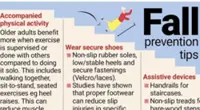
To reduce the risk of falls, he advised simple but practical measures such as wearing proper anti-slip footwear at home, using non-slip flooring, and installing grab rails in high-risk areas like bathrooms and toilets.
Private Physiotherapy Clinics Association of Malaysia president Datuk Dr Balwant Singh Bains said those between 45 and 50 should undergo a full-body assessment by a physiotherapist to help identify early stiffness and movement limitations.
“Early detection allows us to guide and empower individuals to address these areas through targeted stretching and exercise programmes, ensuring that joint range of motion remains complete and functional,” he said.
For those above 70, regular physiotherapy assessments are even more important, as age-related weaknesses and imbalances can still be corrected or managed effectively, he also said.
Dr Balwant added that even in the absence of pain, it is advisable to consult a physiotherapist periodically for a comprehensive movement and functional review.
Apart from these internal bodily factors, external environmental hazards also play a crucial role including cluttered living spaces with limited room to move freely, poor lighting, especially at night, and narrow bathrooms. He recommended installing a night light in the bedroom and motion-sensor lights throughout the house.
“Bathrooms should ideally be wider, with additional safety features such as grab bars installed near toilets and in shower areas to provide support while standing, sitting or bathing.
“I also encourage elderly individuals to sit on a stool or chair while washing their lower limbs, as bending forward often leads to loss of balance and falls,” he said.
Malaysia Coalition on Ageing chairman Cheah Tuck Wing said that it was important for the elderly to consider renovating their homes to suit their current stage of life.
“They must consider installing hand rails, anti-slip tiles, elderly friendly toilet bowls and sensors to detect movements.
“This is because most incidents are likely to happen in the house and most elderly folks tend to spend time in their homes.”
Cheah added that the government can subsidise or give incentives to install basic assistive devices at home to prevent falls like Singapore’s Seniors’ Mobility and Enabling Fund.
Likewise, community support for the elderly and ensuring that someone keeps an eye on them can help them to receive quick treatment in case of an emergency.