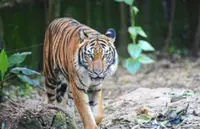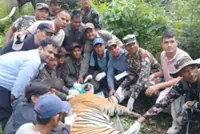
KUALA LUMPUR: The first IUCN Green Status of Species assessment for the tiger (Panthera tigris) finds that the world's largest cat is critically depleted after a century of population decline, but also shows that conservation provides hope for recovery of tigers across their range.
Led by scientists from the Wildlife Conservation Society (WCS) in collaboration with WWF, Panthera and other partners under the auspices of the IUCN Species Survival Commission (IUCN SSC) Cat Specialist Group, the assessment is the most comprehensive evaluation yet of tiger recovery potential.
The assessment classified the tiger as "critically depleted," reflecting habitat loss, prey depletion, poaching and regional extinctions.
Tigers are now extinct in nine of the 24 spatial units evaluated and are threatened in all spatial units where they still persist.
Executive Director of the Big Cat Program at the Wildlife Conservation Society and lead author of the assessment Luke Hunter said that the assessment shows that tigers, though critically depleted, are far from a lost cause.
"If tigers were restored to all suitable, historic habitat, either by natural recolonisation or reintroduction, there could be over 25,000 tigers living in the wild, over five times the current global population," he said.
Director, Tiger Program at Panthera Abishek Harihar said that recent tiger recoveries, particularly in South Asia, inspire hope for the species, highlighting the considerable potential to boost tiger populations and restore their ecological roles.
"Nonetheless, South-East Asia remains in crisis, with steep declines and local extinctions emphasising ongoing threats.
"Recovery in Thailand's Western Forest Complex and progress in Malaysia's Central Forest landscape show that targeted efforts can halt declines and facilitate range-wide recovery," he said.
Assessment co-author and Tiger Recovery Lead for WWF Thomas Gray said that tigers now occur in only 10 of the 46 countries where they once bred.
"Yet, this decline in range also represents an opportunity for conservationists to collaborate with Tiger Range Country Governments and local communities to drive tiger recovery and expand their range.
"This landmark assessment helps us plot a course for long-term tiger recovery across Asia," he added.
Concerted efforts in places like WEFCOM in Thailand, Land of the Leopard National Park in Russia, Endau Rompin and the greater Taman Negara in Malaysia, the Northeast China Tiger Leopard National Park and regionally in India, Bhutan and Nepal can result in remarkable increases in tiger numbers over the next 10 to 20 years.
In the long term, the Recovery Potential of the tiger is assessed as Medium, indicating that intensified conservation could secure survival and enable substantial recovery over the next 100 years.
The Green Status of Species framework builds upon the IUCN Red List of Threatened Species by assessing recovery and conservation impact alongside extinction risk.
The assessment authors include Luke Hunter (WCS), Abishek Harihar (Panthera), Dale Miquelle (WCS), Tom Gray (WWF), John Goodrich (Panthera), Elizabeth Bennett (WCS), Tanya Rosen (Conservation X-Labs), Matt Linkie (WCS), Elliot Carlton (IUCN/SSC Cat Specialist Group) and Molly Grace (University of Oxford / IUCN Green Status of Species Working Group).