
PETALING JAYA: The Cybercrime Bill, expected to be tabled in Parliament next month, will complement the Cyber Security Act 2024 and allow authorities to clamp down on online sexual offences involving children, legal experts say.
While welcoming the new regulation, lawyer Datuk N. Sivananthan said it may still be difficult to detect the online sale of prohibited materials unless there is a tip-off.
“The reality is that if you are doing this in a private WhatsApp group, no one will know.
“Young people must be educated if we want them to understand how predators are taking advantage of them and how these acts and images will destroy their future.
“They should also be encouraged to provide information to the schools if they know that this is going on,” he said.
Sivananthan, who was commenting on children making lewd online content for money, often transferred digitally, urged parents to be alert if substantial payments are received or if their child is displaying signs of having more money than he or she should.
“Unless parents are paying close attention to their child, it’s very difficult to know what’s going on with them.
“Technology has made it so easy for users to provide sex-related services but difficult for the authorities to detect,” he said.
On July 15, Digital Minister Gobind Singh Deo said the Cybercrime Bill is part of ongoing efforts to modernise its legal framework for digital security and strengthen national resilience against rising cyber threats.
He said it will replace outdated laws and equip enforcement agencies with the tools needed to address emerging threats in the digital ecosystem.
Criminal litigator Tripatjit Singh said in this new era, everything revolves around technology, with Internet addiction among children now becoming a problem.
Strict parental supervision is crucial, with rapid technological advancements, particularly in artificial intelligence.
“Ensure your child’s safety. Always check what they are looking for online.
“When it comes to children, it all boils down to their circle of friends. Peer pressure is a strong influence.
“Perpetrators take advantage of kids as they are vulnerable and can be lured with gifts or things they value,” he said.
Tripatjit suggested that parents should activate safe search on Google, create a child account or use parental control software to make the digital space more secure.
Asked if parents should be held accountable in cases of child pornography, he said it would depend on whether they are directly involved.
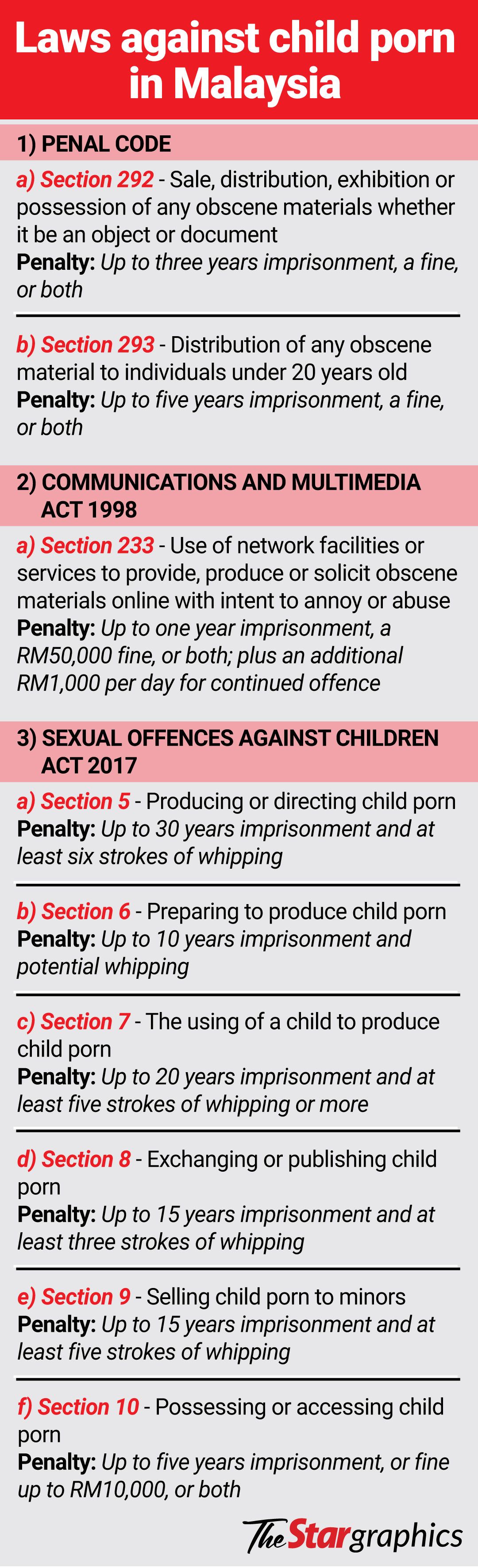
Referring to the Child Act 2001 and Sexual Offences Against Children Act 2017, he said parents can be held accountable if they are negligent in taking reasonable steps to safeguard their child.
“Pornography is illegal in Malaysia under the Penal Code, which includes possession, distribution and production of such illicit materials.
“The Malaysian Communications and Multimedia Commission has blocked pornographic websites but the public including teens and children can still get hands on such content from other sources,” he said.