KUALA LUMPUR: Countless thoughts ran through Mohd Sharrel Fahmi Baharum’s mind after reading news reports that the government is reviving abandoned housing projects.
Despite his doubts, he clung to the conviction that the government would honour its promise.
The 43-year-old father of two, including a special-needs child, took out a housing loan after purchasing a unit in the Federal Territory Affordable Housing (Rumawip) Residensi Hektar Gombak project in Kuala Lumpur in 2018.
However, the project was declared “sick” by the National Housing Department under the Housing and Local Government Ministry in April 2023.
A project is considered sick if construction work has been delayed by more than 30% compared to its scheduled progress or if the sale and purchase agreement has already expired.
Since 2020, Mohd Sharrel Fahmi, a government employee, has been paying nearly RM1,600 a month on his housing loan through salary deductions.
“Imagine paying that amount every month for almost five years now ... and I have yet to even hold my house keys.
“It’s frustrating for me, as the project was delayed several times. We buyers are exhausted and disappointed.
“My challenges may not be as tough as those faced by other buyers who bear the double burden of paying rent as well as (housing loan payments) for an unfinished home.
“Some buyers have even received late payment notices,” he told Bernama.
Another buyer, Mohd Adnan Othman, 34, said he had to postpone his plans to get married since he is still renting a house with several friends.
“My late mother always reminded me to secure a home first so that it would be easier to marry. My mother passed away in May before she could even see my house completed,” he said.
Meanwhile, the government will offer incentives to property developers who adopt the “build and sell” policy, with the aim of eliminating abandoned projects by 2030.
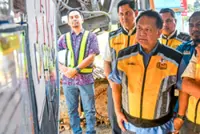
Housing and Local Government Minister Nga Kor Ming (pic) said details of these incentives will be included in the 13th Malaysia Plan.
“This new policy will be announced after the 2026 Budget, as we have already identified proactive measures to prevent abandoned housing projects,” he told reporters at the Rehda Fellowship Dinner 2025 in Ipoh on Saturday.
In his opening speech, Nga reiterated the ministry’s commitment to tabling the Urban Renewal Bill for its second and third readings in Parliament, and emphasised its importance to public welfare.
He described the Bill as a crucial step to safeguard the wellbeing of the people and revitalise Malaysia’s decaying urban areas, ensuring no one is left behind by unsafe or deteriorating housing.
“Urban renewal is not about convenience; it’s a national priority to improve wellbeing and promote sustainable urbanisation.
“We cannot allow our cities to decay while thousands of families continue living in unsafe, ageing homes,” Nga said.
He also highlighted the positive impacts of urban renewal projects, citing examples like Razak Mansion and Residensi Kerinchi, which have seen increased property values and improved living conditions for residents.
Nga explained that the Bill will be supported by mediation committees at both federal and state levels to ensure fair outcomes, with ongoing government oversight to ensure a win-win situation for all involved.
“We have conducted over 105 engagement sessions with stakeholders at the federal and state levels, as well as academic experts, industry representatives, and resident associations,” he added.
Nga called on MPs to support the Bill, emphasising that leadership requires bold decisions that prioritise national interests and public welfare.