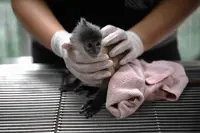
PETALING JAYA: More boots on the ground to deter poachers and stronger links with global anti-crime bodies are needed to stem the black market trade in wildlife, say experts.
This is because wildlife trafficking is done by organised local and international criminal networks with tentacles in multiple countries.
Getting local communities and indigenous groups living near or in rainforests to become the eyes and ears of the authorities is also critical in catching poachers, they said.
Wildlife expert Datuk Dr Dionysius Sharma said all protected areas (PAs) in Malaysia need a higher ratio of rangers and enforcement personnel per unit area.
“The International Union for Conservation of Nature (IUCN) recommends one ranger for every five square kilometre.
“All PAs must receive adequate funding to increase boots on the ground, and annual audits of the efficacy of anti-poaching patrols must be reported,” he said.
For non-PAs, he said, the existing inter-agency enforcement of the Wildlife Conservation Act 2010 needs to increase intelligence gathering and cooperation with local communities.
ALSO READ: Winning the war on illegal wildlife trade
“The local or indigenous communities can be excellent informants,” he added.
Another expert, Azlan Mohamed, said Malaysia does not lack commitment but capacity.
“This includes more boots on the ground, better equipment and sustained long-term funding,” said Azlan, WWF-Malaysia’s Tiger Conservation Programme chief.
He said stronger regional collaboration and intelligence-sharing are needed to anticipate and intercept syndicates instead of playing catch-up.
He said a whole-of-society approach is needed to combat the menace, which includes campaigns to curb consumer appetite for wildlife products.
“This is where government agencies, civil society, local communities, corporates, media and the public can work hand in hand.
“This means behavioural change and promoting alternatives alongside community engagement and corporate support for conservation,” he said.
Sahabat Alam Malaysia president Meena Raman said wildlife trafficking persists because such activities are highly lucrative and involved organised criminals.
“Strengthening cooperation with other agencies in the Asean region is vital. This includes seeking greater support from Interpol, the UN Office on Drugs and Crime, and the Secretariat of the Convention on Trade in Endangered Species.
“The issue is not just a domestic problem but a regional and international one,” she said yesterday.
She said offering higher rewards for whistleblowers and giving them protection will also help in tackling the problem, especially with support from the public, local communities and indigenous people.
She added that border security must also be beefed up to catch smugglers.
“Our enforcement authorities are under-resourced and lack sufficient capacity to deal with the illegal wildlife trade,” she said.
Meena also suggested the use of technology such as drones, cameras and GPS tracking devices to better monitor potential poachers.