
PETALING JAYA: The anonymity feature in the Education Ministry’s Bullying Complaints Portal will create a safer avenue to speak out without fear and prejudice for school students.
But stakeholders say the channel must be effective in tackling the issues that are raised.
National Union of the Teaching Profession secretary-general Fouzi Singon, who welcomed the effort by the ministry, said it is vital to make educational institutions safe and well-managed.
ALSO READ : Transparency and swift action key for anti-bully portal
But he said such efforts should also come with continuous reviews and improvements to ensure the effectiveness of the mechanism in tackling all the issues.
“Schools and dormitories should provide multiple channels for students to register complaints in various mediums,” he said.
“Even if the matter is small, appropriate action should be taken and students should be informed accordingly so that they know their voices are heard and taken seriously.”
Fouzi said this in response to Education director-general Dr Mohd Azam Ahmad’s statement that the existing complaints system, including the Bullying Complaints Portal, will be simplified with an option for anonymity to protect the identity of complainants and witnesses.
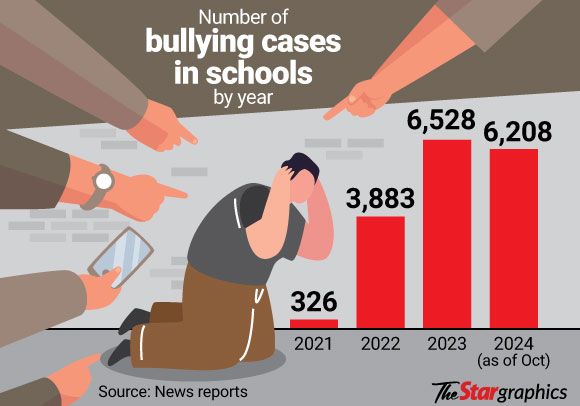
An educational institution safety reform committee will also be established, following a rise in cases of bullying in schools.
Mohd Azam also said that all state education directors and district education officers have been ordered to conduct spot checks to curb bullying in schools.
The officials will also have to visit boarding schools at night to monitor the situation and understand how the students live.
On carrying out spot checks in schools, Fouzi said it should not be a problem as long as the institutions comply with existing standard operating procedure and regulations under the guidelines for student misconduct and discipline.
“However, for repeat offenders, these students can be suspended and expelled,” he said, adding that counselling through the Welfare Department can be included if needed.
Human Rights Commission of Malaysia children’s commissioner Dr Farah Nini Dusuki also expressed support for the reform but cautioned that it is still important to listen to the children.
“You can have the most advanced system but whatever is put in place, the priority must be to hear what the children are saying,” she said.
“There’s no point if the system is not child-friendly and responses are not immediate.
“As for the spot checks, I think it is commendable as they will ensure that protective systems are in place.
“Logically, it will not be rigorous in nature, owing to the multiplicity of schools – sekolah kebangsaan directly under the government, as well as sekolah asrama penuh, sekolah agama and others,” she noted.
She said there must be a strong anti-bullying policy in place in each school, backed by a strong and vigilant monitoring system.
“Teachers and wardens must be the ones conducting regular, consistent and random spot checks in the wee hours of the night or morning,” Farah Nini added.
Parent Action Group for Education chairman Datin Noor Azimah Abdul Rahim raised the concern of how past efforts have not yielded any tangible results to systemic bullying.
As such, she said the approach needs to shift from one-off anti-bullying campaigns to a whole-school, long-term cultural change.
“Acknowledge the scope of the problem. Schools must first accept that bullying is not just ‘kids being kids’ but a serious, systemic issue that can harm mental health, academic performance and even lead to long-term trauma.
“On reporting with anonymity, this will strengthen reporting and response systems.
“Students often don’t report bullying because they fear retaliation or believe nothing will happen.
“Every report must be taken seriously with timely follow-up and clear communication to parents,” she said.
“Schools should have trained counsellors or designated safeguarding officers, not just disciplinary teachers.”
She also said parents are the child’s first and most influential role model and that if parents excuse or ignore harmful behaviour, they are teaching their children that cruelty is acceptable and empathy is optional.
“Parents should guide their children towards accountability, compassion and respect for others,” she added.