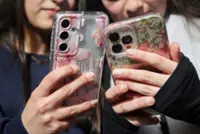

JOHOR BARU: Digital literacy among children should be improved instead of banning them from social media, say groups here, following the government’s proposal to restrict access for those under 13.
Malaysian Cyber Consumer Association (MCCA) president Siraj Jalil said it is more important to ensure children know how to protect themselves online, as they are bound to explore social media despite restrictions.
“No matter what restrictions social media platforms or the government impose, children will still explore the digital world to feed their curiosity.
“What is more important now is to make sure that they have digital literacy and know how to protect themselves online.
“In order to do this, the Education Ministry must play a proactive role, ensuring that schools are prepared to educate future generations on cybersecurity,” he said in an interview.
He added that while the Education Ministry introduced the Digital Education Policy in 2023, it lacks a fundamental pillar – cybersecurity and safety.
“There is no point in stopping our children from using social media. Yes, the Internet is a dangerous place, especially now with the rapid development of artificial intelligence (AI), which could easily be misused.
“Even adults are prone to being scammed and are vulnerable to cyberbullies. These risks do not automatically disappear once a person becomes an adult.
“We need to instead make sure everyone, especially minors, have digital literacy,” he said, adding that the MCCA is prepared to assist the government in doing so.
On July 30, Communications Minister Datuk Fahmi Fadzil said the government was studying a proposal to ban children under 13 from social media in light of the mounting evidence that it has a deleterious effect on their mental health and the increasing amount of harmful content online.
Australia recently banned all children under 16 from using social media. Other nations such as the United States, France and the United Kingdom are watching Australia as a test case of how similar limits can be imposed in their own countries.
In Malaysia, Fahmi said most platforms already do not allow children below 13 to have an account.
“Unfortunately, if you visit schools and ask pupils under 13 whether they have TikTok accounts, many will say yes. That alone is a breach, acknowledged even by TikTok,” he told the Dewan Rakyat.
He said the ministry is exploring ways to improve enforcement of the age restriction, noting that protecting children online is a shared responsibility between the government, online platforms and parents.
Between Jan 1, 2022, and July 15, 2025, service providers removed 1,443 pieces of harmful or extreme content involving children following requests from the Malaysian Communications and Multimedia Commission (MCMC).
Malaysian Education Concorde Organisation (Me’didik) chairman Mohd Ridhwan Othman said such a ban would not do much to deter children from being on social media.
“Children are smart and will find a way to have their own social media accounts.
“Even now, when social media platforms already include a minimum age, minors are still able to find a way.
“I’m not saying that we should not ban or regulate, but I think the more important thing is for society as a whole to also play its role and monitor the content children are exposed to,” he said.