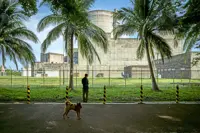
KUCHING: Malaysia has not made any decision to proceed with nuclear energy, but is in the early stages of studying its feasibility as part of the country’s future energy mix, says Datuk Seri Fadillah Yusof.
The Deputy Prime Minister said that the federal government’s current stance is to treat nuclear power as a long-term option, rather than an immediate solution, citing the complexity and safety concerns associated with the technology.
"We are not saying that we are going ahead. What has been approved is for us to consider nuclear as part of the potential energy mix for the future,” he told reporters at the International Energy Week (IEW) 2025 Summit, here, on Tuesday (July 15).
Fadillah, who is also Energy Transition and Water Transformation Minister, said that extensive groundwork is being carried out, including international benchmarking and regulatory planning.
"I’ve visited the United Kingdom, France, and Russia, and we will also be going to the United States, China, and South Korea. We are analysing all available technologies, including their safety and environmental implications,” he added.
He stressed that any move to adopt nuclear energy in Malaysia must comply with strict international processes and treaties, particularly involving the Environmental Impact Assessment (EIA) process.
Fadillah also highlighted the importance of public acceptance, saying that without widespread support from Malaysians, the nuclear option will not proceed.
"Only after we sign all 18 required international treaties, and receive approval at that level, can we even begin to consider incorporating nuclear into our national energy supply,” he said.
"We must engage the public and secure their buy-in. Without public acceptance, we cannot move forward with nuclear,” he said.
As for a potential timeline, Fadillah estimated that implementing nuclear energy in Malaysia would take at least 10 years, considering the regulatory approvals, technical requirements, and necessary public engagement.
Meanwhile, Sarawak Premier Tan Sri Abang Johari Tun Openg said that nuclear energy is not relevant for the state at this time, given its abundant and diversified renewable energy sources.
"We have hydro, gas combined cycle, and solar. With what we have, I don’t think Sarawak needs nuclear,” he told reporters, after officiating the IEW 2025 summit.
He said Sarawak remains focused on becoming a renewable energy powerhouse, targeting the production of up to 15 gigawatts by 2035 through existing clean energy sources.
"We have set targets by 2030 which is 10 gigawatts; now we are aiming for 15 gigawatts by 2035. That will come from the resources we already have,” he said.
Abang Johari also pointed out that solar technology continues to improve, and that Sarawak could emerge as a regional hub for renewable energy exports.
Looking ahead, the Premier shared that Sarawak is exploring fusion energy as a safer and cleaner alternative to nuclear fission.
"Fusion energy uses hydrogen molecules from water to produce power. It could be safer and cheaper than nuclear, and we have the water resources to support it,” he said.- Bernama