
PETALING JAYA: Alarming fire safety lapses in schools could put hundreds of students at risk, with experts warning that even a single oversight during an emergency could lead to damaging consequences.
Malaysian Federation for Occupational Safety and Health chairman Dr Abu Hasan Samad said the numbers revealed by the Fire and Rescue Department stressed the importance of schools having a fire emergency plan and more regular fire drills.
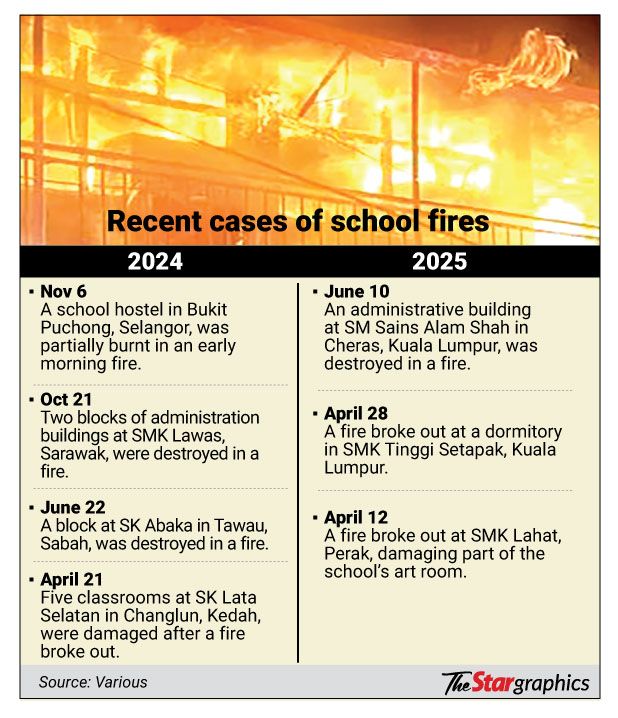
“If renovations are made to the school grounds or if there is a change in the schooling session, it is recommended that a new fire drill be conducted to account for changes in layout and people involved.
“Everyone must be ready,” he said.
ALSO READ: Fire safety lapses plague schools
In addition to being directly impacted by fires, he said students can also be exposed to other hazards like being trampled during emergencies as people rush away from danger.
Teachers and wardens too can be trained on firefighting basics so they can be first responders in any emergency situation, he said.
“It is also important for firefighting equipment to be functioning, especially during emergencies,” he added.
Another concern he raised is how firefighting equipment like fire extinguishers are not placed in the proper locations.
“While it may be documented that fire extinguishers should be located along a hallway, they could have been relocated. This may result in confusion during emergencies,” he said.
Malaysian Fire Protection Association (MFPA) president Tee Siew Chong said fire safety is a fundamental right.
“Issuing notices alone is not enough. There must be timely inspections and penalties for non-compliance to ensure that action is taken. Notices are not mere administrative warnings but highlight potential risks that could threaten lives,” he said.
Tee said many schools operate out of older buildings where wiring, emergency exits and fire detection systems could be outdated.
“There needs to be a nationwide audit and allocation of funds for upgrading these facilities.
“Every school should also have a designated person trained in basic fire prevention and emergency response who can liaise directly with the Fire and Rescue Department.
“Fire safety must be integrated into the culture of schools rather than treated merely as a checklist item,” he said.
To enhance the effectiveness of fire drills, Tee said they should include contingency situations like blocked exits.
Tee also questioned who holds responsibility for ensuring fire safety compliance in schools.
“If so many are issued, are the governing bodies, be it the Education Ministry or state education departments, tracking these cases?” he asked.
MFPA, he added, advocates for a national fire safety rating for schools, just like food hygiene grades issued to premises.
“This would create transparency and empower parents to ask the right questions,” Tee noted.
Education activist Mak Chee Kin said fire drills should be taken more seriously by school authorities.
“Currently, students seem to just line up and walk to the gathering point.
“Younger students may not understand its purpose or the dangers of a fire.
“The authorities can also play a role by getting involved in fire drills at schools to better prepare students and school staff,” said the Melaka Action Group for Parents in Education (Magpie) chairman.
Mak also proposed that selected teachers in each school be well-equipped with knowledge about fire safety.
“Another aspect that can be looked into is the storage of flammable materials and liquids in schools, as well as the measures that can be taken to mitigate potential hazards,” he said.