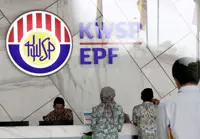
PETALING JAYA: The Employees Provident Fund (EPF) is expected to announce its dividends soon, and experts believe it could maintain the dividend rate for conventional savings at 6.3% in 2025.
In an optimistic scenario, it could even reach 6.5%.
This is despite the EPF adopting a more cautious stance over fourth quarter performance.
For 2024, both the conventional and syariah funds reported dividends of 6.3%.
The 6.3% reported last year was the fund’s strongest performance since 2017, when the retirement fund announced 6.9% for conventional savings.
Bank Muamalat Malaysia chief economist Dr Mohd Afzanizam Abdul Rashid predicted a 6.3% rate based on the EPF’s performance for the first nine months of the financial year.
“The EPF has delivered a respectable performance in the first nine months of 2025, whereby gross investment income grew by 11%.
“In addition, the improvement in global equities during the final quarter of 2025 should help contribute to EPF investment income. Hence, my sense is that the dividend rate of 6.3% can be a baseline.
“The FTSE Emas Syariah Index fell by 3.9% in 2025 while the FTSE Bursa Malaysia KLCI rose 2.3% during the same period.
“Perhaps the dividend for syariah may not be the same,” he added.
EPF reported RM63.99bil in investment income for the first nine months of 2025, an 11% rise year-on-year.
Sunway University economics professor Dr Yeah Kim Leng said EPF contributors are expected to receive another year of strong dividends given the 11% year-on-year increase in investment income in the first three quarters last year.
He is predicting dividend rates of between 6% and 6.5% for both conventional and syariah savings.
“The healthy dividend will be another factor contributing to sustained consumption and a boost in savings that typically lead to a strengthening of consumer confidence and sentiment.
“EPF’s performance is highly commendable given the elevated geopolitical uncertainties and turbulence in the global economy last year,” he said.
This will also be the first full financial year in which withdrawals from the Akaun Fleksibel have been in effect.
Prof Yeah is of the view that the Akaun Fleksibel, also known as Account 3, where 10% of contributions are channelled, is unlikely to have an impact.
“The withdrawals from the Fleksibel account are unlikely to negatively affect the overall fund size given the rising number of contributors and continuing wage increases.
“Additionally, the high and steady dividends motivate those with excess savings to keep their money with the EPF,” he added.
In November, EPF chief executive officer Ahmad Zulqarnain Onn said the 11% growth in total investment income in the first nine months of 2025, alongside 12% growth in assets under management, was a result of the execution of the fund’s strategic asset allocation.
This has allowed the EPF to participate in the recovery of equity markets “post-Liberation Day”, he added.