



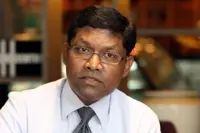
KLANG: The Malaysian Society for Academic Psychiatry (MSAP) has developed a six-month training programme for general practitioners (GPs) to help patients with mental health issues.
It said there is an urgent need for private GPs to be trained to manage such issues, given the increase in cases among Malaysians.
MSAP president Datuk Dr Andrew Mohanraj said the first batch of 49 GPs completed the programme earlier this month.
ALSO READ: Experts: It's as vital as physical health
He said GPs played an important role in identifying patients who come in with mental health issues and provide them with the first line of treatment.
“Traditionally, GPs have also been family doctors, often treating several generations of the same family.
“Patients are likely to open up their problems to a familiar face they trust," he said on Friday (May 23).
According to Dr Andrew, long waiting periods to see a psychiatrist could lead to worsening symptoms, and GPs equipped to diagnose and treat non-complex psychiatric cases can fill the void in such situations.
ALSO READ: Many Malaysians at risk of depression, says Dzulkefly
“They can also offer stop-gap treatment while referring difficult cases to psychiatrists.
“Psychiatrists, too, can refer such cases back to the GPs for follow-up treatment," he added.
He said this model had worked well in the United Kingdom and Australia, where primary care physicians are scaled up to meet the community's mental health demands.
The certificate of completion for the six-month online programme, the only one of its kind in the country so far, is jointly awarded by MSAP, Universiti Kebangsaan Malaysia and a private firm that provides healthcare analytics and consulting services.
At the certificate presentation ceremony, Academy of Family Physicians of Malaysia president Assoc Prof Dr Hazian Hamzah said the number of psychiatrists in the country was low, at just 460.
ALSO READ: Action plan will help youngsters deal with mental health issues
She said the only way to meet the country's needs is to empower primary care doctors to detect and treat common mental health problems while referring complex cases to psychiatrists.
“This will also reduce the bottleneck at specialist services while enabling a conducive therapeutic alliance, since primary care doctors and GPs are familiar with their regular patients," she added.
One GP who attended the course said he was interested in participating as he had patients with mental health issues.
“I see quite a number of cases where people come in with depression and anxiety.
“I normally speak to them to try and find out what triggered it and since most of them say they can’t sleep, I prescribe something to help them relax," he said.
He felt the training programme was timely given the increase in cases.


