

PETALING JAYA: Retrofitting older buildings to better withstand potential damage from seismic activity should be considered to prepare against potential disasters, say experts.
Universiti Teknologi Malaysia (UTM) disaster preparedness and prevention centre (DPPC) director Dr Khamarrul Azahari Razak said some of the measures include reinforcing a building’s structure in high-risk seismic activity zones.
He said bracing, bolting and reinforcing a building’s foundation, walls and roof are other available remedies.
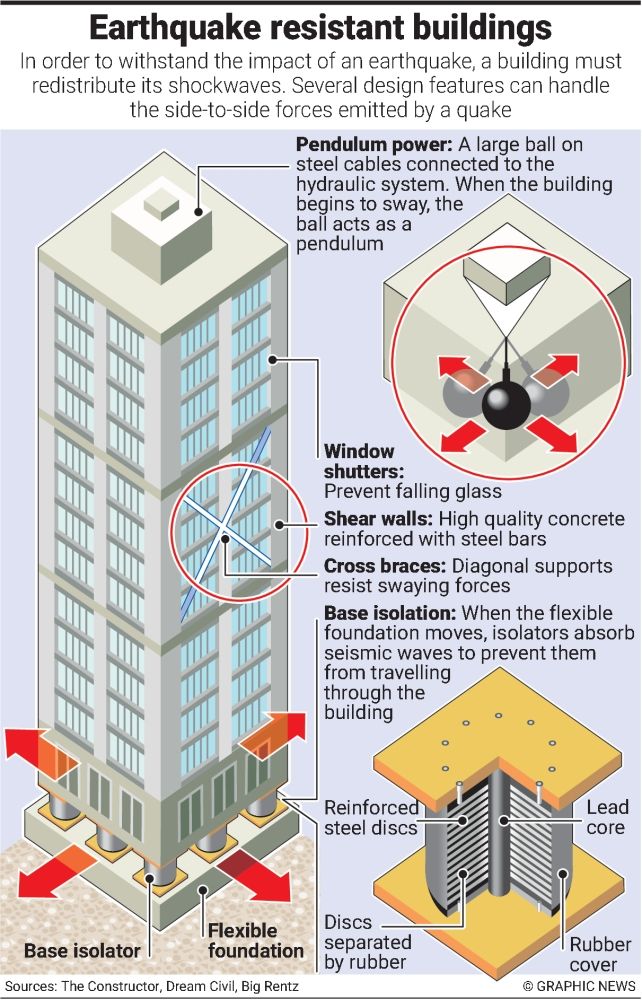
“Retrofitting is a critical process to strengthen a structure’s integrity. This is especially so for ageing buildings and those built with low-quality building material in seismically active regions,” he said in an interview.
Retrofitting may involve reinforcing the structural elements of a building by adding steel braces, carbon fibre wraps or upgrading foundation systems.
“It can be costly and time consuming, but worth the effort,” Khamarrul Azahari said.
He said there is still much to do on people-centric early warning systems, better coordination during emergencies and preparing people on how to respond to seismic activity.
“While Malaysia is not located on the Pacific Ring of Fire, we are not completely shielded from seismic activity,” he said, adding that tremors had been felt in several parts of the country, especially in Sabah.
The DPPC is a disaster risk reduction and management institute tasked with strengthening community resilience.
It facilitates disaster risk reduction and management through education, training, research and field practice in the Asia-Pacific region.
In January, a moderate earthquake with a magnitude of 5.9 struck the Minahasa peninsula in Sulawesi, Indonesia, with tremors felt in Semporna, Tawau and Lahad Datu in Sabah.
In February, a 3.8 magnitude quake was detected in Kota Marudu district.
On public awareness, Khamarrul Azahari said that increased education campaigns and local involvement would help members of the public understand the risks involved and ways to stay safe.
He said it is important to maintain partnerships between the public, private and academic sectors, as well as parliamentarians.
“This promotes resilient thinking in decision-making processes at different levels,” he added.
UTM deputy vice-chancellor (development) Prof Dr Edy Tonnizam Mohamad called for detailed evaluations when designing new buildings.
This includes taking into account the geotechnical and geological aspects of building sites by avoiding the potential for high risk, such as fault line zones.
“Buildings must also be evaluated by qualified seismic structural and geotechnical professional engineers and geologists.
“The recent incident proved that the distance from source cannot be discounted, as the integrity of buildings might be subject to resonance effects, causing major damage,” he said, referring to the earthquake that struck Myanmar last month.
MetMalaysia said the country has a low risk of earthquakes, except for Sabah.
“Most earthquakes in Malaysia occur along active fault lines there, including the Lobou-Lobou and Mensaban fault lines,” its director-general Dr Mohd Hisham Mohd Anip said.
The Lobou-Lobou Fault is near Ranau and Kundasang in Sabah’s west coast, while the Mensaban Fault lies in northern Sabah.
He said guidelines on earthquake and tsunami disaster management have been developed since 2011 and are continuously improved to ensure they keep up to date with the latest developments.
Following the enormous tsunami which hit South-East Asia in 2004, Mohd Hisham said a national tsunami early warning system was developed.
“To date, the system has been operating on par with those employed by other developed countries in detecting earthquakes and tsunamis.
“Earthquake warnings can also be issued within eight minutes upon detection,” he said.
He said these steps were being taken to empower the public against seismic threats.
This included working with the national disaster management agency (Nadma) and relevant agencies, he added.
