



PETALING JAYA: Sexual harassment, unfortunately, remains a persistent problem.
This is why academics like Prof Dr Rozanah Ab Rahman, who is a law professor at Universiti Putra Malaysia’s school of business and economics, believes the Anti-Sexual Harassment Act should cover digital harassment, including cyberstalking, revenge pornography and other forms of online sexual misconduct.
“There remain key areas for refinement to enhance its effectiveness,” she said.
“Even though the Act has provided an essential legal foundation, its effectiveness is contingent on robust enforcement, employer accountability, and stronger support structures for victims.
“Future amendments should prioritise expanding legal protections, streamlining enforcement mechanisms, and embedding the principles of fairness and accessibility within workplace policies.
“Only through such measures can we ensure a safer and more equitable work environment for all,” she said when contacted.
Prof Rozanah suggested that the Act be integrated with the Penal Code, thus allowing a streamlined process for severe cases to be escalated to impose criminal liability where warranted.
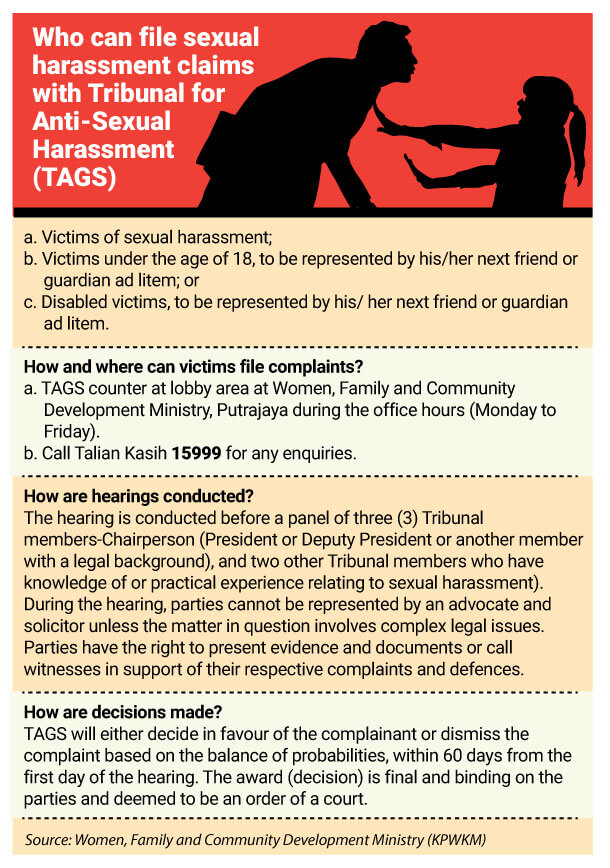
She also said complainants and witnesses should be given stronger protection as the fear of retaliation remains a significant barrier to reporting.
“A formal whistleblower protection provision must be introduced to ensure complainants and witnesses do not face professional repercussions,” she added.
At the workplace, Prof Rozanah said employers should be legally obligated to establish sexual harassment policies as well as conduct training and outline a reporting mechanism.
“We can have stronger integration with the Industrial Relations Act whereby employees should have the right to raise sexual harassment claims as a workplace dispute under employment law, ensuring greater remedies beyond the tribunal’s framework,” she said.
Founder and patron of International Islamic University Malaysia’s Centre of Excellence for Cyber Security Prof Datuk Dr Mohamed Ridza Wahiddin said a multi-pronged approach is needed to address online sexual harassment.
“This includes developing and implementing strong laws, promoting responsible online behaviour, and supporting victims through resources and accessible reporting mechanisms, with a focus on both prevention and immediate response.
“People should be cautious in their online postings. Always remember you are never invisible in the cyber world. Whatever you share will always be there. Someone with an evil intention may eventually use it against you,” he said.
