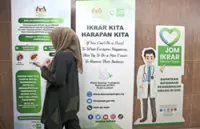
PETALING JAYA: The organ donor rate remains alarmingly low in Malaysia, mainly hampered by misconceptions and the critical hurdle of sudden family objection.
Despite the nod from all major religions, cultural and religious hesitations cast a long shadow, said Malaysian Society of Transplantation president Dr Mohamad Zaimi Abdul Wahab.
“Concerns about preserving bodily integrity for the afterlife or donating across faiths persist.
“Superstitions and fears, like the notion that pledging to donate brings bad luck or that a deceased person might feel pain, continue to deter many from considering a donation,” he said in an interview yesterday.
In Malaysia’s opt-in system, the transplant nephrologist pointed out, the emotional whirlwind following a loved one’s passing means even a registered donor’s wishes can be vetoed by their next of kin.
“A single objection in those heart-wrenching moments can halt a potential donation,” he said.
This challenge, Dr Mohamad Zaimi added, is compounded by a lack of awareness of brain death and organ donation among both the public and some healthcare workers, leading to missed opportunities for donation.
Then there is the challenge of a critical shortage of transplant specialists, he said.
“With only two dedicated transplant surgeons in public hospitals under the Health Ministry, the system faces significant bottlenecks.
“If one of these surgeons is unavailable or if the caseload increases, we face major delays.
“The shortage extends to nephrologists, who are primarily occupied with managing the growing dialysis population.”
Dr Mohamad Zaimi reiterated the need for a national transplant strategy.
“Our system operates in silos, with public, university and private hospitals lacking coordination. This fragmentation results in missed opportunities for collaboration and a plateau in the kidney transplant rate.
“Without a unified national framework, we cannot expand services or improve outcomes effectively.”
He advocates for a revised national strategy that includes dedicated funding, public campaigns and training programmes to enhance the transplantation system.
“Informed citizens are more likely to register as donors and consent to organ donation,” he said.
The society, said Dr Mohamad Zaimi, is ramping up outreach, spotlighting events like Organ Donation Week with high-profile activities across media platforms.
“Our goal is to normalise organ donation as part of end-of-life considerations and celebrate living donations as acts of love,” he said, envisioning a future where Malaysia’s transplant rates soar and patient outcomes improve.
Universiti Malaya Medical Centre (UMMC) senior nursing officer and organ transplant coordinator Harvinderjit Kaur Basauhra Singh also highlighted the challenges healthcare professionals face in the issue.
“Many individuals and families are hesitant due to cultural and religious concerns.
“There’s a significant lack of awareness and education about the importance of organ donation,” she said.
To address these barriers, Harvinderjit said proactive community engagement is crucial to educate the public about organ donation’s life-saving impact.
“Engaging religious and community leaders is also crucial to dispel myths and provide culturally sensitive information.
“Moreover, introducing educational programmes in schools and universities could raise awareness among young people, fostering a future generation more open to organ donation,” she said.
Despite the challenges, UMMC consultant nephrologist Prof Dr Ng Kok Peng remains optimistic about the future of organ transplantation in Malaysia.
“Although there was a slight drop in the number of transplants last year, the outcomes for recipients remain positive,” he said, highlighting the resilience and dedication of the medical community.
“This drop has not deterred our efforts. The transplant community is striving hard to improve the quality of care for patients and not be discouraged by the lack of donations.”
Dr Ng noted that the focus remains on enhancing patient care and outcomes through innovative treatments and improved post-operative care.