GEORGE TOWN: Low market value and a short shelf life are key reasons why they are not cultivated on a large scale, said a vegetable wholesaler here.
Kelvin Goh, 55, said at just RM1.50 to RM3 per kg, pandan leaves lack the value of other vegetables, making large-scale farming unprofitable.
“Pandan plants grow easily in the ground, leading many households to cultivate them in their yards. You can also find them growing at various spots along the streets or gardens.
“Once harvested, the leaves can dry up and wilt within half a day if left exposed.
“Even when stored in a refrigerated room, they last only up to two days,” he said at the Macallum Street Wholesale Market here yesterday.
Given these challenges, pandan leaves remain a niche product rather than a commercially viable crop, added Goh.
“Unlike other vegetables, pandan leaves are not meant for direct consumption, which limits their demand.
“Several vendors who harvest in large quantities would supply the leaves to my warehouse and they used to be about RM1 to RM2 per kg about five years ago.
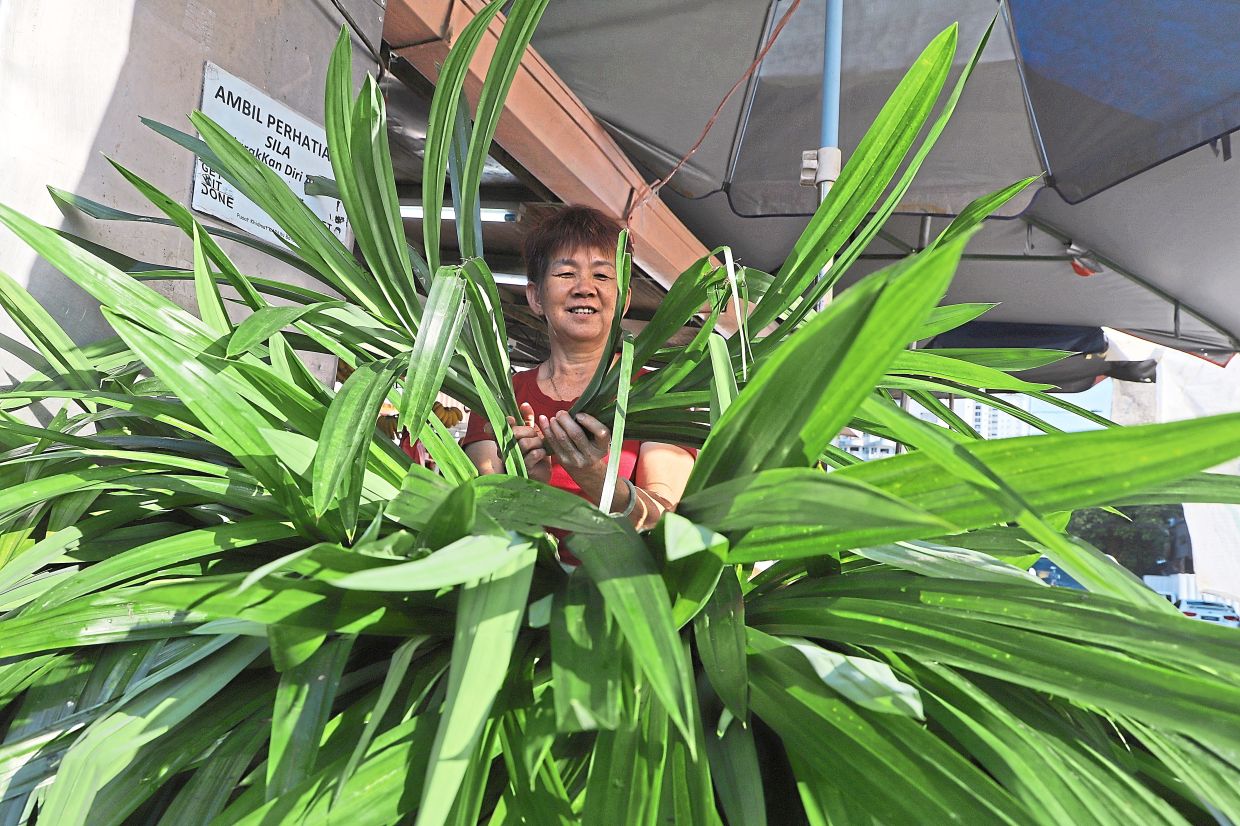
“Although the plants are resilient to various weather conditions, supply can still be affected by unfavourable weather as individual harvesters may choose not to venture out.
“Their prices may also fluctuate during festive seasons due to change in demand, but otherwise pandan remains a slow-selling item on normal days,” he said.
At Moh Teng Pheow in Lebuh Chulia, pandan leaves have played an essential role in nyonya kuih-making for three generations since 1933.
Its current owner Cavin Mook, 46, said between 20kg and 30kg of pandan leaves are used each week to enhance the aroma, flavour and add natural colour to the delicacies they make.
“The leaves can be added during the steaming or cooking process to impart fragrance, while the juice from blended leaves is used for colouring, flavouring or even making drinks.
“Food infused with natural pandan can never be replaced with artificial flavourings, and anyone familiar with the taste would be able to tell immediately.
“Hence, we still retain the traditional process of using pandan leaves in our cooking, and we believe this has contributed immensely to us being recognised in the Michelin Bib Gourmand for three years now,” he said.