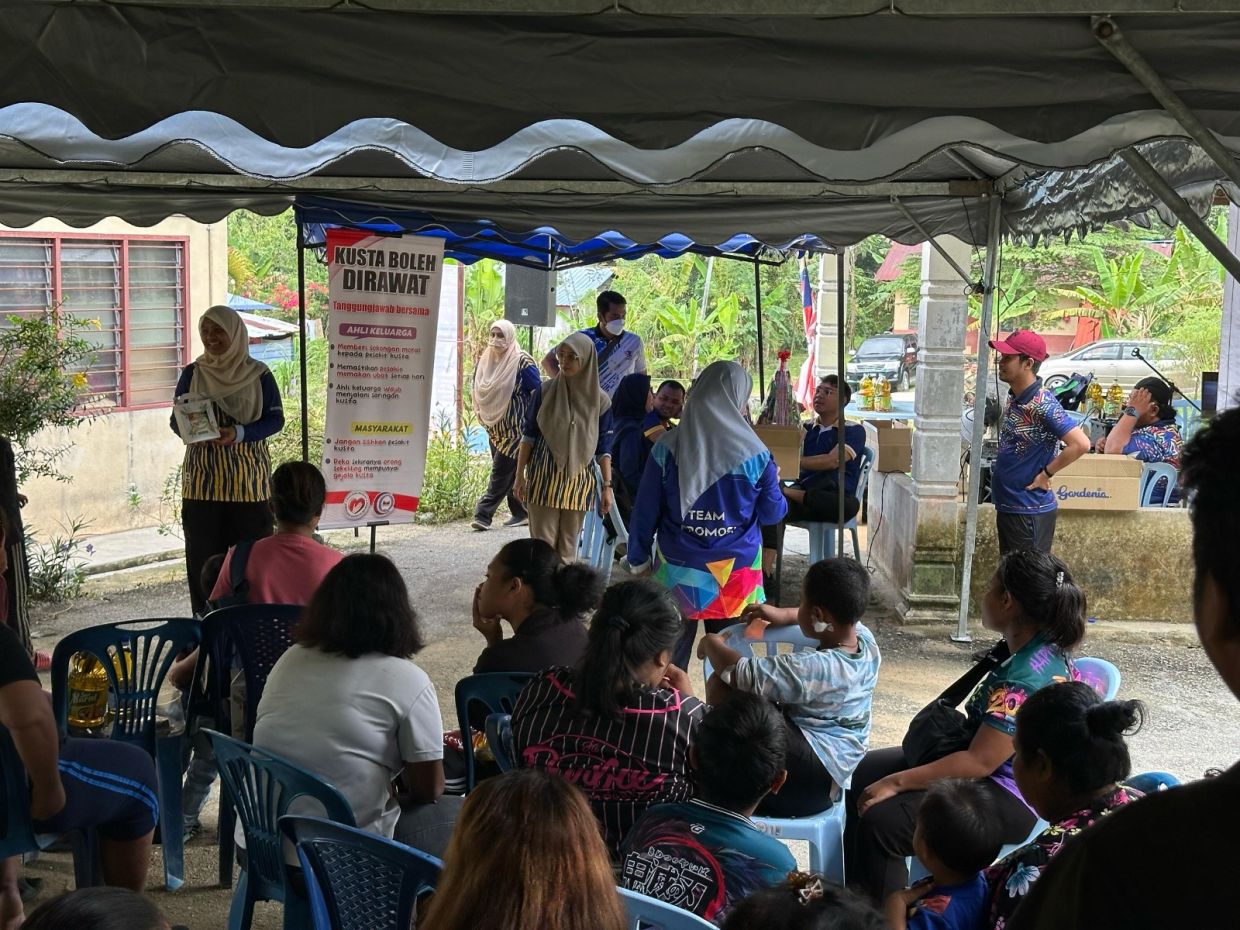
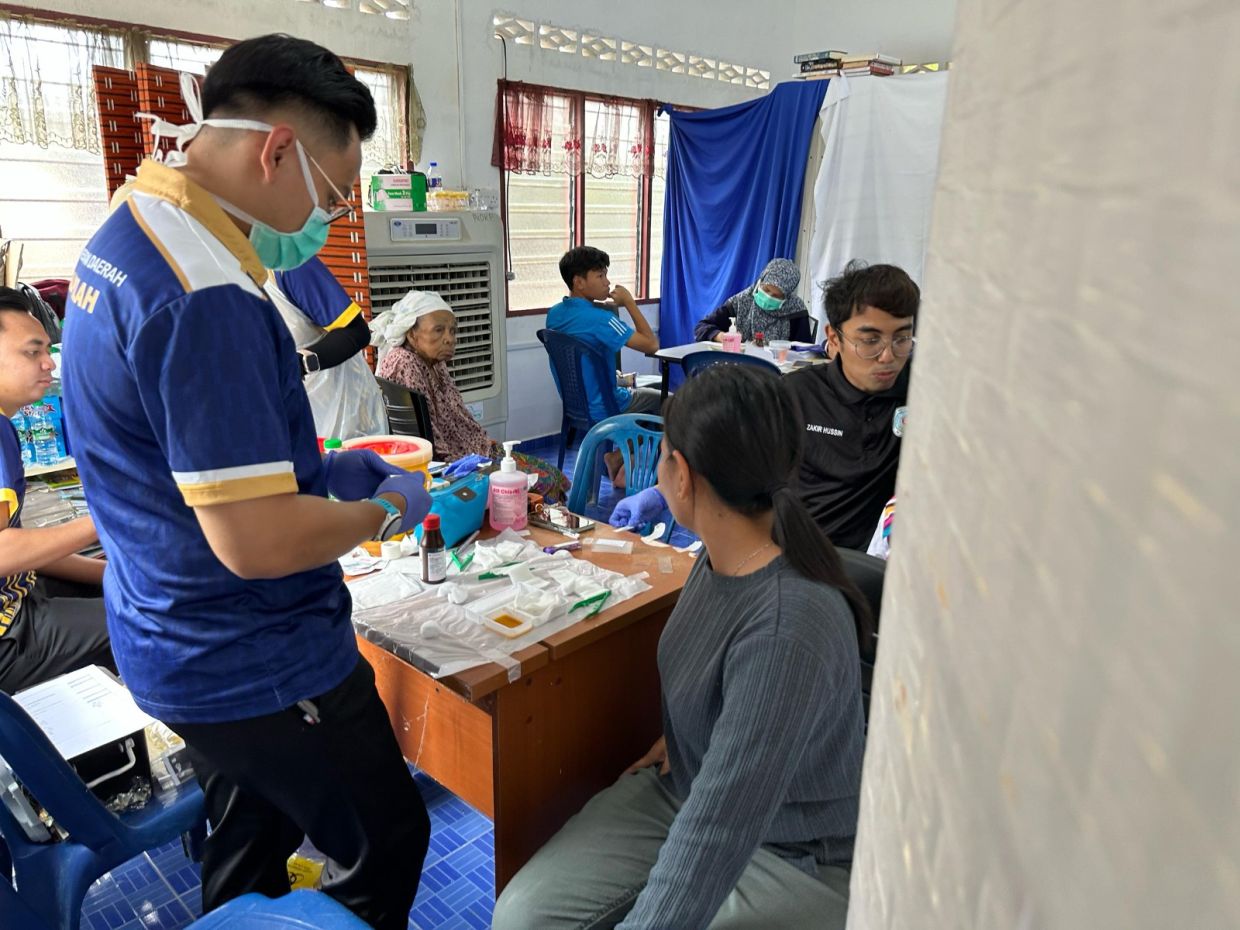
KUALA PILAH: The Orang Asli community in Kg Guntur and Kg Chergun near here had never come across any case related to leprosy for decades until a first case was reported in August 2024.
Kg Chergun village head Sisah a/p Jantan 50, said prior to that, she had only heard stories from her elders that some villagers had suffered from leprosy-like diseases a long time ago.
"We used to hear stories from our grandmothers that some Orang Asli in our community suffered skin ailments, muscle weakness or suffering from deformities in their hands and feet.
"The elders used to tell us stories about some members of our community being sent for treatment and to be quarantined at the Sg Buloh Leprosy Hospital, but personally I have never come across any case during my lifetime," she said.
Sisah, who has been the village head for eight years, said the Orang Asli were surprised when one resident in neighbouring Kg Guntur was tested positive for leprosy during a screening exercise by health authorities last August.
"We were really taken aback then. And then, we had the other cases in January," she said, adding that there were 42 families in her village.
On Feb 19, Mentri Besar Datuk Seri Aminuddin Harun said nine individuals from five families had been infected.
Five individuals, he said, were from Kg Chergun and four others from Kg Guntur
Aminuddin said the authorities will quarantine all villagers following the death of an 18-year-old girl in Kg Guntur on Feb 17.
The Mentri Besar said the Jeram Tengkek Ecopark located on the peripheries of the two villages has also been closed indefinitely to prevent the disease from spreading.
Sisah said there was no need to quarantine the villagers as the sick were already been given treatment
"This is not a plague or epidemic.
"The infection rate is low and the situation is very much under control," she said, adding that the sick were also in good hands as the health authorities were continuously monitoring their condition.
Kg Guntur headman Adnan a/l Sulak, 59, said he too had never before come across a leprosy case in the village until last August.
"We have no idea how the individual got infected. Also, we are clueless as to how the others contracted the disease last month," he said, adding that there were more than 100 families in the village.
Adnan concurred with Sisah that there was no need to impose quarantine in both the villages.
"Even today, our children attended school. We have not received any order," he said.
Adnan, who had been village head for the past three years, said imposing a quarantine order may only lead to the children from the community being subject to ridicule later.
He said those infected were undergoing treatment and were deemed as low risk.
"We were told that once you are under medication, the risk of you infecting others is minimal.
"So why put us under quarantine?,"he asked, adding that medical officers also regularly made their rounds in both villages.
Adnan also questioned the cause of death of the 18-year-old girl who was said to have succumbed to the disease on Feb 17.
"Medical personnel had in her death certificate attributed her death to liver failure, and not due to leprosy.
"When the MB said the victim died due to leprosy, it has only instilled fear in the community," he said adding that the victim had also contracted leprosy but that was not her cause of death.
Adnan also expressed hope that the authorities will be able to pinpoint to the source of the disease in both the villages, and carry out a cleanup exercise to prevent it from spreading.