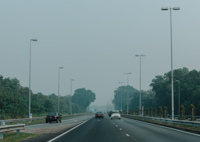
Haze exposure linked to respiratory issues


KLANG: Studies have suggested an increased risk of contracting chronic diseases such as lung cancer due to constant exposure to haze, which has also been linked to worsening asthma problems and other respiratory-related symptoms.

A study in the International Journal of Environmental Research and Public Health found that the seasonal transboundary haze, which affects Malaysia from Indonesia, contains high concentrations of fine particulate matter.

“A vast majority of the particles are less than 2.5 microns in size (PM2.5), and can therefore easily be suspended in wind currents for long periods of time, and are also sufficiently small to penetrate deep into the human respiratory tract,” said the study.

It was also established that people at greater risk of respiratory diseases were the very young and the elderly, as well as those living in urban environments and working outdoors.

A Malaysian study in the journal Lung Cancer found an increased diagnosis and presentation of lung cancer during the haze seasons compared to non-haze seasons.

The study based on lung cancer cases diagnosed in Universiti Kebangsaan Malaysia’s Medical Centre from 2010 to 2015 found that the haze likely exacerbated respiratory symptoms, leading to higher and earlier detection of lung cancers.

The study did not make a cause-and-effect link between lung cancer and the haze, but added that ambient air pollutants have been reported to be associated with lung cancer incidence and mortality.

According to consultant respiratory physician Dr Norhaya Mohd Razali, people with continuous exposure to haze over a few years were at a higher risk of developing cardiovascular effects, such as heart attacks, reduced lung development as well as the development of chronic respiratory diseases such as asthma in children.

“People with underlying lung diseases such as asthma and chronic obstructive pulmonary disease may get an exacerbation of the condition,” she said.

Short-term haze exposure of merely one to three days, said Dr Norhaya, might even cause eye irritation, conjunctivitis, stuffy nose, sore throat, coughing, headaches and dizziness.

On Friday, the Health Ministry issued a statement that in Sarawak, where the API was consistently above the hazardous level of 300 in some areas – and even shot up to over 400 in Sri Aman at one point – there was a 18.9% increase in asthma cases from 258 to 307 between Sept 8 and 14.

Get 20% OFF The Star Digital Access

Monthly Plan

RM 13.90/month

RM 11.12/month

Billed as RM 11.12 for the 1st month, RM 13.90 thereafter.

Best Value

Annual Plan

RM 12.33/month

RM 9.87/month

Billed as RM 118.40 for the 1st year, RM 148 thereafter.

Follow us on our official WhatsApp channel for breaking news alerts and key updates!
respiratory

Next In Nation

I want to focus on building a family first, says Syed Saddiq
172,955 companies, 464,797 vehicles registered under SKDS nationwide, says Armizan
Be careful when using AI to generate national flag images, says Fahmi
Negri polls: Chennah is DAP’s toughest battle, says Anthony Loke
Reject racial division to protect nation's independence, says PM Anwar
1MDB: US returns over US$1.37bil in assets to Malaysia, says Azalina
Activist remanded two days over criminal intimidation probe
Fahmi: National Month celebrations to remain high-spirit despite prudent spending
Negri Polls: Police approve 19 permits for campaign events
Electrician loses RM150,000 in fake investment scheme

Others Also Read