WHEN we talk about diversity, we usually think of racial or religious diversity, and thanks to some incidents in the past two months, the on-going discrimination against the lesbian, gay, bisexual and transgender (LGBT) community.
With the country going on a more hopeful and inclusive footing since the 14th General Election (GE14), there has been a lot more thoughtful discourse on such issues, although intolerance persists.
But there are marginalised Malaysians who are still seen as “Others”, if they are even seen at all.
These are people with disabilities, mental health issues, skin conditions – people too many others do not consider “normal”.
“We often turn a blind eye to what we do not understand,” says Borneo-born Rozella Marie Majhrin, founder of True Complexion, an online platform that features people with disabilities, skin conditions, addictions and even mental health issues that was established in 2015.
“We just don’t realise that there’s so much more to ‘diversity’ and being ‘inclusive’, and I’m just trying to bridge that gap with True Complexion,” she adds.
It is also personal for Rozella, who struggled with a skin discoloration disorder when growing up.
Due to this, she had issues with her appearance, until she started to venture into making music.
“Music really helped me to embrace things more. I was so focused on the craft that I could forget everything else.
“It came to a point where I was finally happy with who I am. Then I thought, there might be people out there with similar stories and perhaps they would like to share their experiences as well,” she says.
True Complexion was born, and it has featured more than a hundred people all sharing their own experiences on their conditions or disabilities.
Rozella says she was bullied and discriminated against as a child, with people constantly giving her looks and calling her names.
Children can be cruel, they say – but discrimination from adults was more hurtful.
“Children are curious, they are young; we can’t blame them for not understanding.
“An adult, however, is supposed to have the capacity to think before they speak, and not say hurtful things to someone simply because they do not understand,” Rozella.
Even running everyday errands such as buying groceries from the market was like running the gauntlet.
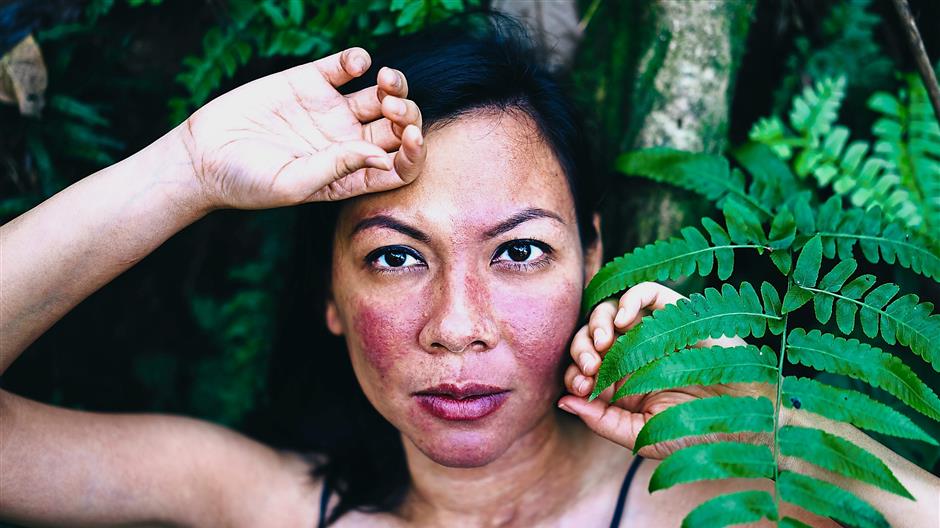
“Have you ever considered plastic surgery?” was a question she was often asked while picking out the freshest bak choy on the counter, which greatly affected her self-esteem.
It does not get better in adulthood, as there is still discrimination against disabled people in the workforce – if they can even land a job in the first place.
“They won’t hire you because they don’t think you’re capable. It’s a type of discrimination as well, because of the image issue, right? A lot of companies worry more about quotas, margins, numbers … there’s no human aspect,” says Rozella.
In August, LGBT activist Pang Khee Teik talked about how difficult it was to be part of the LGBT community in Malaysia, adding that there was a need for greater education and understanding when it comes to niche communities in Malaysia.
Rozella believes the same thing is needed for the disabled, mentally or physically challenged communities.
“Everyone needs to play a role for things to change. It would also be good if we could explain to children, from a young age, what is really going on.
“They have the mental capacity and judgement to understand what’s going on.
“If parents learn how to speak to their children instead of sweeping everything under the rug, it would definitely help the child be more confident and okay with themselves – saying ‘yes, I am different, and that’s okay’.
“At the end of the day, we can’t control what people do – but we can control what we do about it,” says Rozella.
One of the people featured on True Complexion is Janet Lee, a 29-year-old who only learnt how to read and write when she was 16. Diagnosed with intractable epilepsy, doctors attributed her learning difficulties to her medical condition.
Her mother, Joyce Moi, told The Star that after Janet learned how to read and write, she became focused on what she could do to help her daughter be as capable and independent as possible, instead of being dependent on others to survive.
“It was a journey of searching for what she could do for a living. I really cannot see how companies would want to employ her as she could fall and have a seizure anytime and anywhere without warning,” says Joyce.
Janet had a talent for art and colouring, and now owns Janet’s Corner, which sells art and fashion items, and even cookies – all helped by her diploma in small business management.
One of Janet’s paintings was also transformed into “art-on-heels”, a project in collaboration with Lewre Bespoke, the high-end boutique chain that offers customisable hand-made footwear.
“It is something that she is very proud of. And it definitely took her dreams to another level,” says Joyce.
However, she is keenly aware that successes like her daughter’s are rare, and the disabled have a mountain to climb if they want to earn a living – an extraordinary achievement by itself.
“I feel that platforms like True Complexion should come together as one big, single entity conveying the same message across the country. When unified, we can all do more.
“I spent 16 years trying to manage my daughter’s medical situation, with a concurrent 11 years working on her learning issues and 12 years developing her to where she is today.
“I hadn’t realised how long this journey has been,” says Joyce.
Another person who is not seen as “normal” is Sonya Danita, who made history as the first person with vitiligo to walk the runway at Kuala Lumpur Fashion Week.
Vitiligo is a disease that causes the loss of skin colour in blotches because pigment cells called melanocytes are destroyed in certain areas.
It has been a long journey for Sonya, who recalls being picked on and called names such as “Dalmatian” when she was in school.
“There was so much that I had to go through at such a young age due to my skin condition.
“Unfortunately, it took me a long time to finally decide that I had had enough. It wasn’t until I was 17 years old that I decided to stop allowing other people to affect me so much and make me feel like I didn’t belong,” says Sonya.
Despite her success in the fashion industry, Sonya believes her biggest achievement to date is being comfortable in her own skin.
Being content with the way she looks and being able to love herself was not a race that was easy to run, but she got there in the end.
“Though it took me a while to reach this stage, I finally realised that I had to stop beating myself up over something that I could not control, and to embrace it instead.
“I still have bad days when my insecurities come crawling back, and when they do, I remind myself that is really is okay to be different.
“It also helps that I have an amazing support system in the form of family and friends.
“People should start accepting themselves for the way they are, without having to seek validation from anyone else,” she adds.
When life hits you with such blows, most people ask, “Why me?” For others, it’s, “Why NOT me?”
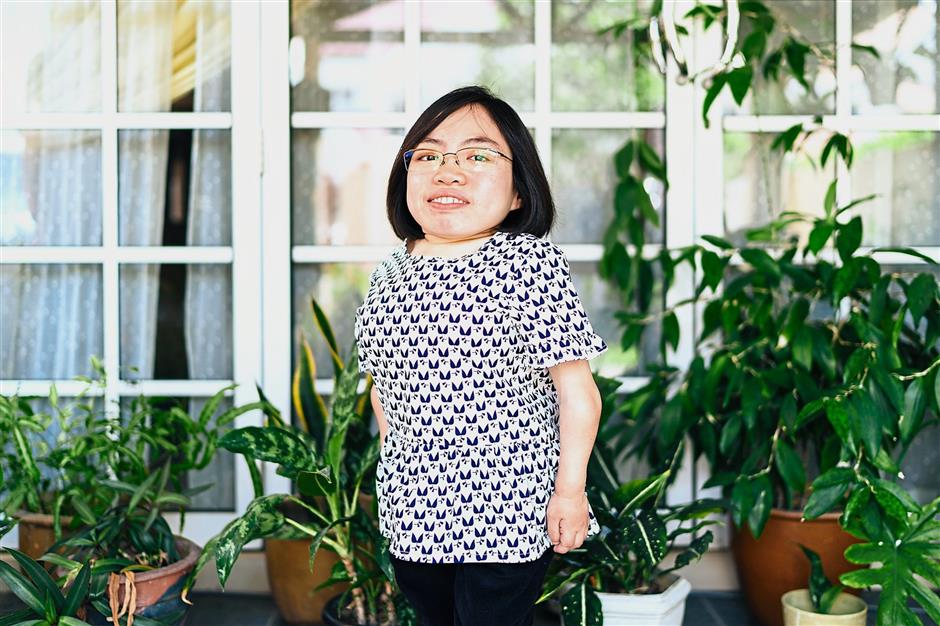
Rachel Siew, who finds it difficult to lift anything heavier than a mobile phone, has asked herself the question countless times.
She was born with a rare degenerative genetic condition known as Mucopolysaccharidosis Type 4 A (MPS IVA), commonly known as Morquio Syndrome.
In layman terms, she was born with a missing enzyme that does not allow her to process certain types of long chains of sugar molecules needed by the body as “lubricants” or “shock absorbers”. It leads to abnormal bone and spine development, and gets progressively worse.
Rachel’s treatment costs about RM1.6mil a year, but she didn’t let this stop her from pursuing her law degree in the United Kingdom.
She is now a GrabCar and Microsoft M-powered ambassador.
“Over time, I started to understand how my body works and began to accept and even like myself,” says Rachel.
“I even changed the question to why NOT me? I believe that everything happens for a reason and that whether I spend my time sulking or happy, the sun will continue to shine,” she adds.
Rachel also recalls how difficult it was to find a job after she graduated six years ago. The moment prospective employers heard she was semi-wheelchair bound, vacant positions would “automatically be filled”, she says.
She couldn’t consider many other companies because their offices were located in buildings that were not disabled-friendly.
She finally landed a job in downtown Kuala Lumpur, as the executive assistant reporting directly to the chief executive officer of an international property developer.
“Companies have to start employing members of the special needs community. We are just like everyone else, just born differently with certain limitations.
“With the right training and some time, I’m certain we can work just like any ordinary, able-bodied individual.
“We, the challenged bunch be it physically/ sighted/ mentally/ any other, are a part of society too. We have to pay for our meals and we even vote when we come of age!
“So why should we not feel like we belong,” she asks.
Already a subscriber? Log in
Get 20% OFF The Star Digital Access
Cancel anytime. Ad-free. Unlimited access with perks.