Sunday Star observes a unique moment in an absolute monarchy: citizens casting votes in a nationwide election.
THOUSANDS of Omanis woke up on a bright Sunday morning on Oct 25 and headed to more than a hundred polling centres around the gulf country.
In a school turned into a polling centre in the wilayah (district) of Nizwa, located 158km from the capital, Muscat, hundreds of men, young and old, all decked out in their white dishdasha (traditional floor-length robes), queue patiently, waiting for their turn to cast their vote.
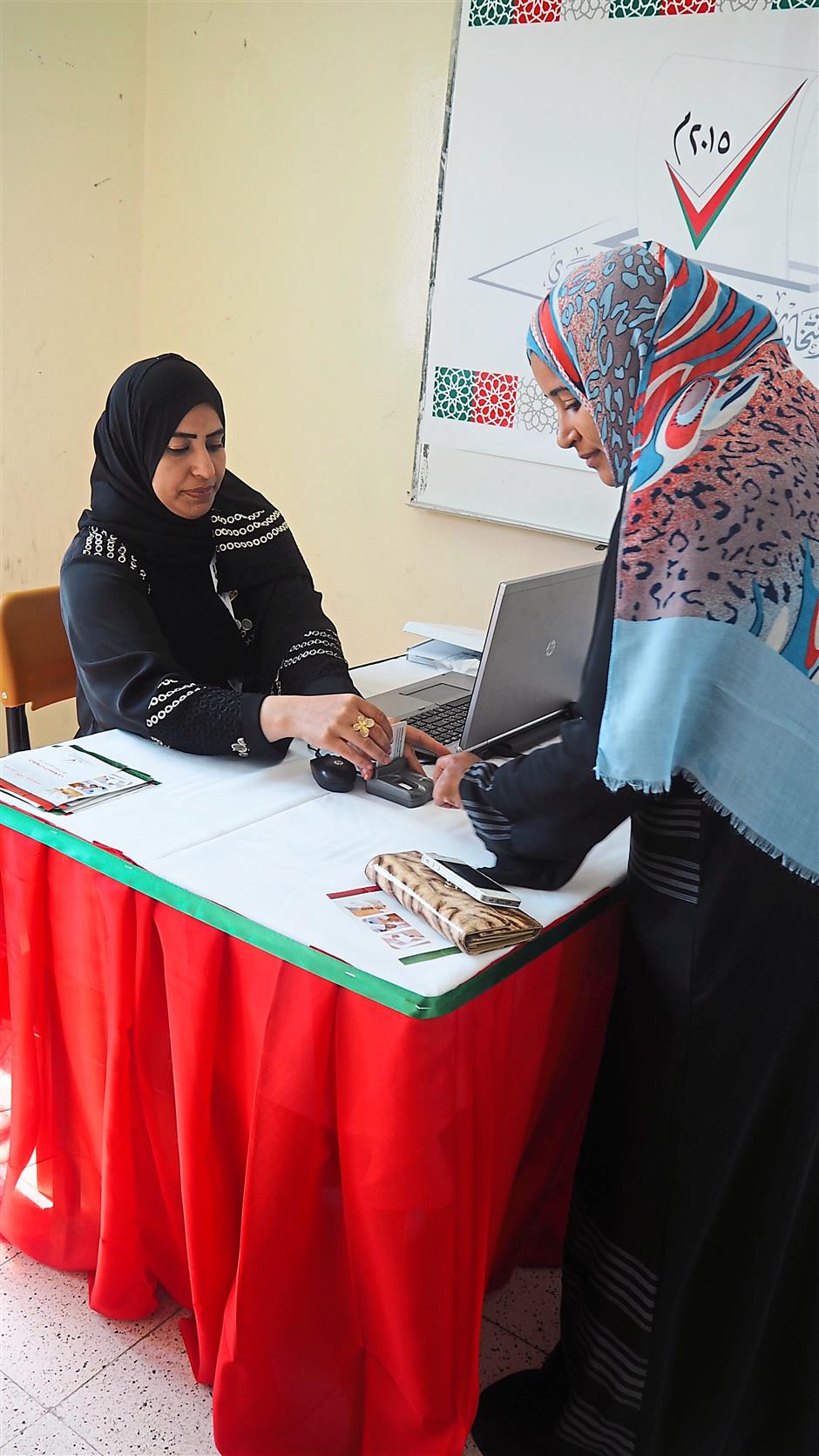
In a separate area, Omani women in their black abaya (another form of robes) huddle together, chatting with one another after they have done their democratic duty, while some who have just arrived head straight to the registration table.
The voters here will select two people to represent Nizwa on the 85-member Majlis Ash’shura.
The Majlis Ash’shura, or Shura Council, is an advisory body founded in 1991 to advise reigning Sultan Qaboos Said Al Said, the much-loved monarch who has ruled the sultanate for the past 40 years.
Electronic and fingerprint reading systems are used to register the voters, promising a smooth polling process.
By nightfall, the votes are counted and two men, Hamdan Nassir Masoud Al Rumaidhi and Ahmed Said Sa’ed Al Hadrami, are declared winners.
While polls are the norm in democratic countries, this Shura Council election is a sign of progress in Oman, a country where the monarch holds absolute power.
During the early days of the council, only a few elite segments of Oman society – mostly comprising tribal leaders, intellectuals and businessmen – were allowed to elect members to the council.
In 2003, the winds of change arrived in Oman as the nation gained universal suffrage and the Sultan opened the election process to all Omani citizens above the age of 21.
Laws had to be amended to allow this democratic process to take place.
Previously, the council played merely an advisory role and did not have any real power to impact legislation or any government decisions.
However, following a domino effect created by the 2010 Arab Spring-inspired unrest that called for greater democracy across the region, the Sultan bestowed the council with wider powers to revise and propose laws.
Now, the council also has the power to question government ministers and conduct its own internal elections for a chairman.
A more significant power is the council’s new standing among decision makers – the Sultan’s elected State Council and the Supreme Court – to decide on a successor to the throne in the event that the Ruling Family Council fails to name one.
First-time voter Hanan Mohammed feels empowered by the chance to vote.
The 26-year-old nurse at a polyclinic in Nizwa says the elections enabled them to choose people they trust to serve the community.
“It is good that we get to choose who can do things for us here in Oman, to do service for us.
“The choice comes from the Omani people, not from the ministry or authorities,” she says when met at the school-turned-polling centre in Nizwa.
Shy and reserved, Hanan speaks English confidently despite her limited vocabulary and is flattered that her opinion was sought.
In an e-mail interview after the election, state council member Yuthar Al Rawahy says the elections are a strong indication that the Sultanate’s march towards sociopolitical and economic progress continues at a steady pace.
“The journey of Oman’s development and growth has witnessed many important milestones.
“As we mark our 45th National Day in November (on Nov 18), we have much as a nation to celebrate.
“With each successive amendment to the Basic Law of the State (which enabled the election to take place) we see greater powers being vested in the people of Oman to have a greater say in determining the future of the country.
“The wise leadership of His Majesty Sultan Qaboos has ensured that each step in Oman’s development occurs in a time and scope that meet the evolving needs of the people,” she says.
According to official figures, there are 525,785 eligible voters in Oman, of which 278,804 are men. However, this eighth Shura Council elections only saw a voter turnout of 56.66%, a stark difference from the 2011 polls when 76% of Omanis voted.
Some blame this decline on the electronic system used during the election – it has been brought to the attention of the officials that the system rejected a huge number of identification cards that had expired.
“The law has stipulated that to participate in the election, voters must register their names in the electoral register earlier.
“A lot of voters did not know this until the polling day. They went to election centres to vote and they were surprised (when rejected),” an official says.
While this writer had the chance to observe the polling process in Nizwa and saw a less than impressive female voter turnout, an official at a press conference in Muscat later clarifies that the Government has never tried to block Omani women from participating in elections. In the previous election in 2011, the Grand Mufti, His Eminence Shaikh Ahmed Al Khalili, had encouraged women to come forward not only to vote but also to stand in the elections as candidates.
“It is perhaps their own attitude that they did not want to come out,” the official suggests.
Yuthar, however, is quick to dispel the notion that Omani women are less than interested in practising democracy.
“Whether Omanis choose to exercise their right to vote, I think it returns to the individuals themselves, with gender not necessarily being a factor.
“As with any democratic process, a lot of variables are at work. Before gender is identified as a reliable factor vis-à-vis election turnout, a proper survey should be conducted to first verify if a pattern of female voting exists which points to larger turnouts in certain localities over others,” she says.
Yuthar suggests that the Government should conduct a study into the possible reasons behind non-voting, not only within the female population but the male population as well.
Nemah Jamiel Farhan Al Busaidiya, who was one of 20 female candidates in the elections, became the only woman to win a seat on the council for the second time.
She was also the only woman who won in the previous elections.
In a patriarchal society such as Oman, the lack of female representation may be dismissed as something common and expected in the male-dominated culture. Yuthar, however, disagrees and does not see the lone female representation on the council as indicative or reflective of the development of female advocacy in the Sultanate.
“It stands to reason that the more diverse the makeup of the membership, the more substantive the views – however, most parliamentary bodies around the world have a smaller proportion of women to men. This is a universal phenomenon, and these countries have been conducting elections longer than Oman.
“A female council member, just as her male counterpart, will do what is in the best interests of her electorate and the nation.
“If an issue is raised in the council that relates to gender in any way, all members of the council will study the proposal and reach conclusions based on its merit. To suggest otherwise would be reductive,” she says.
Despite the imbalanced gender representation on the council, Oman is poised to move forward and become a model country to its neighbours with its brand of democracy in the midst of an absolute monarchy.
Its voters must prove to the world and themselves that they are appreciative of the freedom to choose and exercise their rights in the next election.
Already a subscriber? Log in
Get 20% OFF The Star Digital Access
Cancel anytime. Ad-free. Unlimited access with perks.