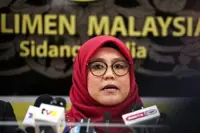
An astute facilitator and top notch negotiator paved the way for the success of the Southern Philippines peace talks hosted by Malaysia.
HOW do you get two feuding parties to work together for peace after decades of conflict?
As the facilitator of the Southern Philippines peace talks, Datuk Tengku Abdul Ghaffar Tengku Mohd would sometimes quietly try to encourage negotiators from both sides of the conflict to feel more at ease with each other.
At some of the sessions which Kuala Lumpur has hosted since 2001 between the Philippine Government and the Moro Islamic Liberation Front (MILF), this would involve creating an informal atmosphere to promote a flow of discussion.
“On some occasions, we would just sit together over coffee for an hour or two to discuss, without any note-taking, just to get that feeling of friendliness going,” said Tengku Abdul Ghaffar, a former director-general of the National Security Council (NSC), in an interview with several journalists at a hotel in Manila where the Malaysian delegation led by Prime Minister Datuk Seri Najib Tun Razak was staying.
The mood among Malaysian, Philippine and MILF officials who had gathered in the capital for the signing of the framework agreement was joyful.
While relieved at the progress of the peace effort, Tengku Abdul Ghaffar was still quick to put things into perspective when asked how he felt.
“The feeling initially is good but work ahead has to be done. (There are) a lot of things we still have to settle.”
Soft-spoken, thoughtful and careful with his words, Tengku Abdul Ghaffar projects qualities that are perhaps required when facilitating the talks.
As the conversation progressed, it became clear that he is deeply passionate about the subject of peace and takes care to explain the conflict from the perspective of both sides.
Explaining how the negotiations were structured, he said both sides would sometimes try to find broad agreement on an issue, then work out the details.
“No one issued ultimatums and no one said you do this', you do that'. It involved a lot of compromise and understanding.”
A facilitator needs patience, willingness to listen, and endurance. Also required is a keen ear for subtle nuances such as the body language of the negotiators.
Ultimately though, it is the negotiators who determine the outcome of the talks, and having top-notch teams from the Philippine Government and the MILF was one reason they succeeded.
The Philippines side was led by Marvic Leonen, one of the country's top law professors specialising in community organising. His counterpart Mohagher Iqbal is a leading thinker in the MILF with a master's degree in political science.
“They are both very articulate, very intelligent, (and) know exactly what they want. They are the best each side has to offer, which made things easier for me,” said Tengku Abdul Ghaffar.
A native of Pasir Mas, Kelantan, he is also uniquely qualified for his role, having developed an expertise in cross-culture negotiations through a long career in the civil service.
Tengku Abdul Ghaffar joined the Prime Minister's Office after graduating from Universiti Malaya in 1972, at a time when the country was under the leadership of Tun Abdul Razak Hussein.
He served at Malaysia's embassies in Thailand, Pakistan and India, and was called to serve as the facilitator in 2001. He retired from the civil service three years later as the NSC's director-general, stepping back from the peace process as well as a result.
The turning point
Tengku Abdul Ghaffar was recalled to serve a second stint as facilitator last year. The peace effort had reached a turning point that was to prove momentous.
Philippine President Benigno Aquino III held a meeting that year with MILF chairman Murad Ebrahim in Tokyo where the two spoke candidly about the peace process, bringing fresh hope.
“It was a turning point in negotiations because the two principals sat down and set the framework and direction for the negotiations to proceed,” said Tengku Abdul Ghaffar.
The MILF agreed to drop its claims for independence, and was willing to decommission its armed fighters if the peace process moved positively. In return, the Philippine Government agreed to grant a Ministerial form of Government in the proposed Bangsamoro autonomous region.
When the recently concluded round of talks, which started in 2001, entered its 32nd round on Oct 2, Tengku Abdul Ghaffar could sense an impending agreement.
“I told them they were on the same page and paragraph, but that paragraph was a bit long. But I knew we could close the deal then.”
The session, normally held in Kuala Lumpur over three days every few months, was lengthened and on Oct 7, an agreement was finally reached.
The ink is barely dry on the framework agreement but both sides are already busy trying to forge agreements on wealth, power sharing and other details for the proposed Bangsamoro autonomous region targeted by 2016.
Tengku Abdul Ghaffar cited Prime Minister Datuk Seri Najib Tun Razak's recent remarks on how crucial it was to get the MILF's fighters to transition into farmers. Describing this as the main risk ahead, he said he told the MILF that “conflict is easy, just take out a gun and shoot, but peace is not easy. Peace must be based on trust, confidence and a fulfilment of expectations.”
“The beauty of the MILF,” he said, “is that they realise the expectations are now on them, not just of the Philippine Government but of their own people who want jobs, who want hope not just on paper but in concrete terms.”
Given a choice, Tengku Abdul Ghaffar prefers to remain in the background, as he considers his anonymity a boon.
“Few knew about me back then and I could go to Cotabato alone or with just my staff from the Malaysian secretariat when I had to shuttle back and forth in the region,” he said.
He is better known now that the framework agreement has been reached, but he said credit belongs to the many teams of people working tirelessly for the past 11 years, including the Malaysian secretariat, negotiators and international contact group.
“This is also a national achievement because whatever I do, it is on behalf of the Malaysian Government,” he said.
Already a subscriber? Log in
Get 20% OFF The Star Digital Access
Cancel anytime. Ad-free. Unlimited access with perks.