Dubbed an “air-conditioned nation”, the island republic is experimenting with cooling alternatives from chilled beams to “passive displacement” to curb its thirst for energy-guzzling air conditioning.
The city-state has the highest per-capita air conditioner ownership rate in South-East Asia, with about 99% of private residences equipped with cooling units.
Singapore’s local building sector accounts for one-fifth of its emissions, while cooling itself accounts for 40 to 60% of a building’s energy consumption, according to studies.
A stroll down renowned thoroughfare Orchard Road highlights that dependence. Shoppers are greeted by blasts of cool air that waft into the street as doors swing open – a major draw given daytime highs hover between 31°C and 33°C year-round.
Some buildings in Singapore are looking at other options, including active chilled beams, which are perforated panels equipped with cooling coils that are mounted on ceilings.
A chiller plant on the building’s top floor cools water down to 9°C, then pumps it into the coils. Simultaneously, air is blasted through small nozzles inside the beams.
The jets of air create a low-pressure zone that sucks up warmer air from the room below so it passes over the coils and is cooled before recirculating.
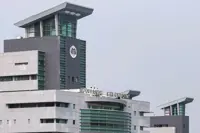
The technology keeps the offices at the eight-storey Paya Lebar Green building at a comfortable 24°C.
When HR professional Renuga Shekar first moved into an office space at Paya Lebar Green last November, the 30-year-old and her colleagues just thought the exposed pipes and panels on the ceiling was a “warehouse kind of look”.
“We didn’t really think much about it. No one really commented about it,” she said.
It was only months later, after noticing how quiet the office was and hearing technicians mention “ACB” during maintenance, that they realised it was cooled by active chilled beams.
“We didn’t even realise how different the air cooling system is because it was very seamless, and in terms of the temperature, ideal for everybody in the office,” she said.
Together, the system cut energy use by more than 30% compared with conventional air conditioning, according to the building’s designers, DP Architects.
Another alternative is radiant cooling, where water chilled to between 14°C and 18°C flows through pipes or panels and absorbs heat radiating from people or objects to reduce ambient temperatures.
Supporters of alternative systems acknowledge that they cost more to install than conventional air conditioning, but say they more than make up for it over time with much lower running costs thanks to energy savings.
The most popular alternative method remains hybrid cooling, simply turning up air conditioning to a higher temperature of 25.5°C to 27°C, and pairing it with fans. — AFP